How to Pack Clothes for Moving: A Complete Step-by-Step Guide

Clothes are the one part of a move that always seem to end up in a last-minute panic — stuffed into garbage bags, wrinkled beyond recognition, or half-forgotten until moving day is already underway. If you've ever unpacked a box of clothes at your new place only to find everything creased, mismatched, or smelling faintly of cardboard, you already know why this deserves its own plan.
This guide walks you through exactly how to pack clothes for moving — from sorting and decluttering to choosing the right method (hanging vs. folded), the supplies you'll actually need, and the small habits that save you both time and money.
Let's go through each step in detail.
1. Before You Start: Sort and Declutter Your Wardrobe
Before a single item goes into a box, take stock of what's actually worth packing. Sorting first means fewer boxes, less time spent, and a much easier unpacking process at the other end.
Declutter First
Pull out anything you haven't worn in the last year. If it's still sitting untouched at the back of your closet, it's not coming with you.
- Donate clothes you never wear
- Sell or gift items that no longer fit
- Toss anything visibly worn out or damaged
Sort by Material and Type
Group similar fabrics and clothing types together before packing. Delicate fabrics, heavier winter wear, and everyday basics all pack (and unpack) differently, so keeping them separated makes it easier to handle each with the right level of care.
Sort by Season
If you're moving during a season where certain clothes won't be needed for a few months, pack and label those separately so you're not digging through them right away.
2. Pack a "Moving Week" Essentials Bag
Set aside one bag or small suitcase per family member with enough clothing to get through the first several days after you move — before the rest of your boxes are unpacked.
Include:
- A few days' worth of everyday outfits
- Extra underwear and socks
- Sleepwear
- One slightly dressier outfit, in case you need it unexpectedly
This one habit alone prevents the most common moving-day scramble: tearing open random boxes looking for a clean shirt. For the complete list beyond clothing — documents, chargers, toiletries, and more — check our guide on what to pack in your overnight moving bag.
3. Clothing Packing Methods and Supplies
Clothes generally fall into two categories for packing purposes — items that hang, and items that fold. Each needs a different method and different supplies.
Hanging Clothes
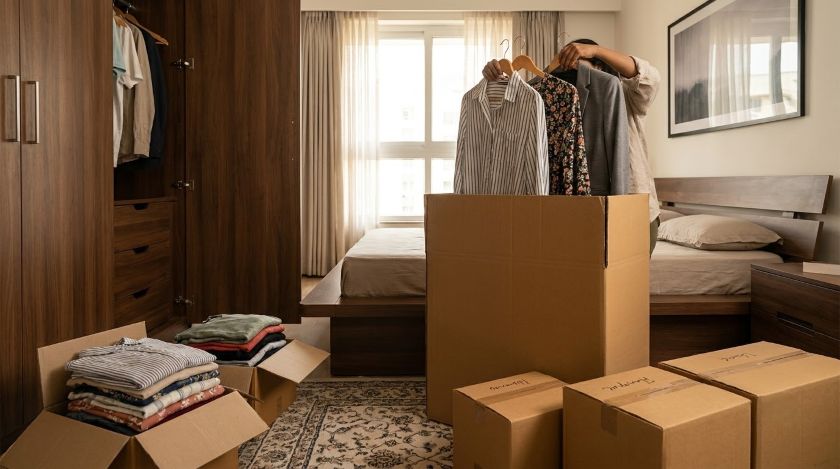
The simplest way to move hanging clothes is to keep them on their hangers throughout the move rather than folding them into boxes.
Supplies needed:
- Wardrobe boxes — tall boxes with a built-in hanging bar; keep clothes wrinkle-free and protected from dust
- Garment bags — best for suits, dresses, or other items you want to keep completely crease-free
Folded Clothes
For everything else, folding or rolling into boxes or bags is the more space-efficient option.
- Rolling — takes a little more time but reduces creasing and fits more into less space
- Folding — the standard method; quick, and works well for stackable items like t-shirts and sweaters
Supplies needed:
- Cardboard boxes — suitable for most folded clothing
- Suitcases and duffel bags — good alternatives, especially for shoes and heavier folded items
- Vacuum bags — ideal for bulky items like jackets and winter coats, since they compress significantly
Packing Shoes and Delicates
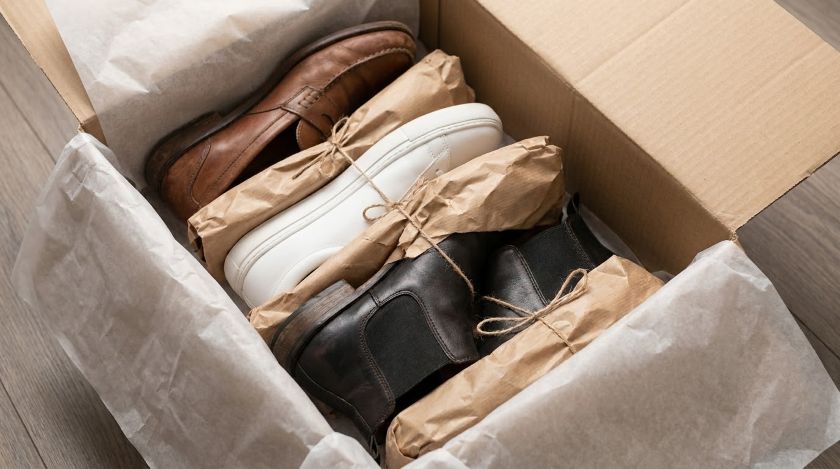
Shoes should be packed separately from clothing to avoid transferring dirt or scuffing softer fabrics. Use shoeboxes where possible, or wrap each pair in paper and pack sole-to-sole inside a dedicated box. For a full breakdown by shoe type, see our guide on how to pack shoes when moving homes. For delicate fabrics like silk or lace, avoid vacuum bags (compression can damage fibers) and instead layer them with tissue paper inside a sturdy box.
Packing Formal Wear and Jewelry
Suits, gowns, and other formal wear travel best in garment bags, hung rather than folded, to avoid deep creasing. Jewelry should be packed separately in a small, padded case or pouch — never inside a garment bag or clothing box, where it can get lost or tangled. If you're moving valuable pieces, our detailed guide on how to pack jewelry safely for a move covers the right materials and precautions to take.
Method Comparison at a Glance
| Method | Best For | Supplies Needed |
|---|---|---|
| Hanging | Suits, dresses, formal wear | Wardrobe boxes, garment bags |
| Folding | Everyday clothing, sweaters | Cardboard boxes, suitcases |
| Rolling | Casual wear, space-saving | Duffel bags, suitcases |
| Vacuum sealing | Bulky items (coats, jackets) | Vacuum storage bags |
| Separate packing | Shoes, jewelry, delicates | Shoeboxes, padded pouches, tissue paper |
4. Money-Saving Ways to Pack Clothes
If you're trying to cut down on packing costs, these substitutes work well without compromising your clothes:
- Use old suitcases and duffel bags you already own instead of buying new boxes
- Leave clothes inside dresser drawers rather than emptying and repacking them
- Use clean garbage bags for soft, non-delicate items in a pinch
- Wrap folded clothes in plastic wrap to keep them together and clean when you're short on boxes
5. Pro Tips for Efficient, Damage-Free Packing
A few small habits go a long way toward keeping your clothes in good shape and your boxes manageable:
- Load heavy items first — place bulkier clothing at the bottom of each box, lighter items on top
- Clean before you pack — freshly laundered clothes avoid odor issues and make unpacking far more pleasant
- Don't overstuff boxes — overfilled boxes are more likely to tear or split during transit
- Carry valuables separately — clothing with sentimental or high monetary value should travel with you, not in the moving truck
- Line boxes with packing paper — adds a layer of protection against dust and moisture
- Plan for long-term storage — if any clothing will sit packed for a while, use airtight containers to guard against moisture and pests
Frequently Asked Questions
Conclusion
Packing clothes for a move doesn't have to be the chaotic, last-minute task it usually turns into. Declutter first, sort by season and material, choose the right method for hanging versus folded items, and keep a moving-week bag ready so the first few days in your new home are stress-free.
If you'd rather skip the process altogether, AssureShift's professional packers and movers can handle your clothes — and the rest of your move — carefully and efficiently from start to finish.