The movers have left. You open the first box — and your grandmother's gold necklace isn't there. No label, no record, no claim possible. Just gone. It happens more often than any moving company will tell you upfront.
Shifting households is already one of the most stressful things you'll do. Knowing how to move your valuables safely — before moving day, not during it — is what separates a smooth relocation from a painful one. This guide covers everything: what qualifies as a valuable, how to document and pack each type correctly, how to insure them, and what to do the moment you arrive.
What Qualifies as a "Valuable" When You're Shifting?
Most people think of gold and jewelry. But valuables cover a lot more ground than that.
| Category | Common Examples |
|---|
| Financial & Legal | Gold, silver, jewelry, passports, Aadhaar, PAN, property documents, cheque books, foreign currency |
| Sentimental & Collectibles | Antiques, family heirlooms, artwork, coins, stamps, limited-edition items |
| Functional High-Value | Laptop, camera, external hard drives, crypto wallets, high-end appliances |
Simple rule: if losing or replacing it would genuinely hurt — financially or emotionally — treat it as a valuable and handle it accordingly.
Often overlooked: Prescription medications and original medical records. Losing them mid-move is not just inconvenient — replacing them can be costly and time-consuming.
Why Valuables Need a Different Approach Than Regular Household Items
A cracked plate is a ₹200 loss. A damaged antique, a missing passport, or a failed hard drive is a different problem entirely. Here's why valuables cannot be packed and moved the same way as regular household goods:
Physical damage
Delicate and fragile items have zero tolerance for the rough handling that happens inside a moving truck.
Theft risk
Moving day involves multiple unfamiliar people handling your boxes; a box visibly labelled "valuables" is an easy target.
Loss in bulk
Small items buried inside large shipments disappear without an inventory trail to trace them.
Weather and moisture
Loading and unloading in Indian conditions, especially during monsoon, puts documents, electronics, and antiques at real risk.
No easy replacement
Unlike most household goods, what makes something a valuable is precisely that it cannot simply be repurchased.
None of these risks require bad luck. Most only require the wrong preparation — or none at all.
Step 1 — Locate and Audit All Your Valuables Before Packing Begins
Most people start pulling out boxes before they've even accounted for everything they own. The audit comes first. Go room by room, area by area:
Room-by-Room Audit Checklist
Bedroom — safe, jewelry box, locker, bedside drawers
Study / Home Office — filing cabinet, desk drawers, external hard drives
Living Room — display shelves, cabinets with antiques or collectibles
Kitchen — any documents or small valuables stored here
Attic / Storage Unit — items packed away months or years ago and not recently seen
Bank Locker — schedule a collection visit at least one week before moving day
Digital — USB drives, external SSDs, crypto hardware wallets, password manager devices
Do this audit at least two weeks before your move. The night before is not an audit — it's a scramble.
Step 2 — Create an Inventory, Photograph, and Gather All Documents
Before a single box is packed, create a verifiable record of every valuable you own. This record does two things: keeps you organized, and gives you something to stand on if a claim is ever needed.
Build a Simple Inventory List
A spreadsheet works. So does an app like Sortly. If you need a structured starting point, follow this guide on how to make a moving inventory list — it walks through the process in five simple steps. Whatever you use, track these columns:
| Item Name | Estimated Value | Condition | Box No. | Serial No. |
|---|
| One row per valuable item |
Store one copy on your phone and one in cloud storage. Not just on the device you're moving.
Photograph and Video Every Item
Take clear photos — top, sides, any existing scratches or marks. Follow with a short walkthrough video of each valuable before packing begins. Upload everything to Google Drive or iCloud immediately.
A photo taken after the move is worth nothing for a claim. One taken before is worth everything.
Collect All Bills, Warranties, and Authentication Papers
Purchase receipts, warranty cards, appraisal reports, certificates of authenticity — gather everything into one waterproof document wallet. Scan digital copies as a backup. This wallet travels with you personally, not in any moving box.
Step 3 — Sort Your Valuables: What You Carry vs. What Movers Handle
Not everything goes in the truck. Decide this before moving day — not during loading.
Carry Personally
Jewelry, gold, silver, precious stones
Passports, Aadhaar, PAN, property papers, educational and employment documents
Credit/debit cards, cheque books, foreign currency
Prescription medications and medical records
Laptop, camera, external hard drives, USB drives
Luxury watches, coins, stamps, small antiques
Goes With Moving Crew
Large framed paintings and artwork
Antique furniture and sculptures
Piano and other large musical instruments
High-end electronics — large TV, sound systems, home theatre setup
These items need either a specialist's hands or a professional moving company with a declared-value insurance clause — not just a standard packers & movers booking.
Step 4 — Get the Right Insurance Before Moving Day
Insurance is the step most people skip. It is also the only thing standing between you and a complete loss if something goes wrong in transit. For a detailed breakdown of your options, read our complete guide to home relocation insurance before you call your insurer.
Does Your Home Insurance Cover Goods in Transit?
Most standard home insurance policies cover your belongings inside your home — not while they're inside a moving truck. Before moving day, call your insurer and ask directly: "Am I covered for goods in transit during a home relocation?" If the answer is unclear or conditional, assume you are not covered.
What Packers & Movers Insurance Actually Covers
Most moving companies offer two levels of coverage:
| Type | What It Covers | The Problem |
|---|
| Basic Carrier Liability | Compensation calculated by weight | Pays almost nothing for jewelry or electronics |
| Full-Value Protection | Repair, replacement, or cash equivalent | Costs more — but actually protects your valuables |
Always choose full-value protection for a move that includes precious items. Read the exclusions list before you sign — what's not covered matters as much as what is.
When You Need a Separate Transit Policy
For individual items valued at ₹50,000 or more — jewelry, artwork, antiques — consider a standalone transit rider or all-risk floater from a general insurer directly. An appraisal certificate for the item significantly strengthens any future claim. Speak with your insurer about what's right for your specific situation.
Step 5 — Choose the Right Packing Materials for Each Valuable
Generic bubble wrap is not a packing strategy. Different valuables need different materials.
| Valuable | Right Packing Material |
|---|
| Jewelry & ornaments | Anti-tarnish pouches, jewelry rolls, foam-lined rigid cases |
| Important documents | Waterproof zip-lock bags, hard-shell document folders |
| Electronics | Anti-static bubble wrap, original manufacturer boxes where available |
| Paintings & artwork | Mirror/picture boxes, corner protectors, acid-free glassine paper |
| Antiques & fragile items | Double-wall corrugated boxes, foam padding, packing peanuts |
| Luxury watches | Individual watch rolls or padded watch cases |
General supplies: Tamper-evident tape, colored markers, numbered labels, packing peanuts. Don't compromise on box quality for valuables. A double-wall corrugated box is worth every extra rupee.
Step 6 — How to Pack Each Type of Valuable Correctly
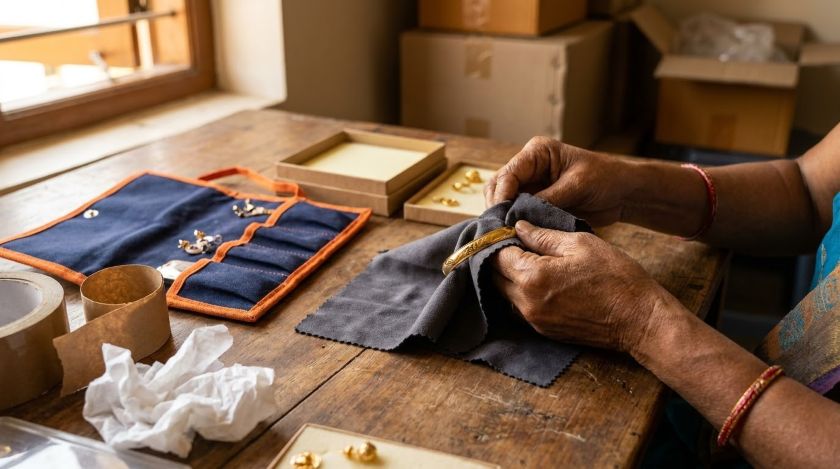
Jewelry and Ornaments
1Clean and dry every piece before packing — moisture causes tarnishing during transit.
2Wrap each piece individually in anti-tarnish cloth or soft tissue — never bundle items together.
3Place wrapped pieces in a jewelry roll or divided jewelry case.
4Seal the case inside a foam-lined rigid box with tamper-evident tape.
5This box goes in your personal bag — not in the moving truck, under any circumstances.
Important Documents and Legal Papers
1Sort into five stacks: identity, property, financial, medical, educational.
2Place originals in a waterproof hard-shell document case — not a standard folder.
3Scan every document and upload to cloud storage before moving day.
4The document case rides in your car's back seat — never in the moving vehicle.
Electronics and Digital Devices
1Back up all data before packing — drives fail in transit more frequently than most people expect.
2Use original manufacturer boxes where available — they are shaped and cushioned for that exact device.
3Where original boxes are unavailable, use anti-static bubble wrap; standard bubble wrap generates static that can damage components.
4Remove batteries from all devices before packing.
5Label every cable and charger before unplugging — you will not remember which belongs to what.
Antiques, Artwork, and Fragile Collectibles
1Do not use newspaper directly on antiques — the acid in newsprint damages finishes and surfaces over time.
2Use acid-free tissue paper or glassine paper as the first wrap layer.
3Add bubble wrap on top, then place in a double-wall box with foam corner protectors.
4Fill every gap with packing peanuts — the item should not shift at all when the box is shaken.
5For large framed paintings, use purpose-built mirror or picture boxes — improvised wrapping is not adequate. See the full guide on packing and moving valuable paintings for canvas, frame, and glass handling specifics.
6For pieces valued above ₹1 lakh, consult a specialist art mover rather than a general packers & movers company.
Step 7 — Label Your Boxes the Smart Way (Not the Obvious Way)
Most people label boxes for unpacking convenience. For valuables, labels also carry a security function.
Labelling Rules
Color-code by category — fragile items, documents, and electronics each get a distinct color.
Number every box and cross-reference it with your inventory list.
Write FRAGILE – HANDLE WITH CARE on all sides, with upward arrows showing correct orientation.
For boxes holding small high-value items, use a decoy label: "Kitchen – Plates" or "Linen – Bathroom" works well.
Keep a private note of which box numbers have decoy labels so you retrieve the right boxes at the new location.
Never write "JEWELRY," "GOLD," or "VALUABLES" on any external surface — you are advertising the contents to anyone who walks past.
Step 8 — Moving Day: How to Transport Valuables Without Risk
The rule that cannot be bent: Small valuables travel in your vehicle. Not the truck.
Keep your personal carry bag — containing jewelry, documents, and electronics — with you at all times during the move. Don't set it down. Don't leave it in an unlocked car.
If items are in a bank locker, collect them the morning of moving day. Arrange to deposit them at your destination city's bank branch on arrival — don't leave them unsecured at home during the loading chaos.
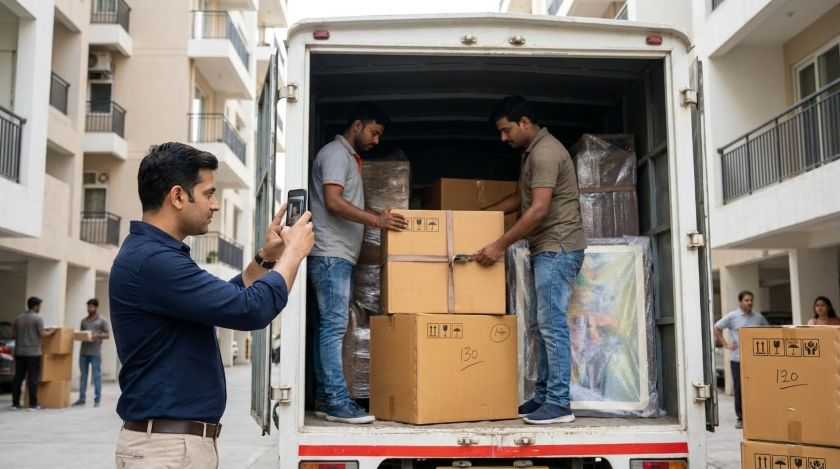
Before the moving truck leaves, supervise the loading of all large valuables personally and photograph the boxes stacked inside the truck with the doors open.
For interstate or long-distance shifts, ask your mover whether climate-controlled vehicles are available — relevant for electronics, documents, and temperature-sensitive antiques.
Moving during monsoon? Wrap boxes containing large valuables in plastic sheeting before they go into the truck.
After You Arrive — How to Verify and Settle Your Valuables
1Unpack valuables first — before any other boxes, before setting up furniture.
2Check every item against your inventory list — do this within 24 hours of arrival, not a week later when memory and context are gone.
3Photograph any damage immediately — before moving, cleaning, or using the item; compare against your pre-move photos.
4File any damage claim without delay — most moving companies require written notice within 24–48 hours of delivery; waiting even three days can void your claim entirely.
5Notify your insurer of the new address — home insurance policies often lapse or reduce coverage if the registered address is outdated.
6Secure the new home before unpacking high-value items — check locks, change entry codes, and set up any alarm systems before your valuables come out of their boxes.
When to Hire Specialist Movers Instead of a Standard Moving Company
Most professional packers & movers companies handle standard households competently. But for certain valuables, general moving experience is not sufficient.
Consider a specialist when:
You're moving a piano or large musical instrument — requires specific knowledge of structural disassembly and reassembly.
You have high-value artwork or sculptures — demands climate-controlled transport and trained handlers who understand how to carry fragile pieces.
You own antique furniture — at genuine risk of irreversible damage if disassembled or handled without specialist knowledge.
Your jewelry or bullion collection exceeds ₹5 lakh in total value — bonded or secured transport may be warranted.
You're doing a long-distance interstate move with multiple fragile or high-value items across several hundred kilometres.
Find Verified Movers
Frequently Asked Questions
Anything irreplaceable and portable travels with you — not in the truck. That means jewelry and gold, all original documents (Aadhaar, PAN, passport, property papers, educational certificates), prescription medications and medical records, and small electronics like laptops and external hard drives. The principle is simple: if losing it would cause serious financial, legal, or personal harm, it stays in your possession throughout the move.
Standard basic carrier liability compensates by weight — not by actual value. For jewelry or antiques this typically pays very little, often a fraction of what the item is worth. Full-value protection, offered by most reputable moving companies for an additional cost, covers actual repair or replacement value. For individual items worth ₹50,000 or more, a standalone transit policy from a general insurer is a safer option. Always clarify insurance terms before signing the moving contract.
Wrap each piece individually in anti-tarnish cloth or soft tissue — never bundle multiple pieces together. Place wrapped items in a jewelry roll or divided case. Seal the case inside a foam-lined rigid box with tamper-evident tape. Carry this box personally in a bag that stays with you throughout the move. Gold jewelry should never go into the moving truck.
No. Original documents — property papers, passports, Aadhaar, educational certificates, medical records — should always travel in your personal vehicle or bag. Scan every document and back it up to cloud storage before moving day as a secondary layer of protection. Originals in the moving truck are originals at risk.
Photograph the damage immediately — before moving or cleaning the item — and compare against your pre-move photos. Notify the moving company in writing within 24–48 hours of delivery (check your contract for the specific window). Then file a damage claim with your insurer, referencing your inventory list and photos as evidence. Do not wait — delays significantly weaken a claim that would otherwise be straightforward.
Small antiques with correct packing — acid-free tissue, bubble wrap, double-wall box — can travel safely with a reliable standard moving company. Large antiques, delicate sculptures, or pieces valued above ₹1 lakh are a different matter. Without handling knowledge specific to fragile or antique items, the risk of irreversible damage is real. For high-value pieces, the cost of a specialist mover is considerably less than the cost of regret.
Start the audit at least two weeks before moving day. Inventory documentation, photography, and document gathering can be completed in a few hours if you begin early. Insurance arrangements — particularly standalone transit policies — take several business days to process. Leaving all of this to moving week means making decisions under pressure, which is exactly when mistakes happen.
Move Smart, Move Safe
Moving valuables safely comes down to three things: knowing what you own, protecting each item the right way, and never leaving any of it to chance or assumption.
A house move is stressful enough. Getting your valuables sorted — documented, packed correctly, insured, and in the right hands — removes one of its biggest sources of anxiety. The steps in this guide take time. They are worth every minute of it.
If you're looking for verified, experienced packers and movers who treat your precious belongings with the care they deserve, AssureShift connects you with pre-screened moving companies across India — complete with real reviews, transparent pricing, and insurance options.
Get Free Moving Quotes