5 Major Risks of Packing and Moving by Yourself — And Why It Can Cost You More
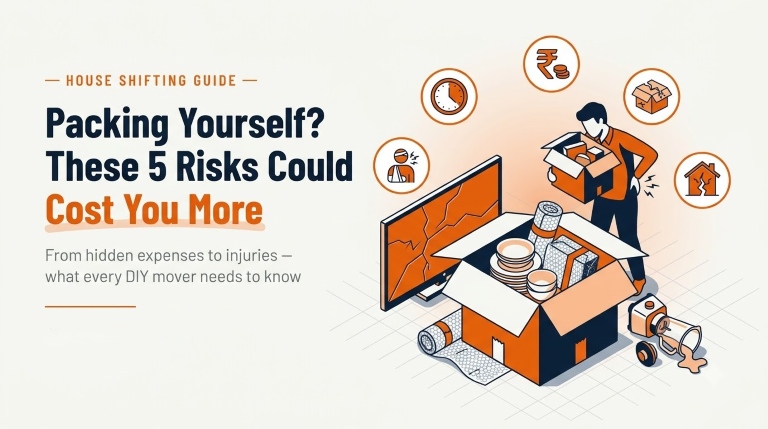
Self-moving looks like the smarter, cheaper choice — until you are actually doing it. Most people only realize the true cost of a DIY move once they are already in the middle of one.
Here are the 5 major risks of packing and moving by yourself — loss of time, higher hidden costs, damage to goods, damage to property, and personal injuries.
5 Major Risks of Packing and Moving by Yourself
Loss of Time
Self-moving looks like a weekend job. For most people, it takes far longer.
Packing a standard 2BHK flat takes a first-timer anywhere between 3 to 5 days. Professional packers complete the same job in 6 to 8 hours. That gap alone should give you pause — but it is only part of the time you will lose.
- Arranging a vehicle — finding a truck or tempo that is available, the right size, and within budget takes far more back-and-forth than expected
- Coordinating helpers — convincing friends or family, aligning their schedules, and waiting for them on the day of the move adds hours of uncertainty
- Packing without professional materials or technique — rewrapping poorly packed items, running back for more boxes, and figuring things out as you go all cost you time you had not budgeted
Beyond the physical hours, there is an opportunity cost that rarely gets counted — days off work, delayed settling into your new home, and the mental exhaustion of managing every detail of the move yourself.
Higher Cost — The Hidden Expenses of Self-Moving
The biggest reason people choose self-moving is to save money. But DIY moving is not always the cheaper option.
Most people calculate only the most obvious cost — a truck. What they do not factor in is everything around it. The hidden costs of self-moving include:
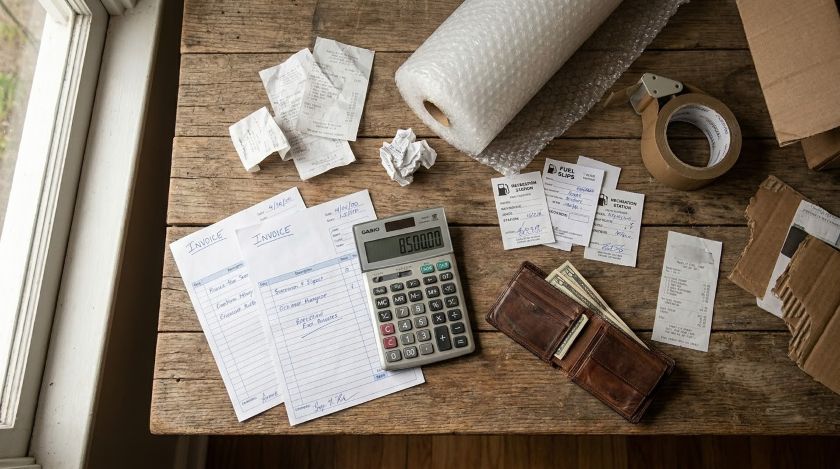
- Truck or tempo rental charges
- Fuel and toll expenses
- Packing materials — boxes, bubble wrap, tape, stretch film, corrugated sheets
- Moving equipment — dollies, straps, trolleys, if rented separately
- Food and conveyance for helpers
- Time off work and the income lost during that period
- Replacement cost if any goods are damaged during the move
- Medical expenses if someone gets injured
When you add these up honestly, the savings disappear. In most Indian cities, hiring professional packers and movers for a local 2BHK shift costs between ₹5,000 and ₹15,000. When hidden DIY costs are factored in — and especially if anything goes wrong — self-moving frequently exceeds this amount, without any of the protection or accountability that professionals provide.
Damage of Goods
Think about the items currently in your home — your television, glass tabletops, mirrors, crockery, wooden furniture. Now think about moving them without professional packing materials or technique.
Items most commonly damaged during self-moves include:
- Flat-screen TVs and monitors
- Glass tabletops and mirrors
- Crockery and glassware
- Wooden furniture corners and edges
- Washing machine drums — damaged by movement without stabilizing transit bolts
- Fragile décor items
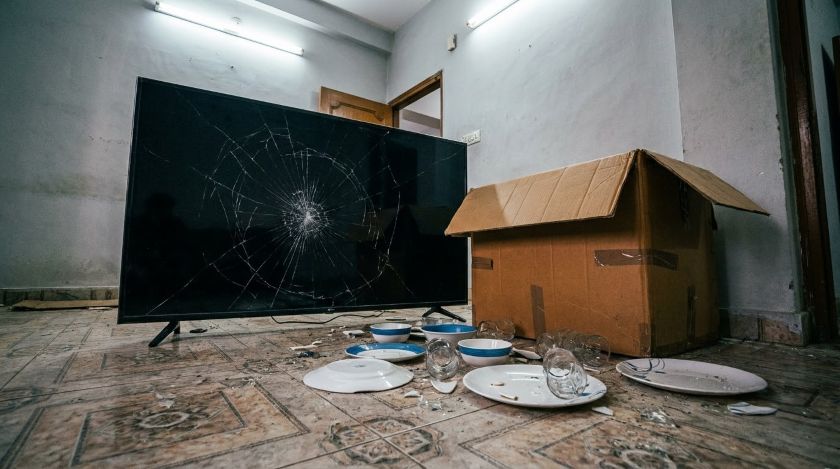
Beyond the physical handling, there is a financial risk that most people overlook entirely — the absence of insurance coverage. Professional movers carry transit insurance. If your ₹45,000 television is damaged during a self-move, you bear the full replacement cost with no recourse. With a licensed moving company, you have a documented claim process and compensation options in place from the start.
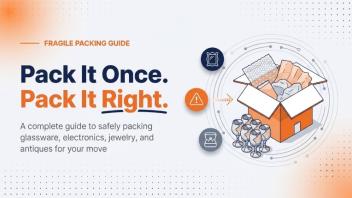
Professional packers also use item-specific materials — bubble wrap, corrugated sheets, custom-sized boxes, foam padding — matched to the fragility and weight of each item. These are not things you can fully replicate with general-purpose packing supplies bought last minute. If you are handling the move yourself, follow these tips for packing fragile and valuable items to reduce the risk of breakage in transit.
Damage of Property
Most people plan for broken items. Almost nobody plans for damage to the property itself — and it is one of the most expensive and surprising outcomes of a self-move.
Professional movers arrive with the right equipment and know exactly how to navigate staircases, tight corners, and narrow doorways without causing damage. When you move without that equipment and experience, the risks include:
- Scratched or damaged floors — hardwood floors, tiles, and polished surfaces are easily marked when heavy furniture is dragged or dropped, even briefly
- Chipped and dented walls — tight corners in hallways and rooms cause damage when large items are moved without protective coverings on both the item and the wall
- Damaged staircase steps or broken banisters — carrying heavy loads up and down stairs without proper technique puts significant pressure on staircase infrastructure
- Doorframe and lift damage — in apartment buildings, this is one of the most frequently occurring and most overlooked forms of property damage during self-moves
Even minor floor or wall damage can cost ₹3,000 to ₹10,000 to repair properly. For those living in rented apartments, any property damage comes directly out of the security deposit — sometimes exceeding it entirely. Taking a few precautions in advance can help — here are easy steps to prevent property damage while moving that apply whether you are shifting yourself or overseeing a professional crew.
Personal Injuries
Moving heavy furniture and appliances without training or proper equipment is one of the leading causes of injury during home moves.
The most common injuries that occur during self-moves are:
- Lower back strain — the most frequently reported injury, caused by improper lifting posture and technique when handling heavy items
- Foot and toe injuries — from items slipping or being dropped during carrying
- Wrist and shoulder sprains — from carrying awkward, unbalanced loads over distances
- Cuts and bruises — from sharp furniture edges or broken items during packing and unpacking
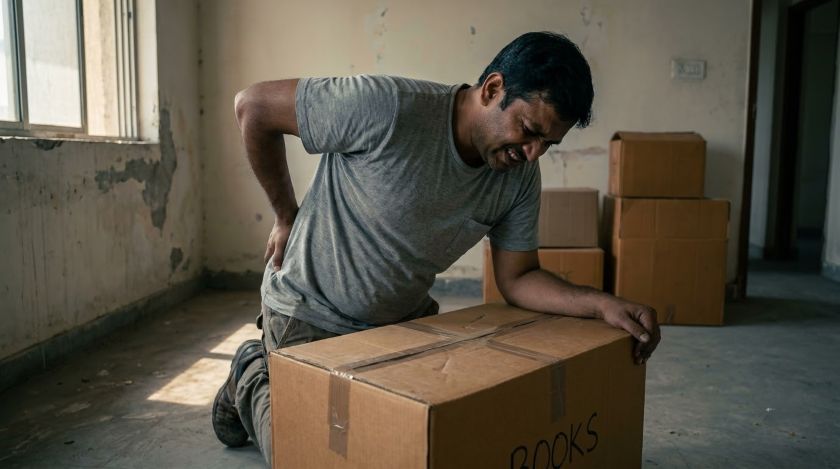
Professional movers are trained in safe lifting techniques and use the right equipment — trolleys, lifting straps, furniture dollies, and moving belts. This training and physical conditioning takes time to develop. It cannot be replaced by caution alone.
These injuries occur even when people take precautions — because safe moving requires training and proper equipment, not just careful intention.
A back injury from moving day can mean days of missed work and medical expenses that far exceed what a professional moving company would have charged for the entire job.
Frequently Asked Questions
Conclusion
Self-moving carries five real risks — loss of time, higher hidden costs, damage to goods, damage to property, and personal injuries. Each of these can turn a decision that was made to save money into one that ends up costing significantly more.
Wanting to save money on your move is completely reasonable. But when the hidden costs, physical risks, and potential for damage are honestly factored in, professional packers and movers frequently turn out to be the more economical and safer choice — not the expensive one. If you are still planning to move by yourself, start by understanding the most common self-moving mistakes and how to avoid them before moving day.
Before you decide, compare quotes from verified packers and movers in your city. Knowing the actual cost of professional help takes minutes — and gives you a clear, honest picture to weigh against the risks of doing it yourself.
Compare quotes from verified packers and movers before moving day.