How to Move to a New City with Kids: A Parent’s Guide for India

Moving to a new city with kids means more than packing boxes. Your child's school, friendships, daily routine and sense of home all change at once, and how you time and handle the move often decides how quickly they settle. This guide is for parents in India who are relocating with children and want a clear plan.
Here you'll find how to choose a moving date around the school year, how to tell your child, what to sort out for school admission and records, how to get through move day with kids, and how children of different ages settle into a new home. We also cover the signs that a child is struggling and who to talk to if that happens.
Best Time to Move with Children, and What to Do If Your Date Is Fixed
Many family moves are decided by a job transfer, so the date isn't always yours to choose. This section covers both situations: when you can pick the date, and when you can't.
If you can choose your date
The easiest time to move is between academic sessions, after annual exams and before the new year begins. Nobody has to catch up on half a year of lessons, and your child joins a class at the same time as everyone else.
Sessions begin at different times depending on the board and the state, so check the calendar of the schools you are considering. Many schools start taking admissions several months before the session opens, so even a "between sessions" move means contacting schools well ahead of your moving date.
If your date is fixed
Mid-session moves are common, and children do cope with them. The difficulty is practical: the new school may be ahead of or behind the old one in the syllabus, and seats in a class may already be full.
Whether a school takes mid-year students is its own policy, so ask directly. The schooling section below shows what to ask and which documents to have ready.
After a Difficult Period at Home
Class 10 and Class 12
Board-exam years need their own decision, even when your date is fixed. Many schools are reluctant to admit students into Class 10 or 12 mid-session, and boards ask for registration in Class 9 and 11, so speak to the school before you commit to dates. Families usually choose one of these:
- Move after the board exams. Simple, if your job or housing timeline allows it.
- Let your child finish the year in the old city, living with a relative or a close family friend. It protects the school year, but it means months apart at a stressful time, so talk it through with your child first.
- Move together and change schools. Possible, but ask the new school early about syllabus, subject options and how they handle students who join late.
Telling and Preparing Your Child
Tell your child early, and keep the first conversation short. You don't have to answer everything on day one.
When and how to tell them
Give school-age children and teenagers a few weeks' notice at the least. Toddlers and preschoolers have little sense of time, so a couple of weeks is enough. That's when to start the picture books and photos.
Pick a quiet moment when neither of you is rushing somewhere, and make sure both parents are saying the same thing.
Give the real reason in words your child can follow.
What You Say Depends on Age
- Toddlers and preschoolers: Short and concrete. "We're going to live in a new house. Your bed, your toys and your books are coming with us."
- Children aged 6 to 12: They want facts: which school, what the house looks like, what stays the same. They'll ask the same question several times. Answer it each time.
- Teenagers: Give them the honest reason and let them decide what they can, such as the colour of their room, the school shortlist, or how they'll stay in touch with friends. They may not agree with the move, and that's allowed.
When your child is upset, angry or silent
Some children cry, some shout, and some say "okay" and go quiet, which can be harder to read. Let the reaction happen, and resist the urge to list all the reasons the move is good.
If you're worried yourself, you don't have to hide it. Just don't pass the whole weight of it on to them.
Giving them a role and a goodbye
Children usually cope better when they have a say in something and a proper chance to say goodbye.
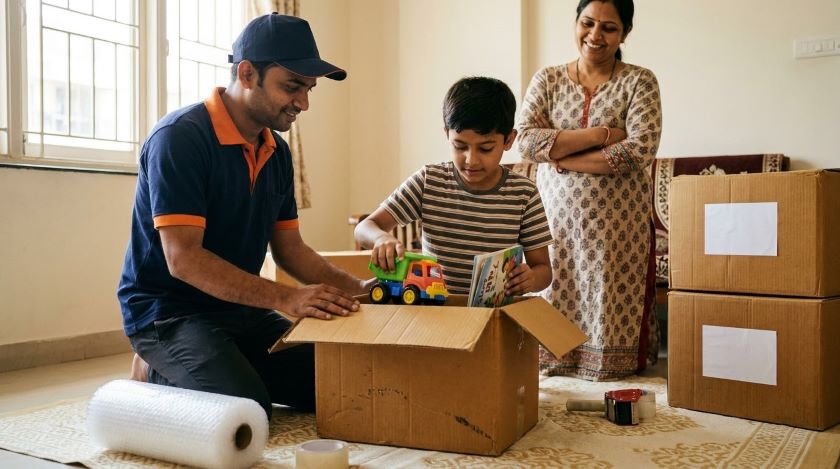
- Let them pack one box themselves and decide what travels with them in the car.
- Plan a small get-together with friends before you go, and swap phone numbers with the ones who matter.
- If you can't visit the new city beforehand, look up the school and the area online together. A short video walk-through of the new house helps younger children a lot.
Sort Out Schooling and Records Before You Move
Many schools accept students mid-year, but it depends on seat availability and the school's own policy. Contact more than one school, and start early.
Applying before you arrive
You don't always have to be in the new city to begin. Some schools take enquiries and forms online, some will speak to you over the phone, and some insist that a parent visits in person.
Call and ask. If a visit is required, a relative or friend in the new city can sometimes handle the formalities, but only if the school allows it.
Documents from the current school
Ask your child's present school for:
- Transfer Certificate (TC). Most schools ask for it before admission. Issue times differ, so apply well before your move date. Some schools want pending fees cleared first.
- Report cards. The last completed year's, plus the current term's marks if you are leaving mid-session.
- Birth certificate, passport-size photographs, and ID and address proof. Schools differ on what they accept as address proof, especially if you haven't yet signed a rent agreement in the new city.
Your own paperwork matters too. Our list of essential documents to organize before moving will help you gather the rest.
Questions to ask the new school
- Is there a seat in my child's class, and do you take students mid-session?
- Which board do you follow? If it's different from my child's current board, how do you handle the gap in subjects?
- Is there an interaction or test before admission?
- What are the fees, bus routes and uniform rules?
- If we are moving to another state, which languages are compulsory, and at what level does my child start?
If you haven't picked a school yet, our guide on how to find the best school in a new city covers that part.
Move Day with Kids
On move day, the aim is simple: the children stay safe, fed and out of the way. Our moving day checklist covers everything else that needs doing on the day.
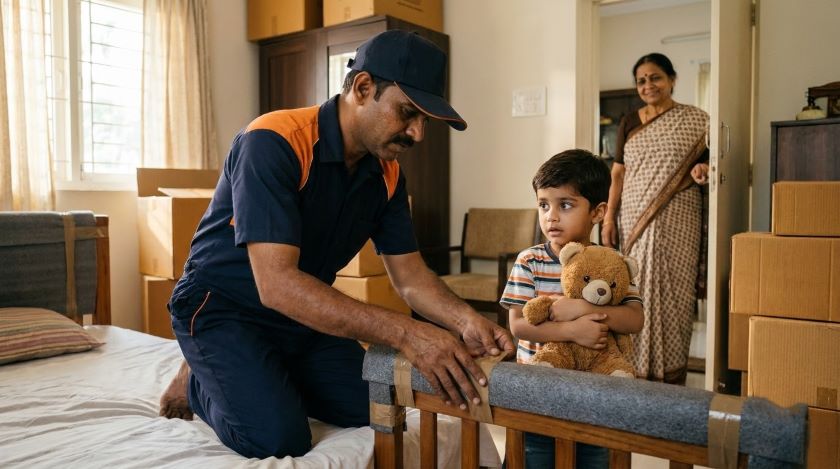
One adult for the children, and a safe space
If you can, ask a relative or friend to look after the children for the day. With you and your partner busy supervising the movers, someone whose only job is the kids makes a big difference.
Keep Them Clear of the Work
Choose one room to pack last and keep it calm, with a blanket, a few toys and some books.
A separate bag for each child
Keep one bag per child with you, not on the truck:
- Babies and toddlers: diapers, wipes, feeds or formula, a comfort toy, a spare set of clothes and any medicines.
- School-age children: snacks, water, a book or a game, a change of clothes and a comfort object.
- Teenagers: phone charger, headphones, snacks and water.
For the family-level list, see what to pack in your overnight bag.
The days before your goods arrive
In an inter-city move, the family often reaches the new home before the household goods do. The truck can take several days, depending on distance. Professional domestic relocation services can give you a realistic delivery window, so you can plan your children's bridge kit around it.
The journey
- By road: Stop every couple of hours so younger children can move around. Keep water and snacks within reach, and use a child seat or seat belt suited to your child's age.
- By train or flight: Carry food your child will eat, and keep medicines and a change of clothes in the bag you keep with you.
The First Few Days in the New Home
Once your belongings arrive, set up your child's space before anything else. A familiar bed and meals and bedtime at the usual hours do more for a child than a fully unpacked house.
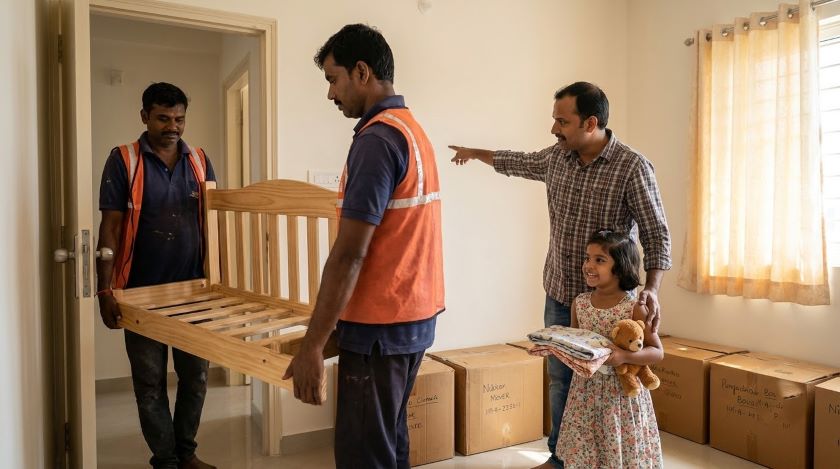
Their space and routines first
Put up your child's bed, bedding and a few favourite things before you touch the kitchen boxes. Older children can often arrange their own room, or choose a poster wall or a paint colour. Having a say makes the space feel like theirs.
Bring back the old timetable as quickly as you can: wake-up, meals, play, bedtime.
Quick Safety Check
Getting to know the neighbourhood
Go for a walk together in the first few days. Find the building's play area, the nearest park, a local shop, and the route to school. Let your child lead where possible.
Introduce yourselves to neighbours, but don't push your child into friendships. They come in their own time.
How Children Settle In, by Age
Every child is different, but there are patterns by age that help you know what to expect.
| Age | What you may see | What helps |
|---|---|---|
| 0–5 years | Clinginess, broken sleep, changes in appetite, setbacks in toilet training | Same routine, familiar objects, extra cuddles, patience |
| 6–12 years | Worry about the new school and making friends, irritability, not wanting to go to school | Visit the school before the first day, meet the class teacher, arrange a play date early, join one activity |
| 13–18 years | Withdrawing, anger, long hours on the phone, missing old friends | Space and control over their own time, realistic expectations at school for the first term, help staying in touch with old friends |
Calls and messages with old friends are healthy for teenagers and don't mean they aren't settling. Many also settle faster once they find one thing they care about, like a sports club, a band or a class.
Children Who Depend Heavily on Routine
If that describes your child:
- Visit the new home and school more than once before the move, if you can.
- Ask the school what support it offers.
- Keep daily routines as close to the old ones as possible.
Is Your Child Struggling? What's Normal and When to Get Help
Many children seem off for a few weeks after a move and then come around. If the sadness or irritability is still heavy after a month or two, it's worth talking to someone. This is a rough guide, not a deadline.
What's normal, and what isn't
It's normal for a child to be quieter or clingier than usual, to snap more, or to keep saying they miss the old city. Pay closer attention if you notice:
- Sadness or withdrawal that isn't lifting after several weeks
- Refusing to go to school day after day
- Big changes in sleep or appetite
- No interest in things they used to love
- Frequent headaches or stomach aches with no clear cause
Who to approach
The class teacher or school counsellor is usually the best first person, because they see how your child behaves at school. Your family paediatrician can check for anything physical and refer you to a child psychologist if needed.
If Your Child Talks About Hurting Themselves
Frequently Asked Questions
Conclusion
A few decisions matter more than the rest when you move to a new city with kids: fixing the date with the school year in mind, telling your child early, sorting the school paperwork before you leave, and getting their bed and routine back first once you arrive. Keep an eye on how your child is doing for the first couple of months, and if something doesn't feel right, ask for help sooner rather than later.