How to Prepare Household Items for Warehouse Storage: Step-by-Step Guide
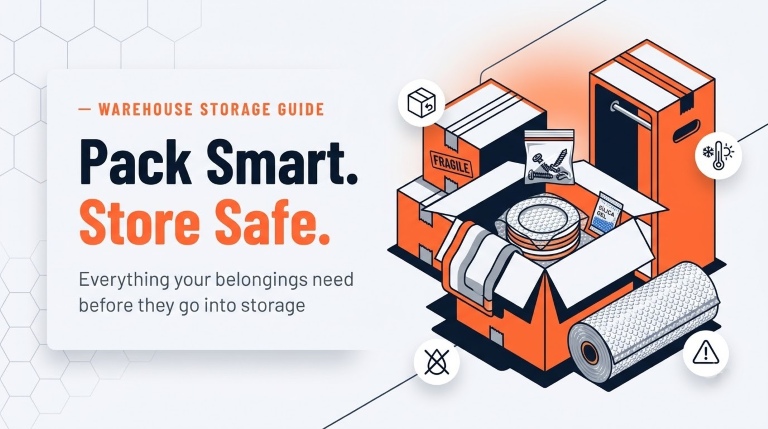
Preparing household items for warehouse storage requires more than putting them into boxes. Items need to be cleaned, dried, packed, and protected properly to prevent moisture, mould, pests, scratches, and damage during storage.
This guide explains how to prepare household items for warehouse storage, including sorting, cleaning, furniture disassembly, packing materials, category-wise packing, labelling, moisture protection, prohibited items, and the final pre-storage checklist.
1 Sort Your Belongings Before You Pack Anything
Packing before sorting wastes time, money, and storage space.
Before a single box is folded, go through your home and divide everything into three categories:
| Category | What Goes Here |
|---|---|
| Store in Warehouse | Furniture, appliances, seasonal items, collectibles, excess inventory |
| Keep at Home | Daily-use items, original documents, medicines, chargers |
| Discard or Donate | Broken items, expired goods, duplicates, old packaging |
2 Create an Inventory List of Everything Going to Storage
An inventory list is your single most important document throughout the storage period.
Why it matters:
- You know exactly what is in storage at all times
- It is essential if you need to make an insurance claim
- It helps you retrieve a specific item without digging through the entire unit
Format to follow:
| Box No. | Item Name | Category | Condition | Est. Value |
|---|---|---|---|---|
| 01 | 4-seater sofa | Furniture | Good | ₹18,000 |
| 02 | Samsung 43" TV | Electronics | Good | ₹32,000 |
| 03 | Winter quilts (x4) | Textiles | Good | ₹4,000 |
Two additional steps that most people skip:
- Photograph high-value items before packing — condition record for claims
- Note serial numbers for all electronics — essential for insurance and recovery
3 Clean and Dry Every Item Before Storing
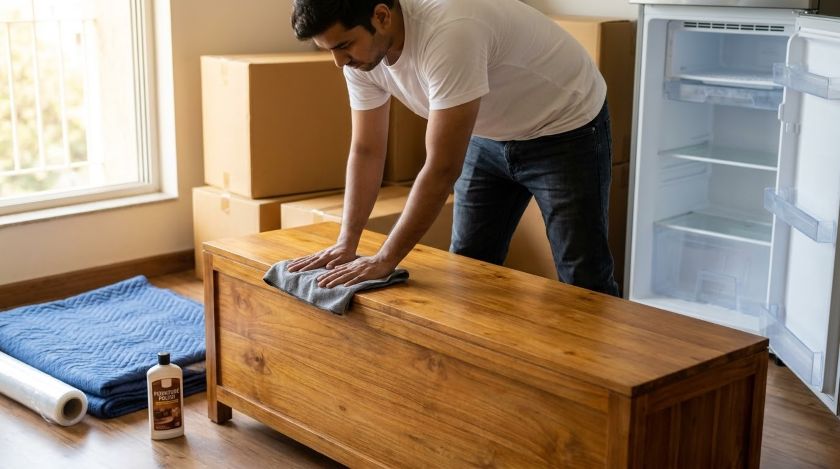
Item-by-item cleaning guide:
Furniture
- Wipe all surfaces with a dry cloth
- Remove crumbs and debris from cushions and crevices
- Polish wooden surfaces before wrapping
Refrigerators & Washing Machines
- Defrost the refrigerator at least 48 hours before storage
- Dry the washing machine drum completely
- Leave no water standing anywhere
Mattresses
- Vacuum both sides thoroughly
- Use a mattress protector cover before storing
Clothing & Textiles
- Wash all garments and dry completely before folding
- Do not store clothes that have been worn but not washed
Kitchenware
- Wash every piece and dry completely
- Zero moisture residue — even a slightly damp vessel creates mold
4 Disassemble Large Furniture Before Packing
Storing a bed frame assembled takes 3× the space it needs to. More importantly, assembled furniture is far more likely to be scratched, dented, or structurally damaged during loading and stacking.
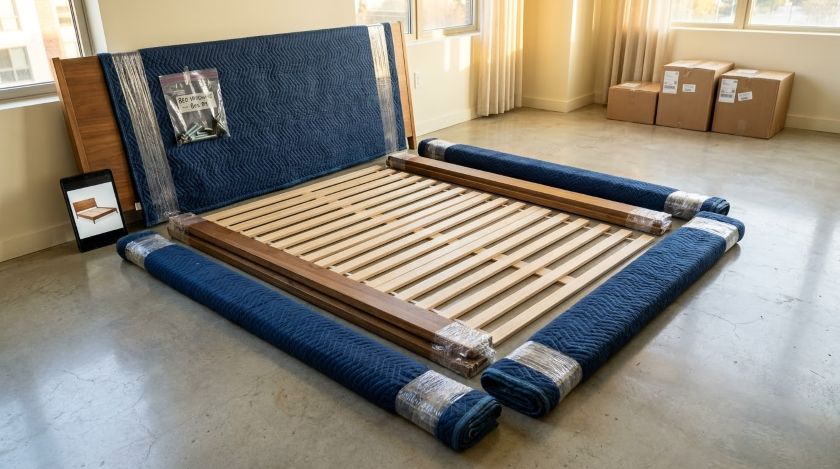
Item-by-item disassembly guide:
| Item | What to Disassemble |
|---|---|
| Beds | Headboard, footboard, side rails, slats |
| Wardrobes | Shelves, mirror panels, doors (if detachable) |
| Dining Table | Legs removed, tabletop wrapped separately |
| Sofas | Detachable legs removed, cushions stored separately |
Not sure where to start? This detailed walkthrough on how to disassemble furniture correctly covers every common piece room by room.
- Photograph each item before disassembly — your reassembly reference
- Store all screws, bolts, and small parts in a labelled zip-lock bag and tape it directly to the item it belongs to
5 Gather the Right Packing Materials
Using the wrong materials is as damaging as not packing at all. Newspaper ink stains. Thin plastic traps moisture. Sealed plastic bags turn clothes into mildew factories. Before you buy anything, read about the full range of types of packing materials for storage so you choose correctly the first time.
What to use and why:
| Material | Best For |
|---|---|
| Sturdy cardboard boxes | General household items |
| Double-walled boxes | Heavy items — books, tools, appliances |
| Bubble wrap | Fragile items — glassware, ceramics, frames |
| Stretch/shrink wrap | Furniture surfaces and appliances |
| Moving blankets | Wood furniture — prevents scratches |
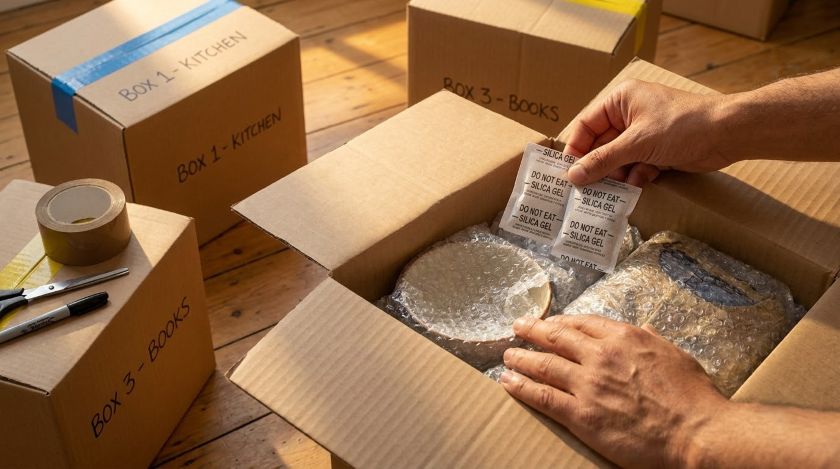
| Silica gel packets | Inside boxes — absorbs moisture |
| Zip-lock bags | Screws, cables, small parts |
| Mattress/sofa covers | Large upholstered items |
| Wardrobe boxes | Hanging garments |
What NOT to use:
| Material | Why to Avoid |
|---|---|
| Newspaper | Ink transfers and permanently stains items |
| Thin plastic directly on wood | Traps moisture, causes warping and mold |
| Sealed plastic bags for clothes | Creates humidity — leads to mildew |
6 Pack Each Type of Household Item Correctly
Generic packing works for a short move — it does not work for weeks or months of warehouse storage.
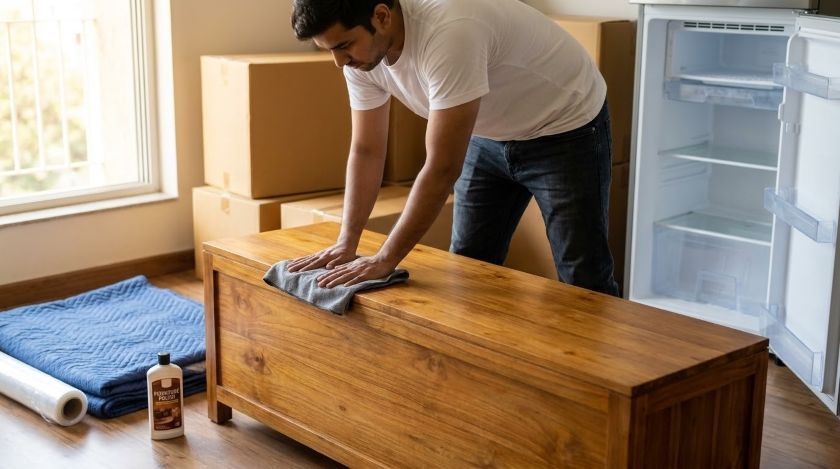
Furniture
- Wrap all wood surfaces in moving blankets, not plastic
- Apply furniture polish to wooden pieces before wrapping — prevents drying and cracking
- Elevate all furniture off the floor using wooden pallets or boards — never place directly on concrete
- Use breathable fabric covers for sofas and chairs — not plastic
- Never stack heavy boxes on top of upholstered furniture
Electronics and Appliances
- Use original packaging wherever available — it is engineered for that item
- Remove all batteries before storage — leaking batteries cause irreversible damage
- Wrap in anti-static bubble wrap — regular plastic builds static charge
- Label all cables and store them in separate labelled bags
- For refrigerators and washing machines: leave the door slightly ajar — prevents internal odour and mold buildup
Clothing and Textiles
- Use wardrobe boxes for hanging garments — maintains shape, prevents creases
- For folded clothes: vacuum storage bags save space and protect from moisture and pests
- Add cedar balls inside clothing boxes — natural insect deterrent, no chemical odour
- Never store clothes in sealed plastic bags for long-term storage
Kitchenware and Utensils
- Wrap each piece individually before boxing — even if stacking
- Store plates vertically (like vinyl records) — significantly reduces breakage risk
- Wrap glasses individually in bubble wrap and fill the hollow with crumpled paper
- Layer pots and pans with a cloth or paper between each piece
Artwork, Mirrors, and Fragile Items
- Wrap in acid-free paper first, then bubble wrap — regular paper can cause yellowing
- Store mirrors and framed artwork vertically only — never flat
- Mark FRAGILE and THIS SIDE UP on all four sides of the box
- Use corner protectors on all framed pieces
- Do not stack anything on top of a fragile item box
7 Label Every Box Clearly and Consistently
Warehouse storage is not like stacking boxes at home. Boxes can be stacked five or six high — the top is invisible. If your label is only on the top, it is useless.
What every box label must include:
- Box Number → Matches your inventory list (e.g., Box 07)
- Contents → Brief description (e.g., Kitchen – Plates & Bowls)
- Room → Where it came from (e.g., Master Bedroom)
- Fragile → If applicable — mark on all four sides
- Weight → Heavy / Medium / Light
- Label the sides, not just the top — sides are the only visible face when stacked
- Use colour-coded tape by room — Kitchen (yellow), Bedroom (blue), Living Room (red) — instant visual sorting
- Write the box number large and bold — small writing is unreadable from a distance in a warehouse
8 Protect Items from Moisture, Heat, and Pests
Your packing protects items from physical damage. This step protects them from environmental damage — which is often far more destructive and completely invisible until it is too late.
Moisture Protection
- Place silica gel packets inside every sealed box
- Never store items directly on the floor — use wooden pallets or boards to keep boxes elevated
- For wood, electronics, leather, artwork, and antiques — choose a climate-controlled storage unit
- Never wrap wooden surfaces directly in plastic — use moving blankets or breathable fabric instead
Heat Protection
- Electronics, candles, and vinyl can warp or melt in extreme heat
- Ask the facility about ventilation and temperature range for your unit
- Avoid placing temperature-sensitive items near the unit's walls or ceiling
Pest Protection
- No food of any kind inside storage boxes — even sealed packets attract rodents
- Place naphthalene balls inside clothing and textile boxes
- Confirm the storage facility has active, documented pest control
- Avoid using cardboard boxes that already show moisture damage — pests nest in them
9 Know Which Items Cannot Go Into Warehouse Storage
Every warehouse has restrictions. Sending a prohibited item can get your booking cancelled, void your insurance, or create a safety hazard for other stored goods.
10 Document and Declare Your Items Before Handover
This is the final step before you hand over your items. It is a confirmation check — not paperwork for its own sake.
Final pre-handover documentation:
- Inventory list completed with values and photos
- Serial numbers of all electronics noted
- Prohibited items confirmed as excluded
- All boxes packed, wrapped, and labelled
- Disassembled hardware stored and tagged
On insurance — one clear look:
Before choosing between facility or third-party coverage, read through storage insurance options in India to understand what each policy actually covers and what it excludes.
Keep a copy of both your inventory list and your storage agreement at home, separate from the items in storage.
Pre-Storage Checklist: Confirm Before Handing Over Your Items
Frequently Asked Questions
Conclusion
How your items come out of warehouse storage depends almost entirely on how they went in.
Sort before you pack. Clean before you wrap. Use the right materials for each item type. Label every box on the sides. Protect against moisture and pests. Know what cannot go in. And complete your documentation before handover.
Follow the checklist above, and you will not have to worry about what you will find when you open that storage unit months later.
Ready to store your household items? AssureShift connects you with verified, secure warehouse storage partners across India. Want to know what professional storage and relocation will cost before you commit? Calculate your packing and moving costs instantly with AssureShift's free calculator.