Most kitchen items that break during a move don't break in the truck — they break because they were packed wrong. Plates stacked flat. Glasses without wrapping. Open oil bottles sealed with nothing. By the time you open the boxes at your new home, the damage is already done.
This step-by-step guide on how to pack and move your kitchen covers everything — what to pack, how to pack it, what to carry yourself, and how to have a functional kitchen on Day 1 at your new home. Start packing your kitchen 5–7 days before your move date.
Quick Answer: How to Pack and Move Your Kitchen?
- Start packing 5–7 days before your move date
- Declutter and clean all items before packing
- Gather the right packing materials first
- Pack each item type using the correct method
- Load kitchen boxes last into the truck
- Unpack kitchen essentials first at your new home
1
Kitchen Packing Checklist: Everything You Need to Pack
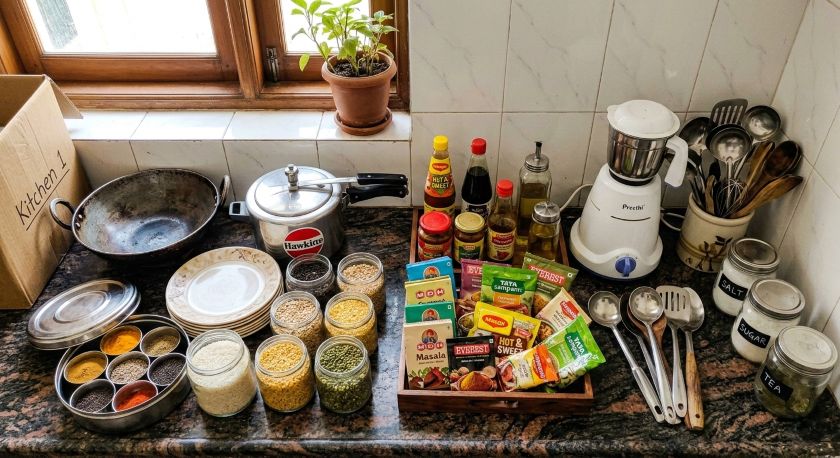
Do a full sweep of your kitchen first. Sort everything into these categories.
![All kitchen items — utensils, appliances, containers and pantry goods — laid out on a table being sorted before packing for house move]()
Utensils
- Steel — kadai, cooker, cooking pots, milk pan, plates, spoons, glasses
- Non-stick — tava, fry pan, saucepan, kadai
- Containers — large, medium, small, spice box, oil dispenser, salt & pepper shaker
- Ladle & spatula
Cutlery
Kitchen Appliances
- Fridge, microwave, water filter, kettle, induction stove, dishwasher
- Toaster, egg boiler, sandwich maker, blender, mixer grinder, electric cooker, exhaust fan
Gas Appliances
- LPG cylinder, gas pipe, gas regulator, gas stove
Movers do not transport LPG cylinders — carry this yourself.
Pantry Items
- Masala & spices, dal & pulses, atta, rice, oil
- Packed food — noodles, pasta, instant soup
- Bottled — ketchup, spreads, mayonnaise, juice, health drinks
Fresh Items
- Fruits & vegetables, dairy (milk, curd, butter, cheese), eggs
- Idli/dosa batter, ginger-garlic paste, tamarind paste
Fragile Items
- Glassware — containers, microwave cookware, bakeware
- Ceramicware — mugs, cups & saucers, dinner sets
Silverware
- Plates, glasses, spoons, cups
Other Kitchen Tools
- Whisk
- Grater
- Tong
- Measuring cups
- Chopper
- Mortar & pestle
2
Declutter and Clean Before You Pack
Do not pack what you do not need. Fewer items = fewer boxes = lower moving cost. If you want to understand how volume affects your bill, check out what goes into packing and moving charges in India.
Utensils
Discard broken, damaged, or duplicate pieces
Wash all vessels, wipe completely dry before packing
Appliances
Check working condition of every appliance
Sell unused but functional ones on OLX or Quikr before moving day
| Appliance |
How to Clean |
|---|
| Fridge | Remove food, defrost overnight, wipe inside, place lemon slices for odour |
| Microwave | Baking soda + lime juice + water spray, scrub, wipe dry |
| Exhaust Fan | Unplug, apply baking soda + toothpaste, scrub with lemon, wipe dry |
| Water Filter | Clean exterior, empty tank, unmount |
| Gas Stove | Scrub burners, stand, and drip tray with dish soap |
Call a professional to inspect gas pipe and regulator for leaks before moving.
Fresh Items
Stop buying groceries 1 week before move date
Cook to finish or give away — do not attempt to pack perishables
Fragile Items & Silverware
Inspect every piece for existing cracks
Discard anything already damaged — it will not survive transit
Silverware — toothpaste + soft sponge to restore shine
Dry completely before wrapping
3
Packing Supplies You Need
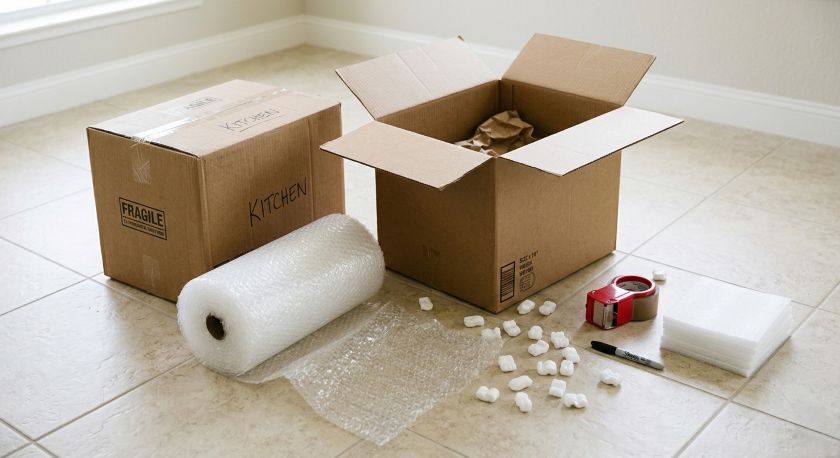
Arrange everything before packing day starts. Bubble wrap, foam sheets, packing peanuts, shredded paper — if you're unsure what to buy, check out our guide on types of packaging materials.
Time expectation: Packing a full kitchen typically takes 6–10 hours spread over 2–3 days. Start early — do not leave it for the night before.
![Bubble wrap rolls, carton boxes, duct tape and packing peanuts laid out on the floor ready for kitchen packing before a house move]()
Materials Needed
Bubble wrap, foam sheets, packing peanuts, shredded paper
Carton boxes — small for heavy items, large for light bulky items
Steel containers, carry bags, Ziploc bags, cotton cloth
Strong duct tape, labels, permanent marker
3
Three Rules That Apply to Every Single Box
1
Wrap every item before boxing2
Fill all empty spaces — a rattling box will arrive damaged3
Tape both sides, label immediately
Label format: Item type → Contents → Priority (Open First / Can Wait)
Pro tip: Keep every box under 15–18 kg. If you cannot lift it alone, split it into two.
4
How to Pack Each Kitchen Item Safely
Utensils
Pack small items — ladles, cups, glasses, shakers — inside a large steel container
Nest smaller pots inside larger ones to save box space
Wrap non-stick items individually in foam sheets — the coating scratches easily
Appliances
Use the original box wherever possible — it is the safest fit. For a broader look at how to safeguard electronics, see our guide to pack and move appliances safely.
No original box? Wrap in bubble wrap, use a same-size sturdy carton, fill gaps with packing peanuts
Mixer grinder — remove all jars from the motor unit, wrap each jar individually in bubble wrap, pack jars and motor separately
Short-distance move — standard wrapping is enough. Long-distance move — double-wrap everything, extra cushioning is essential.
Pro tip: Photograph the back of each appliance before packing — makes reconnecting cables at the new home effortless.
Gas Appliances
Disconnect gas pipe from the cylinder
Pack gas pipe + regulator together in one carry bag
Pack burners, drip tray, stove stand in a separate carry bag
Wrap gas stove body in bubble wrap
LPG cylinder — valve fully closed, regulator removed, carry upright in your own vehicle. Movers do not transport flammable items.
Pantry Items
Sealed containers — double-check all lids are tight before boxing
Half-open atta or rice — transfer to a Ziploc bag or tape the opening shut
Open oil bottles — tape the cap, wrap in a plastic bag, pack upright
Open masala packets — transfer to a small container with a tight lid
Fragile Items
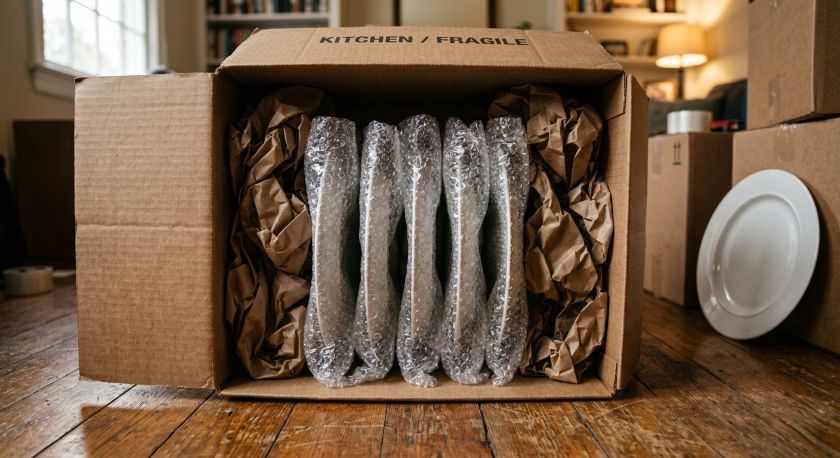
![Dinner plates each wrapped in bubble wrap and packed vertically standing on edge inside a moving carton box to prevent cracking]()
Wrap every single piece individually — no exceptions. For more detailed guidance, read our tips for packing fragile items before you begin.
Pack plates vertically, standing on edge like records — never lying flat
Wrap glasses with bubble wrap inside the cup and around the outside
Heavier pieces at the bottom, lighter on top
Fill every gap before sealing
Mark FRAGILE and THIS WAY UP on all four sides.
Silverware
Wrap each piece in cotton cloth — prevents oxidation in transit
Label this box with a personal code name only you know — never write "silverware" on the outside.
Cutlery & Other Kitchen Tools
Cutlery — bundle in a Ziploc bag or cotton cloth, pack inside a larger kitchen carton
Whisk, grater, tong — pack with cutlery
Chopper — blades inside, lid closed, seal with tape
Mortar & pestle — heavy, pack alone in a small sturdy carton
Common Kitchen Packing Mistakes to Avoid
Plates packed flat — crack under pressure. Always pack vertically.
Fridge switched on immediately — wait 4–5 hours minimum after delivery.
Wet utensils packed — causes rust and mould in transit. Dry everything first.
Boxes overfilled — collapse in transit. Follow the 15–18 kg rule.
Open liquid containers unsealed — one leak ruins the entire box.
5
How to Load Kitchen Boxes in the Moving Truck
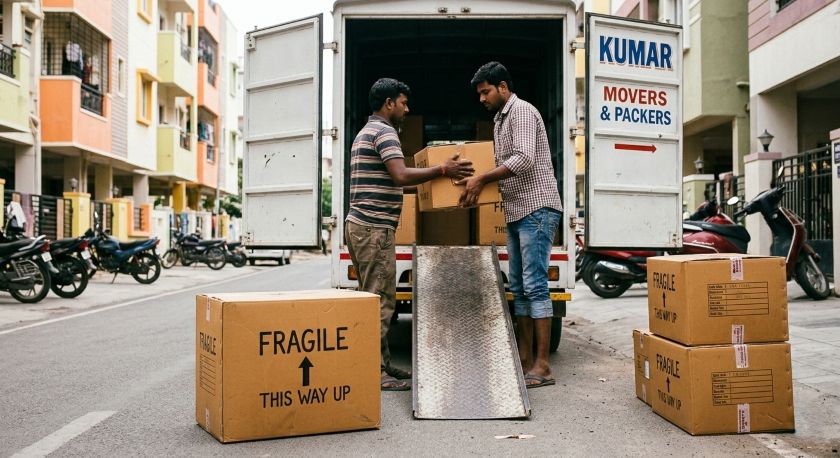
![Labelled kitchen carton boxes with fragile markings being carefully loaded into a moving truck by packers and movers]()
Load kitchen last — it comes out first at the new home
Heavy boxes on the floor — never stack heavy on light
Fragile boxes loaded last — after all other goods are in
Secure boxes against truck walls — prevents shifting in transit
Carry yourself: LPG cylinder + silverware — movers will not take these
Pro tip: Keep fragile kitchen boxes on top of all other kitchen boxes and mark them clearly — so movers do not stack heavy items over them during loading or transit.
6
How to Unpack and Set Up Your Kitchen
Pack This Before You Leave — Open It First When You Arrive
Before moving day, set aside one box labelled OPEN FIRST:
One plate, glass, pot, knife, basic cutlery
Dish soap, sponge, hand towel
Pro tip: This box travels in your car. It lets you cook and eat on Day 1 without unpacking everything.
Unpack in This Order
1
Open First box
Instant kitchen function from day one
2
Utensils & cutlery
Rinse all vessels before use
3
Pantry items
Arrange on shelves
4
Fragile items
Open box upright, unwrap one piece at a time, wipe before placing
5
Appliances
See placement below
Appliance Placement
On the platform
- Microwave
- Mixer grinder
- Induction stove
- Electric cooker
- Kettle
Inside cabinets
- Sandwich maker
- Blender
- Egg boiler
- Toaster
Call a professional to remount water filter and exhaust fan.
Fridge Rule — Do Not Skip
Do NOT switch on the fridge immediately after delivery. Wait 4–5 hours for the refrigerant to settle. Switching on early can permanently damage the compressor.
Gas & Professional Installations
Call a professional for:
Gas pipe & regulator connection + leak test
Water filter remounting
Exhaust fan reinstallation
Frequently Asked Questions
Start 5–7 days before move date. Pack rarely used items first — bakeware, extra utensils, silverware. Leave daily-use items for the last 24 hours.
Pack it last among all rooms. Unpack it first at your new home.
A standard Indian kitchen needs 8–15 boxes — 3–4 for utensils, 2–3 for pantry, 2–3 for appliances, 1–2 for fragile items. Larger kitchens may need up to 20.
Packing a full kitchen takes 6–10 hours spread over 2–3 days depending on kitchen size and number of items.
Close the valve fully. Remove the regulator. Keep upright. Carry in your own vehicle — movers do not transport flammable items.
LPG cylinder, silverware and valuables, open liquid containers, all fresh and perishable food.
Wrap each plate individually in bubble wrap. Pack vertically — on edge, never flat. Fill all box gaps before sealing.
You can pack most items yourself using this guide. For long-distance moves or large kitchens with many fragile items, professional packers significantly reduce breakage risk and save time.
Basic functional setup takes 1–2 hours. Full organisation of a standard Indian kitchen takes 1–2 days.
A well-packed kitchen makes your entire move smoother — pack last, unpack first, label everything, and follow the item-specific method for each category. Even if you hire professional help, the groundwork — sorting, cleaning, and deciding what comes with you — is always yours to do first.
In India, it is considered auspicious to cook something sweet first in your new kitchen — a small tradition that fills your new home with warmth from day one.
Planning your move?
AssureShift helps you compare verified house shifting services in your city — real reviews, transparent pricing, and save up to 30% on your move. Get free quotes today.
Verified packers and movers only
Real reviews, transparent pricing
Save up to 30% on your move
Share Requirements