Moving in the Rain: 8 Helpful Tips for a Secure and Dry Move
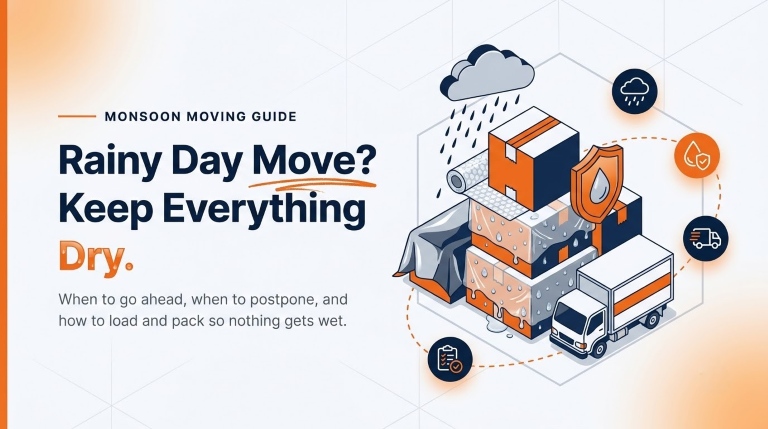
Can you go ahead with moving in the rain? Yes, in light to moderate rain if the truck is closed or covered. Reschedule if the rain is heavy, roads are waterlogged or there is an orange or red weather alert.
This guide gives you 8 practical tips for moving house in the rain and for house shifting in the rainy season anywhere in India. You will learn when to reschedule, what to ask your packers and movers in monsoon, how to pack and load so nothing gets wet, how to receive your goods at the new home, and what to do if something does get soaked.
Tip 1: Check the Forecast and Decide Whether to Move or Reschedule
Look at the rain you actually have, not just the word “rain” on your weather app.
| What you see | Decision |
|---|---|
| Light rain or drizzle: surfaces are damp, but you can stand outside for a few minutes without getting soaked | Go. Keep towels and extra plastic sheets handy. |
| Steady rain: continuous, with puddles forming | Go with precautions. Use a closed or fully covered truck and keep the load under cover until it is carried out. Postpone if you can. |
| Heavy rain: water running along the road, poor visibility | Reschedule if possible. If you can't, follow the plan below. |
| Official warning or waterlogging: an orange or red IMD alert, or water on the approach road or parking area | Reschedule. Roads and entrances may be unsafe, and the truck could get stuck. |
Check the forecast a few days ahead, the evening before and on the morning itself. Use the hourly view, because a rainy day often has dry spells you can build around. If your lane or society gate floods easily, or your building has no covered entrance, treat steady rain as heavy.
The southwest monsoon broadly runs from June to September, but parts of Tamil Nadu get their heavier rain from the northeast monsoon later in the year. Check your own city on the India Meteorological Department website instead of assuming the rainy season means July and August.
If you can't postpone:
- Schedule loading for the driest or lightest stretch in the hourly forecast.
- Allow extra time. Loading is slower in rain, and waterlogged roads can delay the drive.
- Tell your mover in advance if heavy rain is forecast, so they can bring extra covers and adjust timings.
- Keep a rain kit ready: spare tarpaulin (tirpal) or plastic sheets, old towels, packing tape, extra polythene bags and non-slip mats.
Tip 2: Insist on a Closed Truck and a Fully Covered Load
Ask for a closed-body truck. Use an open truck only if a full tarpaulin covers the load and is tied down at every corner.
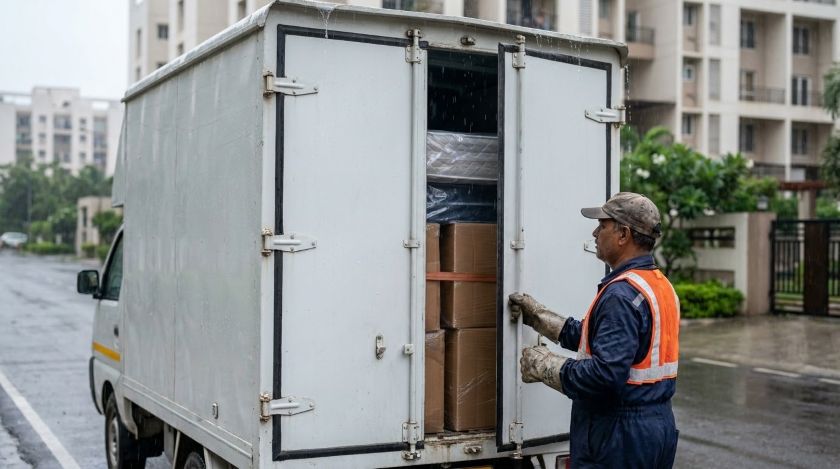
- If you can, check the truck before moving day. Close the doors and look inside for daylight through gaps in the roof or door seals. A gap that lets light in will let water in.
- On a long-distance move, ask where the truck will be parked overnight and whether the cover is rechecked at stops. Goods can spend a night or more on the road.
Tip 3: Ask Your Packers and Movers These 5 Monsoon Questions
Put these questions to your packers and movers in monsoon before you confirm the booking. If you are moving yourself in a hired vehicle, ask the vehicle owner the same things.
- Can I reschedule if heavy rain is forecast? How much notice do you need, and is there a charge? “We'll see” is not an answer.
- Does moving in rain change the price? Ask now, so there is no surprise on the day.
- Are stretch film, polythene and tarpaulin included in the quote? Also ask whether the crew uses non-slip footwear and gloves.
- What happens if the truck is held up by waterlogging? Ask how and when you will be updated.
- Is transit insurance active before loading, and does it cover water damage? Ask what is excluded and how to claim.
Our transit insurance guide explains cover in more detail.
Moving during monsoon?
Tip 4: Pack With Waterproof Materials
- Cartons: use double-wall cartons and seal the bottoms well.
- Heavy items: pack kitchenware and tools in plastic crates.
- Wrapping: use stretch film on sealed cartons and thick polythene on mattresses and sofas.
- Humidity: add silica gel to electronics and document boxes if you can get it.
- Timing: pack in a dry room, and never seal anything that is still damp.
- Before loading: keep boxes off the floor, on a plastic sheet or a plank, and never leave them on bare wet ground, even briefly.
Tip 5: Protect Furniture and Electronics While Moving in the Rain
| Item | What to do |
|---|---|
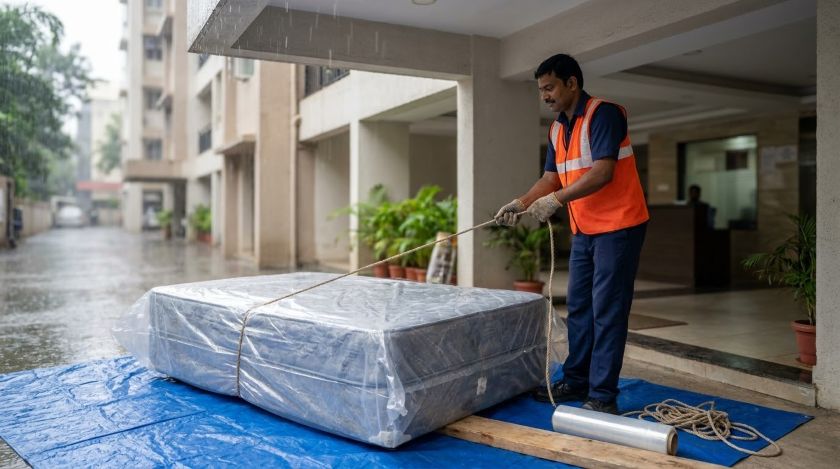
| Mattresses and sofas | Wrap in thick polythene and tie it down. Cloth covers alone aren't enough, because they soak through quickly and take days to dry. |
| Wooden furniture (beds, almirahs, dining tables) | Wipe dry first, then pad it and cover it with a loose plastic sheet. Tight plastic over damp wood traps moisture and causes swelling and mould. |
| TV, laptop, router, chargers | Make sure the device is dry before wrapping. Use the original box if you have it, put it in a plastic bag and keep it upright. Let it settle in a dry room before switching it on, to avoid condensation damage. |
| Fridge, washing machine, RO purifier | Drain and dry fully before wrapping, because trapped water leads to mould and odour. Secure doors and loose parts, then cover with polythene. |
| Books and documents | Pack books in small boxes lined with plastic. Carry documents and valuables yourself in a waterproof folder or pouch. See our guide to moving valuables safely. |
| Clothes, linens and footwear | Pack only dry items, in plastic bags or suitcases, to prevent mildew. Leave a little breathing room for leather and shoes, and don't seal them tight. |
Tip 6: Set Up the Route and Load the Truck Smartly
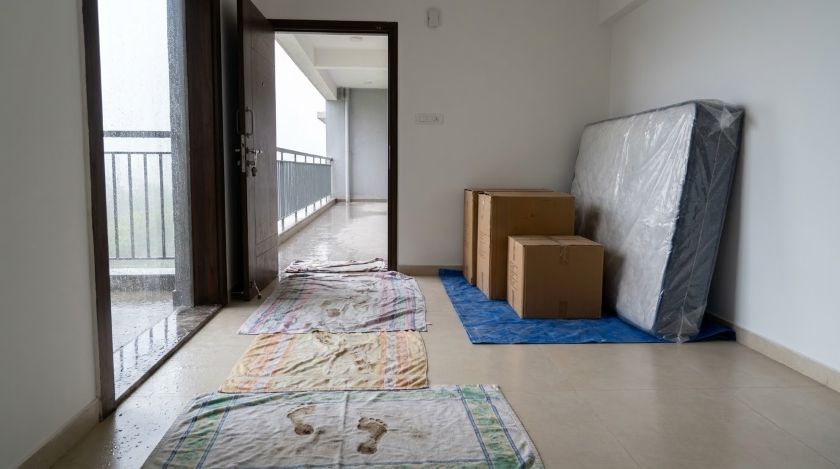
Tell the society office and security guard a day before. Check the permitted moving hours, lift booking and where the truck can park, because many societies have fixed rules. Park as close to the entrance as they allow. Put non-slip mats or old carpet on the outdoor route and towels just inside the door, and replace them when they are soaked.
Don't leave packed items sitting out waiting for the truck. Stage them under cover, such as in a lobby or a covered porch, and carry them out in short runs. Skip umbrellas, since they are hard to hold while carrying a box.
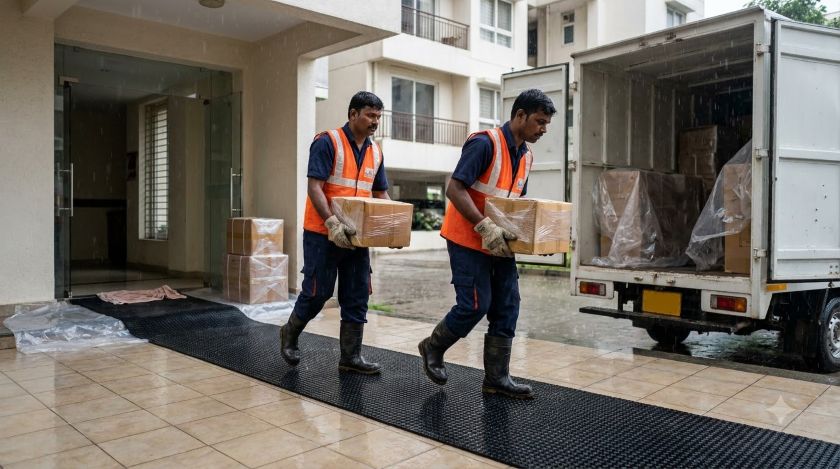
Load in this order:
- Heavy items and plastic crates at the base, so the load stays stable.
- Cartons on a plastic sheet, not directly on the truck floor, where water can pool.
- Padded electronics above floor level, away from the doors.
- Mattresses and sofas fully wrapped, standing against a side wall and away from the doors.
- A full tarpaulin over the load, tied down at every corner. Recheck it at the first stop.
Tip 7: Prepare the New Home Before the Truck Arrives
Send someone ahead of the truck to open up and set up the entrance. Lay towels or old sheets inside the door, set a staging spot close to it so wet cartons don't travel through the house, and protect the lift and floors where the society allows. Unload sensitive items first, such as electronics, documents and mattresses, and bring in heavy furniture later.
Our home inspection checklist covers what else to look at.
Tip 8: Dry Everything Fast and Claim If Something Gets Wet
- Photograph the damage before you move or clean anything.
- Tell the movers and the insurer in writing, quickly. Check your policy for the claim window.
- Open wet or damp cartons the same day, and within 24 to 48 hours at the latest.
- Dry wood and textiles in the shade with good airflow. Direct sun or a heater can warp wood and damage fabric.
- Throw away soaked cardboard and keep damp items apart from dry ones.
| Item | What to do |
|---|---|
| Wooden furniture | Wipe dry and leave in a shaded, ventilated space. Keep away from heaters and direct sun. |
| Sofas and mattresses | Remove covers, stand on edge in a ventilated spot and dry fully before use. Damp foam can smell and grow mould. |
| Paper and books | Lay flat or fan the pages apart in a dry room. Don't use heat. |
| Electronics | Keep off and unplugged. Don't put them in rice, which doesn't reliably dry them. Have a technician check before use. |
| Clothes and linens | Wash and dry fully, or air in shade. Don't repack anything damp. |
To file a claim, gather these:
- Photos of the damage, and of the item's condition before the move
- The inventory list and the mover's receipt
- Your insurance details
- A written note of what was damaged and when you found it
FAQs
Conclusion
Moving in the rain is manageable with the right plan. Go ahead in light to moderate rain with a closed or fully covered truck, and reschedule if the rain is heavy, roads are waterlogged or an IMD warning is active. Ask your mover about their rain policy and insurance, pack with thick polythene and double-wall cartons, and photograph everything before it leaves.
Check your area's forecast today and ask your mover how they handle rain, including what happens if you need to reschedule.
Planning house shifting in the rainy season? Share your move details with AssureShift and get a quote from packers and movers who plan for the monsoon.