How to Adjust in a New City After Marriage: Practical Tips for Newlyweds in India

Moving to a new city after marriage is one of the biggest transitions a person can go through — and nobody really prepares you for it. You're adjusting to a new partner, a new home, a new neighbourhood, and sometimes even a new language, all at once. The excitement of starting fresh is real, but so is the quiet overwhelm that comes with it. If you've just relocated after your wedding and you're wondering when this unfamiliar place will start feeling like home — this guide is written for exactly where you are right now.
Find Your New Home Before the Wedding Rush
Most couples make the mistake of leaving this for after the wedding. Don't. The post-wedding period is emotionally full — the last thing you want is to be hunting for a flat while still running on honeymoon time zones and zero sleep.
Start your home search at least six to eight weeks before your moving date. That gives you enough time to visit options, negotiate rent, and sign a lease without panic.
When shortlisting localities, think beyond just rent:
- How far is it from both your workplaces?
- Is the neighbourhood walkable — grocery store, pharmacy, and auto stand within ten minutes?
- Does it feel safe at 8 pm on a Tuesday, not just on a Sunday afternoon?
- Is there metro or bus access for days one of you needs to travel independently?
Update These Documents Right After You Move
Changing your address after a marriage relocation is not just a postal formality — it's a legal requirement that affects your banking, voting rights, tax filings, and government records. Start by updating your address across all official records — the process is more involved than most people expect. Most people keep putting this off. Most people then face problems at the worst possible moments.
Pack Smart When Two Households Become One
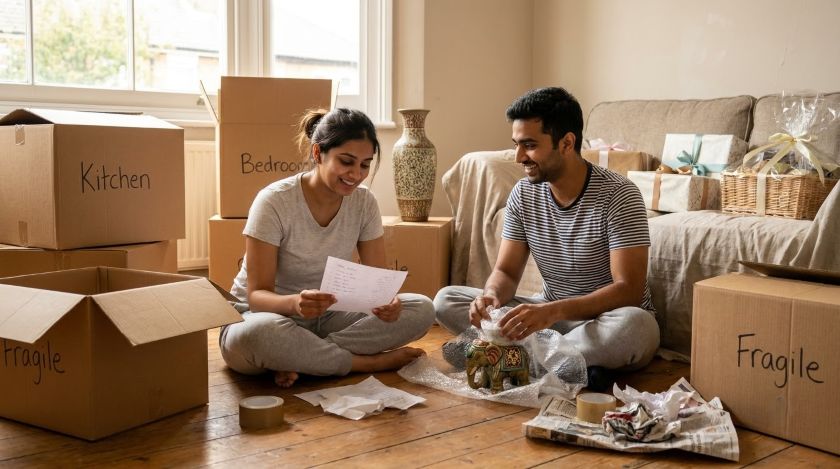
This is not a regular move. You're combining two people's kitchens, two wardrobes, two sets of opinions on what furniture to keep, and an entire haul of wedding gifts — some of which you genuinely love and some of which you genuinely do not know what to do with.
Before anyone touches a box, sit down together and make a joint list. What are you keeping? What's being donated? What's going to a sibling or parent who might actually use it? Getting aligned here saves a lot of friction later.
Fragile or oversized gifts should be shipped separately. For duplicate appliances — keep the better one, donate the other. Don't carry clutter into a fresh start.
You both have a say in how the new home looks and feels. Decide this together before unpacking, not after one person has already arranged everything their way.
Pack and label boxes by room. It sounds obvious. Most people don't do it. The difference in unpacking speed is significant.
If you're moving intercity — with furniture, appliances, and wedding gifts — hire professional packers and movers. Compare trusted home relocation services to take the logistics weight off your plate entirely.
Handle Homesickness Before It Handles You
Here's something no one says clearly enough: feeling homesick after relocating for marriage is completely normal — and it doesn't mean you made the wrong decision.
It just means you had a full life before this. Friends you could call at any hour. A kitchen that smelled like home. Parents in the next room. A city whose roads you knew without thinking. That doesn't disappear because you got married. It takes time to rebuild, and in the gap between leaving and rebuilding, homesickness lives.
The specific version that hits newly married couples tends to arrive on ordinary weekday mornings — when your spouse has left for work, the flat is quiet, and you don't know a single person in this city. It shows up during festivals celebrated at home without you. It hits when your family group chat is full of a family dinner you're missing.
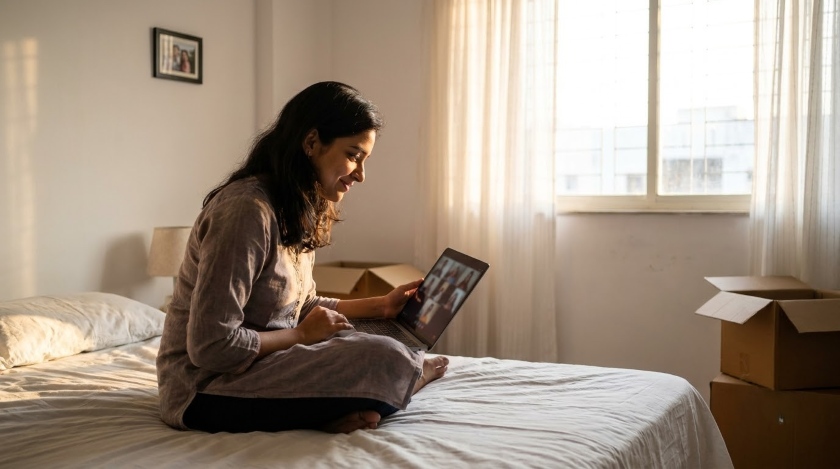
What actually helps:
Not a random check-in whenever you remember — a fixed day and time. It becomes something to look forward to instead of a guilt-driven last-minute call.
Having a date on the calendar changes everything. Homesickness is harder when there's no end point in sight.
Performing happiness when you're struggling is exhausting, and your spouse cannot support you through something they don't know is happening.
Most people who relocate after marriage feel genuinely settled between months four and six. That's not failure — that's just how adjustment actually works.
Build Your Daily Routine and Your Social Circle
Before you can build a social life in a new city, you need a routine. A routine gives your days structure when everything else still feels unfamiliar. It sounds unglamorous, but it's the foundation everything else is built on. For more practical ways to settle into a new city after relocation — from building daily habits to finding your social footing — this guide covers the specifics.
Start simple: a morning walk, a fixed work schedule, cooking together in the evenings, a weekend plan. Structure creates a sense of normalcy far faster than waiting to feel comfortable.
Introduce yourself to neighbours early — a simple hello at the lift goes further than you'd expect. Your spouse's colleagues are a natural entry point for couple friendships. Building society events are low-pressure ways to meet people you'll see regularly.
A gym class, a weekend market, a local interest group — the key is repeated contact. You don't make friends by meeting someone once. You make friends by running into the same person three times in a context you both chose.
Not fluency — ten to fifteen words and phrases. The willingness to try opens doors that staying in English simply doesn't. People respond differently to the effort. It's worth making.
Don't judge your social progress at the six-week mark. Two to three months is a more honest timeline for friendships to start forming in a new city.
Getting Back to Work in Your New City
If you relocated for your spouse's job transfer, your career matters just as much. Don't let the settling-in period quietly become a six-month gap that you then have to explain.
Recruiters in your new city filter by location. If your profile still says your old city, you're invisible to local opportunities.
Naukri, LinkedIn Jobs, Indeed all let you search by location. Use them.
Send personal messages to ten people you know — former colleagues, classmates, professional contacts. Tell them you've relocated and are looking. More opportunities come through people than through portals.
"I relocated after marriage and am now actively looking." That's a complete, professional answer. You don't need to over-explain it.
Frequently Asked Questions
You'll Find Your Footing — Give It Time
Adjusting to a new city after marriage isn't a two-week process. It's a gradual thing — one routine established, one neighbor's name learned, one favourite coffee place discovered, one honest conversation with your spouse about how you're both actually doing.
The couples who look back fondly on those early months aren't the ones who found it easy. They're the ones who found it hard together, and kept going anyway.
If the logistics of the move itself are adding to the overwhelm, let that part be easy. Find trusted, verified packers and movers on AssureShift — compare quotes, check reviews, and book a move that takes one major thing off your plate, so you can save your energy for everything that matters more.