Complete Bike Shifting Guide in India: Cost, Documents & Safe Transport to Another City

Most people don't think about bike shifting until their bike arrives late, scratched, or stuck in paperwork at the RTO. By the time something goes wrong, reversing the damage — financially or physically — is rarely straightforward. It's a problem that's almost always avoidable with the right preparation.
This complete bike shifting guide covers everything: the right documents, how to prepare your two-wheeler, which transport method fits your move, what drives bike transport charges, and how to protect yourself legally with re-registration and transit insurance — whether you're relocating within a state or shifting to another state entirely. For a quick overview of professional options, you can explore dedicated bike shifting services that handle the entire process.
Which Bike Transport Method is Right for You?
Not all bike transport methods offer the same safety, speed, or cost advantage. Here's how to choose the right one for your situation.
| Method | Best For | Approx. Cost | Safety Level |
|---|---|---|---|
| Open Carrier Truck | Budget moves, short distances | Low | Moderate |
| Enclosed/Covered Carrier | Expensive or new bikes | Moderate–High | High |
| Indian Railways (Train) | Long-distance, low budget | Lowest | Moderate |
| Self-Riding | Short distances only | Fuel cost only | Depends on road |
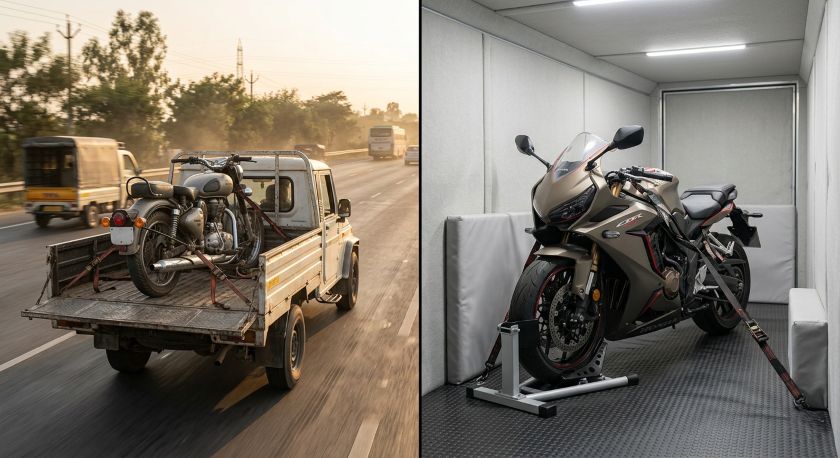
Open Carrier Truck Transport
The most common and affordable method. Works well for standard commuter bikes on short to mid-range routes.
Enclosed/Covered Carrier Transport
Your bike travels inside a closed container — the safest option for safely relocate sports bikes, cruisers, or freshly purchased bikes.
Bike Transport by Train in India
The most affordable long-distance option. Book at your city's railway parcel office.
Self-Riding
Only realistic under 300 km.
Documents Required for Bike Shifting
Do you need different documents depending on where you're moving? Yes — and the gap between same-state and interstate requirements is significant.
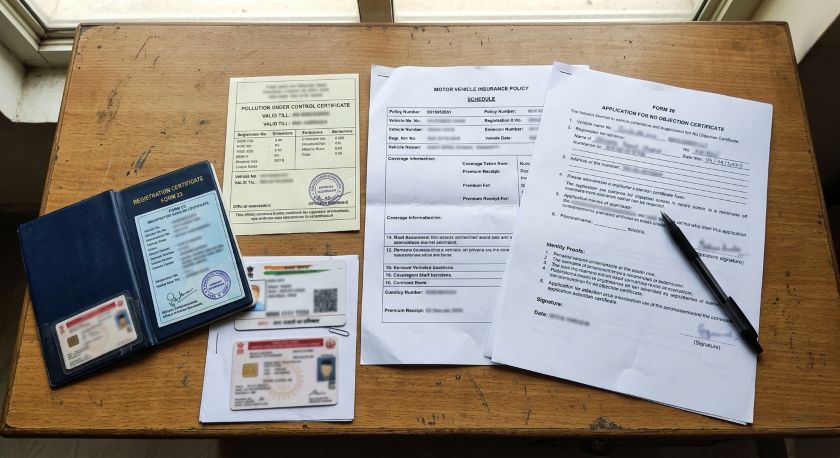
- RC (Registration Certificate) — original or attested copy
- Valid PUC Certificate (Pollution Under Control)
- Bike Insurance Policy — with active coverage dates
- Owner's ID Proof — Aadhaar, PAN, or Passport
- Delivery address proof at the destination
All of the above, plus:
- NOC from your current state's RTO — apply via parivahan.gov.in
- Form 27 and Form 28 — ownership transfer documentation
- Form 29 — notice of transfer, required in most states
- Road Tax Clearance Certificate from the current RTO
How to Prepare Your Bike for Transport (Step-by-Step)
Proper preparation prevents 90% of transport-related damage. Don't skip this.
Service Your Bike Before Transport
Get a basic service done 2–3 days before transport. Check brake fluid, engine oil, and chain lubrication. A well-maintained bike handles the mechanical stress of loading/unloading better.
Remove Loose Parts and Accessories
Detach or secure mirrors, rear carriers, phone mounts, decorative guards, and saddlebags. Anything that can rattle, snap, or get caught during loading should come off. Pack them separately and label them.
Set Tyre Pressure and Leave a Quarter Tank of Fuel
Inflate tyres to the recommended pressure — underinflated tyres can damage the rim during transport. Keep the fuel tank at no more than one-quarter full. A full tank adds weight and poses a hazard during loading.
Disconnect the Battery (Critical — Often Skipped)
Disconnect the negative terminal of the battery before handing over the bike. This prevents accidental electrical discharge during transit and protects the bike's electronics from vibration-related shorts. Reconnect at the destination before starting.
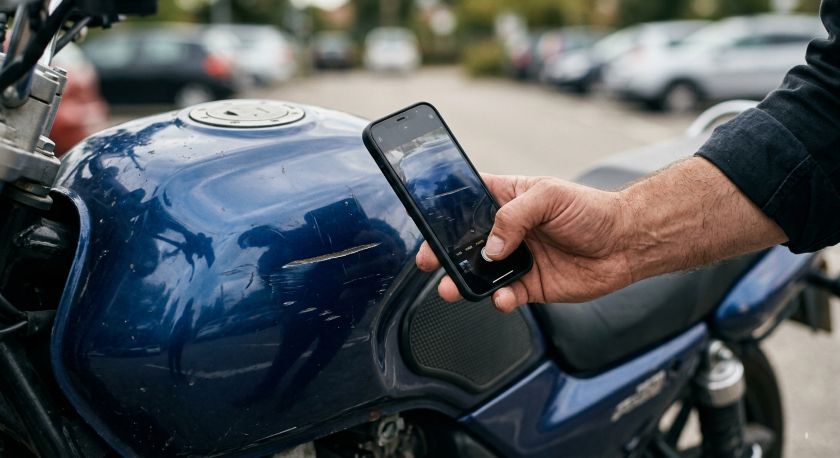
Clean the Bike and Do a Photo/Video Inspection
Wash and dry the bike before handover. Then take a full video walkthrough — front, back, both sides, close-ups of any existing scratches or dents. This is your legal proof if damage claims are needed later.
Give Written Instructions to the Movers
Write down the gear, bike model, key quirks (e.g., "kickstart only," "fuel cap stiff"), and your destination contact number. Hand it to the loading supervisor and keep a copy for yourself.
How to Choose a Reliable Bike Transport Company
People reading this section are usually close to booking — so here's what actually separates a trustworthy transporter from a risky one.
IBA-approved movers have undergone background verification. This matters for insurance claims and accountability.
Look for reviews that mention specific routes, timelines, and damage handling — not just "great service." Patterns matter more than individual ratings.
Any company that hesitates to give a written quote is a red flag. Get the pickup date, delivery window, and total cost in writing before you confirm.
A legitimate transport company will have a valid GST number. Ask for it — unregistered operators often have no accountability for damage or delays.
Bike Shifting Cost: Why Your Quote May Differ from Others
Bike shifting in India typically costs between ₹2,000 and ₹12,000 depending on distance and service type. But two people moving the same bike on the same route can still get very different prices — even two movers operating on the same route can quote differently based on truck availability that day, load urgency, or seasonal demand. Here's what actually drives the number.
The biggest variable. Within-city shifts (e.g., within Mumbai) cost ₹1,500–₹3,000. Intercity routes like Mumbai → Pune run ₹2,500–₹4,500. Long-distance interstate routes like Delhi → Bangalore can go from ₹5,000 to ₹12,000.
Standard commuter bikes (100–150cc) cost less to transport than cruisers or sports bikes (250cc+) due to size, weight, and packaging requirements.
Open carrier is cheaper. Enclosed carrier adds ₹500–₹2,000 to the base price but offers significantly better protection.
Wooden crating for premium bikes adds ₹1,000–₹2,500 but is worth it for bikes above ₹1.5 lakh in value.
Usually 1–2% of the declared bike value, added on top of the transport fee.
Rates spike in March–April (financial year end relocations) and October–November (festival + transfer season). Book 10–15 days in advance during these months.
Bike Transit Insurance: Do You Need It?
If your bike is scratched during loading, insurance ensures you're not stuck negotiating with the transporter on the roadside — because most won't compensate without documented coverage. Learn more about how bike transit insurance works specifically for two-wheelers and what it covers. Without it, even a valid damage claim becomes a conversation you're unlikely to win.
Transit insurance typically covers accidental damage, theft during transport, and fire. It does not cover pre-existing damage (which is why the photo/video inspection in Step 5 above is so important).
In India, some transporters include basic coverage in their quote, while many don't — always ask specifically. The cost is usually 1–2% of your bike's declared value. For a ₹1 lakh bike, that's ₹1,000–₹2,000 for peace of mind across the entire journey.
Re-registration of Your Bike After Shifting to Another State
If you're moving to a new state permanently (or plan to stay more than 12 months), re-registration is legally required under the Motor Vehicles Act.
Get an NOC from Your Current State's RTO
Apply via parivahan.gov.in or visit the RTO office in person. This confirms you have no pending dues or challans on the vehicle.
Visit the RTO in Your New State
Bring the NOC, original RC, insurance, PUC, identity proof, and address proof. Submit Form 27, 28, and 29 as applicable.
Pay Road Tax in the New State
Rates vary by state and engine capacity. Your RC book will be updated with the new address and state registration once processed.
How Long Does Bike Shifting Take? (Transit Timeline)
| Route Type | Estimated Delivery Time |
|---|---|
| Within the same city | 1–2 days |
| Intercity (within the same state) | 2–4 days |
| Short interstate (e.g., Mumbai → Pune, Delhi → Jaipur) | 3–5 days |
| Long interstate (e.g., Delhi → Bangalore, Chennai → Kolkata) | 7–10 days |
Frequently Asked Questions About Bike Shifting
Conclusion
A poorly planned bike shift usually costs more in damage, delays, and legal headaches than the transport fee itself. The fix is simple: get your documents ready early, prepare your bike properly before handover, and choose a verified transporter — not just the cheapest number you find.
Get your documents ready early — especially the NOC, which takes 7–10 working days.
Prepare your bike properly — service it, disconnect the battery, and do a photo inspection before handover.
Choose a verified transporter — IBA-approved, GST-registered, and with written quote in hand.
Ready to Shift Your Bike?
AssureShift works with IBA-approved, background-verified bike transporters across 500+ cities in India — from metros to Tier 2 and Tier 3 towns. Compare quotes, check real reviews, and book with a paper trail.