Vehicle Shifting Insurance for Car & Bike in India: Types, Costs & Claim Guide
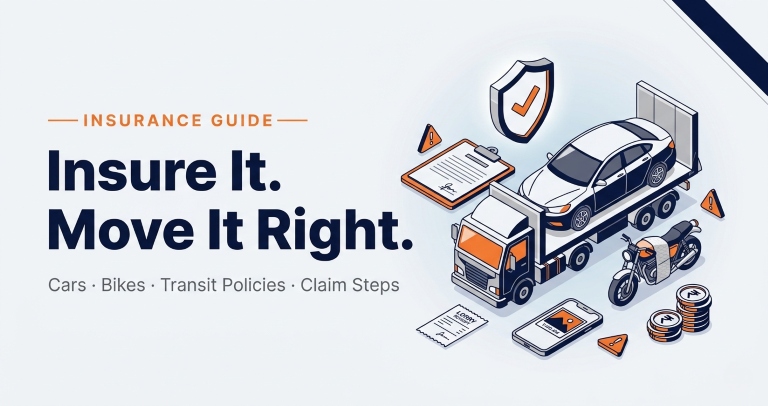
You've booked a mover and everything seems sorted — until someone asks, "Did you take insurance for the vehicle?" Most people assume their existing car or bike insurance covers shifting. It doesn't. Your motor insurance works while you're driving or parked, but the moment it goes on a car transportation carrier truck, that coverage stops. If there's an accident, a scratch during loading, or damage in transit, you're usually not covered — and the mover's carrier liability is capped far below your vehicle's actual value. This guide on vehicle shifting insurance covers what's protected, what it costs, and how to claim if something goes wrong.
Quick Answer
Your existing car or bike insurance does not cover damage during transport on a carrier truck. You need a separate vehicle shifting insurance policy. Premiums typically range from ₹800–₹2,500 for bikes and ₹1,500–₹6,000 for cars, depending on vehicle value and distance. Most IBA-approved movers offer basic carrier liability, but it is capped and rarely covers the full vehicle value.
Does Your Existing Car or Bike Insurance Cover Vehicle Shifting?
- Standard OD cover protects against accidents, fire, and theft while you or an authorised driver is operating the vehicle — not while a third-party transporter is hauling it.
- The transit gap is a specific exclusion in most motor policies. Unless your insurer has issued a written transit endorsement, you are not covered.
- Carrier liability (the mover's default responsibility) exists under IBA guidelines — but it is capped at ₹20,000–₹50,000. That does not replace a ₹10 lakh car.
The solution is either a standalone transit insurance policy or a transit endorsement from your existing insurer — obtained before the shift, in writing.
Data Source: IRDAI Motor Insurance Policy Wordings; Motor Vehicles Act 1988
Types of Vehicle Shifting Insurance in India — Car and Bike
There are three coverage structures available when shifting a vehicle in India. Understanding the difference determines how much protection you actually have.
| Coverage Type | Who Provides It | Premium (Car) | Premium (Bike) | Max Claim | Key Exclusion |
|---|---|---|---|---|---|
| Carrier Liability | IBA-approved mover (default) | No extra cost | No extra cost | ₹20K–₹50K cap | Only covers mover negligence |
| Declared Value Policy | Mover via insurer tie-up | ₹1,500–₹4,000 | ₹800–₹2,000 | Up to declared IDV | Pre-existing damage |
| Standalone Transit Insurance | IRDAI-registered insurer | ₹2,000–₹6,000 | ₹1,000–₹2,500 | Up to declared IDV | Act of God (standard policy) |
Data Source: IBA Guidelines on Approved Movers
Carrier Liability — Default Coverage from IBA-Approved Movers
IBA-approved movers carry a defined carrier liability as part of their certification. If damage happens due to the mover's direct negligence, they are responsible — up to the cap. It is a baseline, not comprehensive cover. For a ₹5 lakh car, a ₹50,000 liability cap leaves ₹4.5 lakh of exposure.
Declared Value Policy — Offered by the Transport Company
Most established movers have tie-ups with general insurance companies (Tata AIG, ICICI Lombard, Bajaj Allianz) and offer a declared value policy as an add-on at booking — this applies equally whether you are arranging bike transportation or a four-wheeler shift. You declare your vehicle's market value (IDV), pay the premium, and the policy covers you up to that declared amount. Read the exclusions before signing.
Standalone Transit Insurance — Purchased Directly from an Insurer
The most comprehensive option. You buy directly from an IRDAI-registered general insurer, independent of your mover. This gives you broader coverage (including all-risk add-ons for natural calamities), and you control the claim process — your mover is not the gatekeeper. Best suited for high-value cars and premium bikes.
Vehicle Shifting Insurance Cost in India — Car and Bike
Premium is calculated at 0.1%–0.5% of your vehicle's Insured Declared Value (IDV). Always declare the accurate IDV — undervaluing saves ₹200 on premium but can cost ₹2 lakh on a rejected claim.
Car (4-Wheeler) Transit Insurance — Premium Range
| Vehicle Type | IDV Range | Transit Insurance Premium | Distance Band | Coverage Type |
|---|---|---|---|---|
| Hatchback | ₹3L–₹6L | ₹2,000–₹3,500 | Up to 1,000 km | Declared Value |
| Sedan | ₹5L–₹10L | ₹2,500–₹4,000 | Up to 1,500 km | Declared Value |
| SUV / MUV | ₹8L–₹20L | ₹3,000–₹6,000 | Pan-India | Declared Value |
| Luxury Car | ₹20L+ | ₹5,000–₹12,000+ | Pan-India | All-Risk / Standalone |
Bike / Two-Wheeler Transit Insurance — Premium Range
| Vehicle Type | IDV Range | Transit Insurance Premium | Distance Band | Coverage Type |
|---|---|---|---|---|
| Standard Bike (100–150cc) | ₹40K–₹80K | ₹800–₹1,500 | Up to 1,000 km | Declared Value |
| Premium Bike (200–500cc) | ₹80K–₹2L | ₹1,500–₹2,500 | Pan-India | Declared Value |
| Superbike (500cc+) | ₹2L+ | ₹3,000–₹6,000+ | Pan-India | Agreed Value / Standalone |
| Scooter / Moped | ₹30K–₹60K | ₹700–₹1,200 | Up to 800 km | Declared Value |
AssureShift Data: Based on verified mover quotes collected across 15+ cities
Peak Season Alert
Vehicle shifting insurance premiums increase 15–25% during October–December and April–June — when carrier demand is highest. Buy and declare insurance at least 7 days before the move date to lock in the current rate.
What Vehicle Shifting Insurance Covers — and What It Doesn't
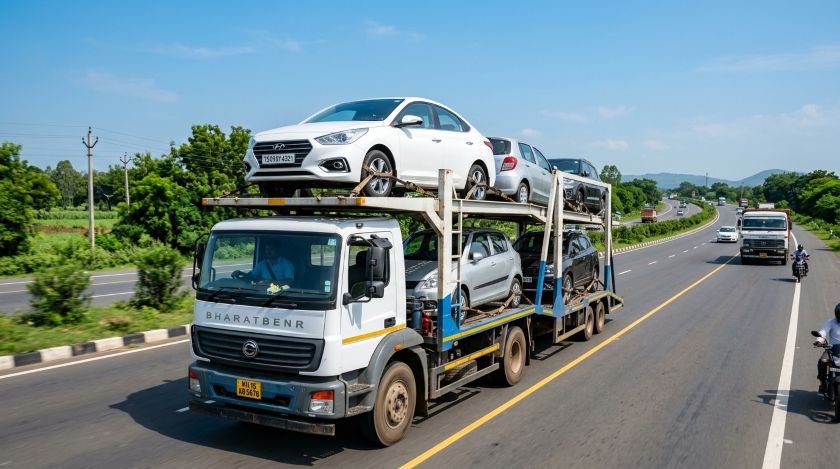
| Covered | Not Covered |
|---|---|
| Accidental damage during loading, transit, or unloading on a carrier truck | Pre-existing dents, scratches, or mechanical defects not documented before handover |
| Fire or explosion on the carrier vehicle during transit | Mechanical or electrical breakdown unrelated to a transit accident |
| Theft of the vehicle from the carrier while in transit (FIR required) | Damage from improper packing done by the owner (not the mover) |
| Total loss if the carrier truck overturns or is involved in a road accident | Act of God' events — flood, earthquake, landslide — are only covered under an all-risk endorsement. Understanding the difference between standard vs all-risk transit insurance before you book can save you from a rejected claim during monsoon season. |
| Damage during railway transit (if rail carrier is named in policy) | Items left inside the vehicle — laptops, bags, accessories |
Regulatory Reference: IRDAI Motor Insurance Exclusions; Consumer Protection Act 2019
Why Vehicle Shifting Insurance Claims Get Rejected — 5 Real Scenarios
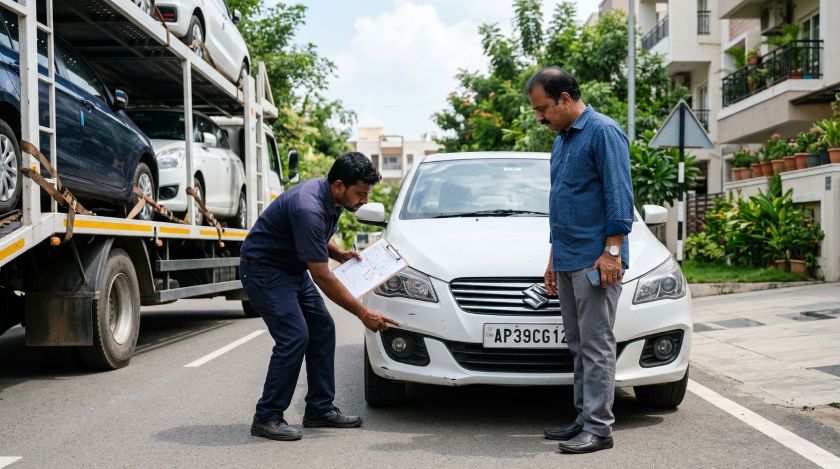
Most people know insurance exists. Very few know why it fails. These five scenarios are the most common reasons vehicle transit insurance claims are rejected in India — and each one is avoidable.
A sedan was shifted from Delhi to Hyderabad. Bumper damage was noted on delivery. The insurer rejected the claim — there was no countersigned inspection report from before loading. Without it, the owner had no way to prove the damage occurred during transit rather than before the vehicle was handed over.
A bike owner booked enclosed transport for a Mumbai-to-Pune shift. The mover used an open carrier without informing the owner. Minor paint damage occurred in transit. The insurer rejected the claim — the carrier type in the policy did not match the actual carrier used. The mismatch voided the coverage.
A car was shipped from Kolkata to Chennai during peak monsoon season. The carrier truck was submerged in floodwater en route. The standard declared value policy rejected the claim — flood is excluded under the Act of God clause. Only an all-risk endorsement with natural calamity cover would have paid out.
An owner booked a reputed mover for a Delhi-to-Bangalore shift. The mover subcontracted the vehicle leg to an unregistered local transporter. The vehicle was damaged in transit. The original insurance policy did not transfer to the subcontracted carrier — the claim was stuck in a grey zone for three months.
A bike was delivered at 9 PM. The owner signed the delivery receipt without inspecting closely in low light. A scratch on the fuel tank was noticed 30 minutes later. The insurer rejected the claim — a signed delivery receipt is treated as confirmation of damage-free delivery. No recourse was available after signing.
Regulatory Reference: IRDAI Grievance Redressal Framework; Consumer Protection Act 2019
How to File a Vehicle Shifting Insurance Claim — Step by Step
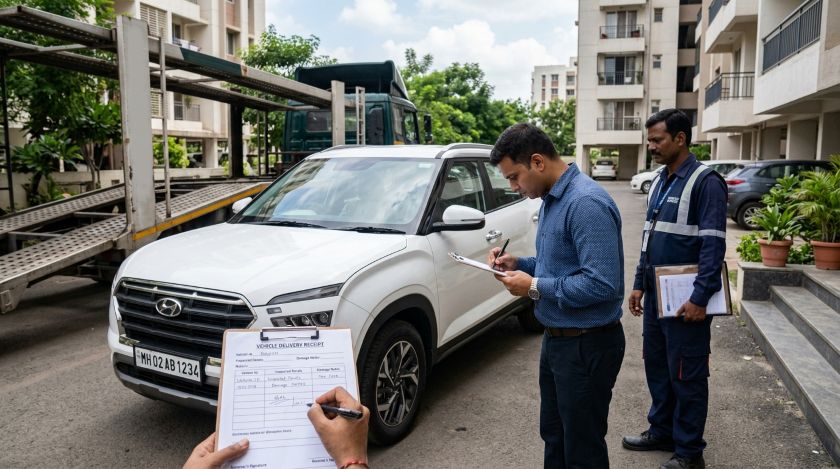
Examine the vehicle thoroughly in the carrier driver's presence — before the driver leaves. Note every new damage directly on the Proof of Delivery (POD) document. Once you sign the POD without noting damage, the claim is void.
Photograph all four sides of the vehicle, close-ups of every damaged area, and the odometer reading at the time of delivery. The smartphone timestamp is your evidence — do not edit, filter, or screenshot these images.
This is the document countersigned by you and the mover's representative before the vehicle was loaded at origin. It is the key document that proves damage occurred during transit — not before handover. Without it, the claim has no foundation.
The lorry receipt is the primary transport contract document. It is required for all claim filings. Do not discard it at delivery — treat it like the vehicle's RC until the claim is settled.
Contact the insurer or the mover's insurance desk within 24–48 hours of delivery. Some policies require same-day notification. Check your policy wording — delayed reporting is a frequently cited rejection trigger.
If the vehicle was stolen, involved in a major accident en route, or the carrier vehicle itself disappeared — file an FIR at the nearest police station immediately. FIR is mandatory for total loss and theft claims.
Send the complete set: policy copy, bilty receipt, pre-loading inspection report, POD with damage noted, timestamped photographs, FIR (if applicable), and a repair estimate from an authorised service centre.
The insurer will appoint a surveyor within 48–72 hours to physically verify the damage. Getting the vehicle repaired before the surveyor visits invalidates the claim in most policies.
Standard claim settlement: 7–15 days for straightforward damage claims. Disputes or total loss cases: 30–60 days. If the claim is unresolved beyond 30 days without explanation, file a complaint at the IRDAI Bima Bharosa portal.
Critical Warning
Do not sign the delivery receipt as "received in good condition" if you can see any damage — or if you have not fully inspected the vehicle yet. If the driver pressures you to sign before you are done, write "inspection pending" on the POD before signing. That notation preserves your right to claim.
Frequently Asked Questions
Conclusion
Vehicle shifting insurance is not complicated — but the gaps in it are expensive if you don't know where to look.
The policy type, the carrier type, and the paperwork at handover — these three determine whether your claim succeeds or fails. For those comparing verified movers for car or bike relocation, AssureShift provides IBA-approved transporter listings with transparent quote breakdowns that separately itemise transit insurance charges, without requiring upfront payment or personal commitment.
Compare Verified Movers with Insurance Breakdown
Get transparent quotes from IBA-approved transporters — transit insurance charges listed separately, no upfront payment required.