How to Move Houseplants Safely During House Shifting: A Complete Guide

Moving houseplants can be tricky because they need protection from heat, damage, sudden changes in light, and rough handling. Whether you're shifting across the city or moving to another state, a little preparation can make the journey much safer for your plants.
This guide explains how to prepare, pack, transport, and settle your houseplants after a move.
How to Prepare Your Plants Before Moving Day
The biggest mistake people make is treating plants like any other item — pack them the night before and move on. Plants need a preparation window of at least two to three weeks before moving day. Here's exactly what to do and when.
Three Weeks Before: Repot, Prune, and Audit
Repot into lightweight plastic containers. If your plants are in ceramic, terracotta, or clay pots, transfer them into shatterproof plastic containers two to three weeks before the move. Heavy pots are a back injury waiting to happen, and ceramic cracks under the bumps and vibrations of transit. Plastic is lighter, sturdier, and far less likely to cause a mess if it shifts.
Prune dead leaves and overgrown branches. Trimming your plants two to three weeks before the move serves two purposes: it makes them more compact and easier to pack, and it conserves the plant's energy for the journey ahead rather than spending it maintaining unnecessary growth. Remove any dead, yellowing, or broken foliage entirely.
Do a plant audit. Not every plant is worth the effort of moving. Before you spend time and resources packing something, ask three questions honestly: Is it healthy enough to survive transit? Is it a common variety you could replace cheaply at a nursery near your new home? Is the pot too large or heavy to move safely? If the answer to the first is no, or the other two are both yes — gift it to a neighbour, donate it, or sell it in a local plant swap group. Taking a struggling plant to a new home rarely ends well.
One Week Before: Health Check and Pest Control
Inspect every plant carefully for pests — look for spider mites (tiny webs on leaves), mealybugs (white cotton-like clusters), and fungus gnats (small flies hovering around the soil). Treat any infestations immediately with a suitable pesticide or neem oil solution.
Two to Three Days Before: Watering Rules
Water your plants two to three days before moving day — enough that the soil is moist, not soaking wet. Wet soil causes three problems during transit: it can spill if the pot tips, it adds significant weight to each pot, and waterlogged roots left in dark, sealed boxes are extremely vulnerable to rot.
How to Pack Plants for a Safe Move
Once your plants are prepared, the packing stage is where most damage actually happens — either from suffocation (sealed boxes with no airflow) or from poor support (pots tipping and soil spilling). Here's how to do it properly.
Choosing the Right Box
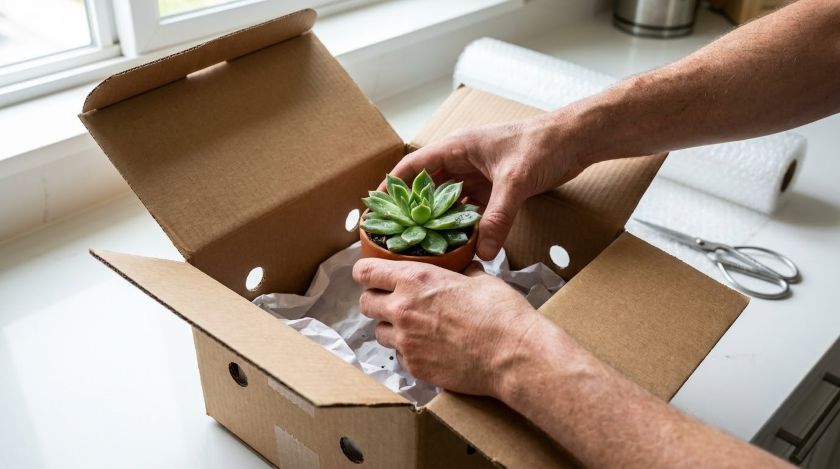
- The box must be tall enough for the plant to stand upright inside without bending or pressing the foliage against the top. Never lay a plant sideways — this disorients the root system and can break stems that have been growing in one direction for years.
- Before placing any plant in a box, line the bottom with a plastic garbage bag. This catches soil and water leaks and protects the cardboard from collapsing mid-move. Then, and this is critical, punch several ventilation holes in the sides of the box.
Packing by Plant Size and Type
Different plants need different approaches — the original advice of treating succulents and ferns the same way is one of the most common packing mistakes. Here's what actually works for each type:
Small plants: Place each in its own box, or group two to three together with packing paper or bubble wrap cushioning between pots. Keep the box top open or folded loosely — do not seal it shut.
Medium plants: Place in a box where at least the top flap can remain open or is cut to allow airflow. Secure the pot with crumpled packing paper around the base so it cannot tip.
Large and floor plants: These rarely fit in a box. Cover the soil surface with plastic wrap sealed with a rubber band to prevent spillage. Drape foliage loosely with an old breathable bedsheet or newspaper — never plastic wrap directly on leaves.
Succulents and cacti: Stop watering entirely one week before the move. Wrap the pot and plant in soft tissue paper, place in a box with biodegradable packing peanuts or crumpled paper as void fill. Dry-packing is the right method here.
Ferns, peace lilies, and moisture-loving tropicals: Place slightly damp sphagnum moss around the base of the pot before boxing to maintain humidity. Do not dry-pack these — they suffer in arid conditions very quickly.
For more detailed guidance on cushioning, securing, and protecting delicate items in transit, see our tips on packing fragile and valuable items.
Essential Steps Before Sealing Any Box
Place your moving inventory list next to you as you pack so every plant is accounted for. Then before you close each box:
- Seal the pot opening with plastic wrap and a rubber band so soil cannot spill even if the pot tips during loading.
- Write "FRAGILE — LIVE PLANTS — THIS SIDE UP" on all four sides of the box in large, clear letters.
- Never stack any other item on top of plant boxes.
- Photograph every plant before it goes into a box for a health baseline and insurance purposes.
How to Transport Houseplants During House Shifting
When it comes to several options for transportation, the right choice depends on the distance you're covering, the size of your collection, and the value of individual plants. Here's what each option actually involves.
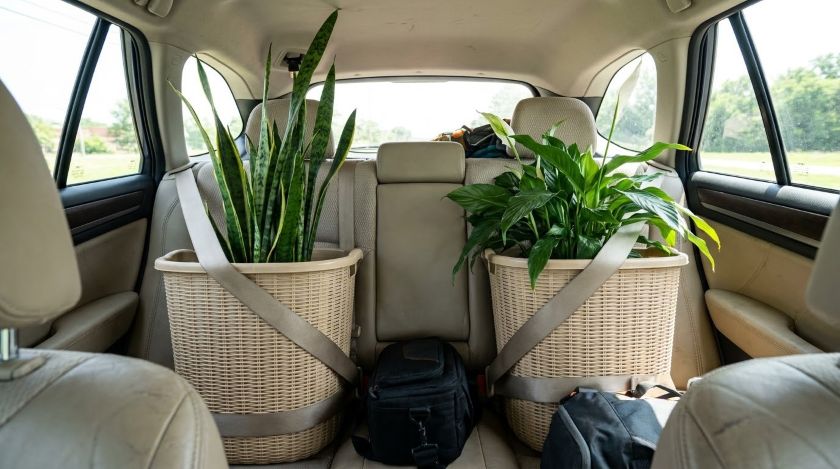
For any move within the same city or within a few hours' drive, your own car is the safest option. You control the temperature, you can monitor the plants directly, and there's no risk of them being buried under other items.
- For smaller plants: Place them on the back seat and secure them upright in laundry baskets, crates, or cardboard box dividers. Use seat belts looped around baskets to stop them sliding.
- For taller plants: Place them in the footwell of the back seat or in the boot, always upright, with moving blankets or towels wrapped around the pot for cushioning. If using the boot, ensure it is not sealed — crack the boot or keep a rear window slightly open for airflow.
For multi-day drives: At every stop, take plants out briefly, expose them to natural light and fresh air, and check if any need a light misting. Lay an old plastic sheet or bedsheet across your back seat and boot floor before loading, since soil spills are almost inevitable.
Most professional packers and movers in India are equipped to transport houseplants, particularly for local and intercity shifts. For long-distance or interstate moves, their capacity varies — always ask specifically about plant handling before booking.
Questions to ask any mover before confirming for plant shifting:
- Do you have experience handling live plants during transit?
- Is your vehicle ventilated or air-conditioned?
- Where in the truck will the plants be positioned — rear (best airflow) or deep inside?
- What is your policy if a plant is damaged or dies during transit?
This option is reserved for rare, high-value, or irreplaceable plants that you cannot personally transport and that justify the higher cost. Use only couriers that explicitly advertise plant or live cargo shipping — not general parcel services. Before booking any courier for plants: confirm they offer temperature-controlled transit, declare the contents in full upfront, and ask about their live-cargo handling protocol.
| Transport Method | Best For | Approximate Cost | Risk Level |
|---|---|---|---|
| Personal Car | Local and short-distance moves | Low | Low |
| Packers & Movers | Local, citywide, and medium-distance | Medium | Medium (ask before booking) |
| Specialist Courier | Rare/high-value plants, long distance | High | Low (if genuinely specialist) |
Moving Plants Long Distance or to Another City or State
Long-distance plant moves are a different challenge — not just logistically, but biologically. Plants on a journey of several hours or days face prolonged darkness, temperature fluctuation, and extended root stress. Here's how to approach it.
Before committing your rarest specimens to a multi-day journey, it helps to prepare thoroughly for long-distance home relocation to ensure nothing — living or otherwise — is left to chance.
Regulations for Interstate Plant Shifting in India
India does not have a single uniform federal law on importing plants between states the way countries like the US or Australia do. However, some states maintain agricultural quarantine checkpoints, particularly along major highway entry points, where certain plant species or soil types may be flagged.
For large outdoor plants or mature trees, check with the municipal authority in both your origin and destination city. Transporting tree root balls with soil attached is occasionally regulated at a local level. When in doubt, contact the agriculture or horticulture department in your destination state before moving day.
Which Plants Are Worth the Effort of a Long-Distance Move?
Keeping Plants Alive on a Long Journey
Moving Plants in Indian Weather — Summer, Monsoon, and Winter
Indian weather conditions vary dramatically across seasons and regions, and each presents specific risks to plants in transit. The original advice of "avoid extreme temperatures" does not go far enough. Here's what to actually do.
- Load plants last, unload them first — the less time they spend inside a hot vehicle, the better.
- Never leave plants in a parked, sealed car or truck during summer, even for a brief stop.
- Water lightly on moving day — this is the one exception to the general rule, to prevent desiccation in the heat.
- During outdoor loading and unloading, cover exposed plants loosely with a light-coloured cloth or old bedsheet to reflect heat.
- Avoid moving plants during midday (11am–3pm) if at all possible. Early morning loading significantly reduces heat exposure.
Monsoon introduces a different set of risks: waterlogging, fungal infection, and humidity fluctuation.
Cold temperatures slow plant metabolism, but freezing temperatures at root level can be lethal — particularly for tropical houseplants that are not cold-hardy.
- Wrap each pot with a layer of bubble wrap or several sheets of newspaper to insulate the root zone from cold.
- Schedule loading and unloading during the warmest part of the day — generally between 11am and 3pm in winter.
- Inside the vehicle, keep plants away from cold air vents and any gaps where cold draughts can enter.
- Once you arrive, do not place cold plants directly into a heated room — let them adjust gradually.
After the Move — Helping Your Plants Settle In
Getting your plants to your new home in one piece is only half the job. What you do in the first 72 hours after arrival largely determines whether they thrive or slowly decline.
Unpack Plants First
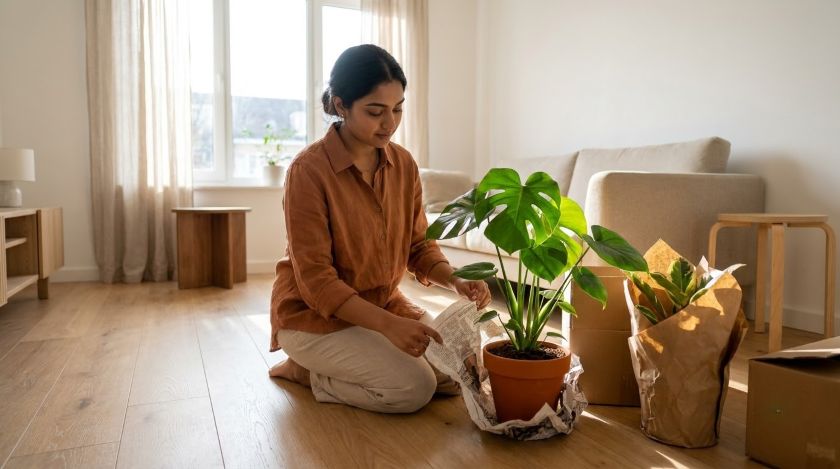
As soon as you arrive, plants should be the very first thing you unpack — before furniture, before boxes, before anything else. Remove all wrapping, plastic, and newspaper immediately. Let them breathe in open air. Do not place them in direct sunlight on the first day, even if their permanent spot is a sunny windowsill.
The 72-Hour Settling Rule
Watering After the Move
The instinct after a move is to water generously — to compensate for any dryness during transit. Resist it. Overwatering a stressed, disturbed plant is one of the most common causes of post-move death.
Warning Signs to Watch For
Most plants show some degree of stress after a move.
- Some minor leaf yellowing
- Slight drooping in the first day or two
- Temporary pause in new growth
- Persistent yellowing leaves beyond one week — check for overwatering or light mismatch.
- Continued drooping or wilting despite adequate water — root disturbance during transit may have damaged the root system; check drainage and consider repotting.
- Significant leaf drop — fiddle leaf figs and rubber plants especially. If it stabilises after two weeks, the plant is adjusting.
- New pests appearing — a stressed plant is more vulnerable to pest attack. Inspect weekly for the first month.
- No new growth after four to six weeks — try gradually moving it to a spot with slightly more light.
Re-establishing Your Plants in the New Space
When moving plants to their permanent spots, match the new position to their previous conditions as closely as possible — same light intensity, similar temperature range, similar humidity level. If the new spot is significantly brighter or darker, transition gradually over a week or two rather than all at once. Give every plant at least four to six weeks before concluding it has failed to adapt.
Frequently Asked Questions About Moving Houseplants
Yes — most professional packers and movers in India can transport houseplants, particularly for local and citywide shifts. For interstate or long-distance moves, their capacity and experience varies significantly, so always confirm plant-handling capability before booking. AssureShift's verified professional plant relocation services make it easy to compare movers, read reviews, and choose the right service for your collection.
Conclusion: Your Plant Moving Checklist
Moving is hard. Moving with plants is harder. But every plant you've nurtured over the years is worth the extra effort it takes to bring it safely to your new home — and with the right preparation, most plants make the journey without lasting damage.
Before you close the last box, run through this:
- Start preparing plants at least three weeks before moving day — repot, prune, and audit your collection.
- Pack by plant type, not by pot size — succulents and ferns need opposite treatment.
- Transport in a ventilated, temperature-appropriate vehicle with pots secured upright.
- Unpack plants first when you arrive and follow the 72-hour settling rule.
- Watch for stress signs in the first two weeks and adjust watering and light placement accordingly.
For everything else on the day, pair this with our complete moving day checklist to make sure your plants aren't the only thing you've got covered.
Need professional help shifting your plants safely across the city or to a new state? AssureShift connects you with verified plant movers who handle your green companions with the care they deserve.
For more moving guidance, see our complete moving checklist and full guide to packing for a home move.