How to Pack and Move Your AC Safely in India

For most Indian households, the AC is the last thing switched off before leaving and the first thing needed at the new place. But knowing how to pack and move your AC safely — especially a split AC — is not straightforward. One wrong step can permanently damage the compressor or leave you with a repair bill of ₹3,000 to ₹15,000.
Whether you have a split AC or a window AC, this guide covers everything in the right order: how to remove it, clean it, pack it, transport it, and reinstall it at your new home. The same rules that apply to packing fragile items apply here — sequence and the right materials matter.
Prefer watching over reading? This step-by-step video covers everything — removal, packing, transport, and reinstallation.
First, Know What Type of AC You Have
The process is completely different depending on your AC type.
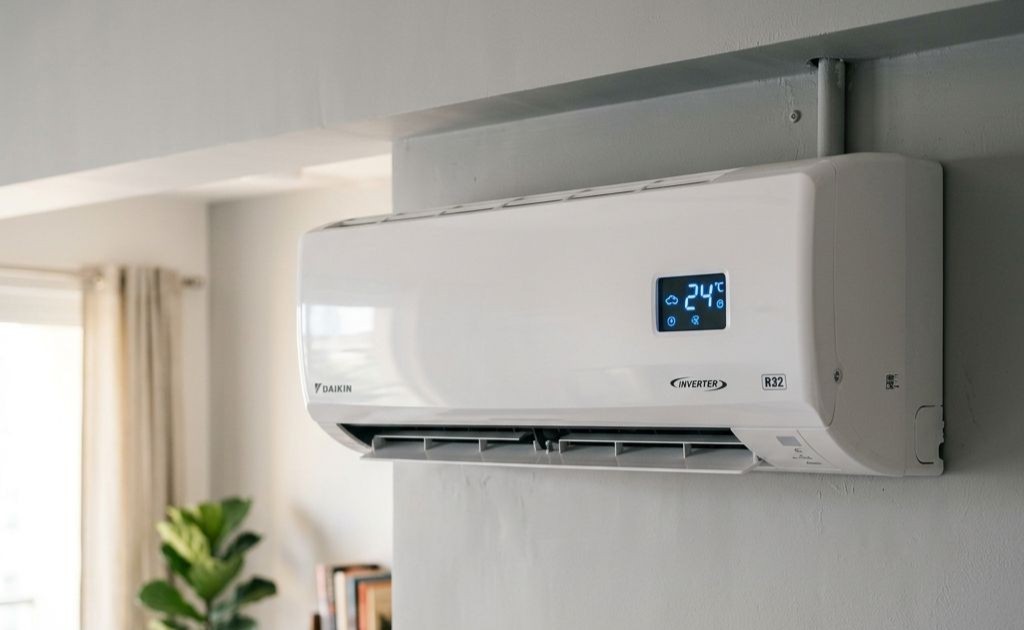
Split AC
The most common type in Indian homes. Has two units — an indoor unit on the wall and an outdoor compressor unit outside. Requires a licensed technician for both removal and reinstallation. Refrigerant gas is involved. This is not a DIY job.
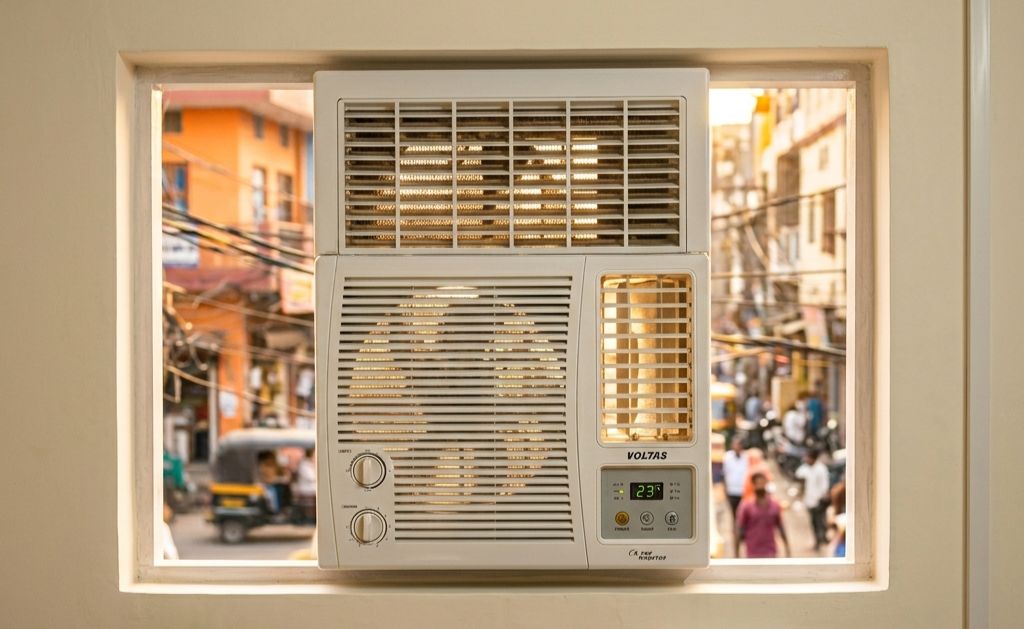
Window AC
A single unit fitted in a window frame or wall slot. No refrigerant pipes to disconnect externally. Can be removed and packed with two people and basic tools. DIY-friendly with care.
Step 1 — Stop Using the AC 24 Hours Before the Move
Shut down your AC at least 24 hours before removal — not just on the day.
Running an AC creates condensation inside the unit. If packed while wet, components can develop mould and corrosion during transit. For split ACs, a dry unit also makes the technician's pump-down procedure cleaner and more effective.
Step 2 — Book an AC Technician for Split AC Removal (Do Not Skip This)
If you have a split AC, a licensed technician must handle removal. There are no exceptions here.
Split ACs run on refrigerant gas — R32 or R410A in most modern Indian units. If the copper pipes are disconnected without pumping the gas back first, the refrigerant escapes, the compressor is damaged, and your warranty is voided. This mistake costs more to fix than the entire shifting exercise.
What the technician handles:
- Pumps refrigerant gas back into the outdoor compressor (pump-down process)
- Disconnects and caps the copper pipes to block moisture entry
- Removes the indoor unit from the wall bracket
- Dismantles the outdoor unit from its mounting
- Labels all pipes, wires, and brackets for easy reinstallation
How to book:
You can book through your AC brand's service app — Daikin, Voltas, LG, Blue Star all have one — or through a trusted local technician. Book at least 2–3 days before your moving date. Between April and June, AC technicians across India are heavily booked and last-minute appointments are hard to get.
Step 3 — Clean the AC Before Packing
A dirty AC packed for transport develops mould and odours. Clean it before the technician arrives.
Step 4 — Use the Right Packing Materials
If you don't have the original box, use:
- Double-walled cardboard box (sized to fit the unit)
- 10mm bubble wrap — thick air-bubble type, not thin decorative sheet
- Thermocol or foam corner guards
- Cling film / stretch wrap — especially for the outdoor compressor unit
- Moving blankets or thick cloth covers
- BOPP packing tape — 2-inch width minimum
- Movers' straps for the outdoor unit
Step 5 — Pack the Indoor Unit and Window AC Correctly
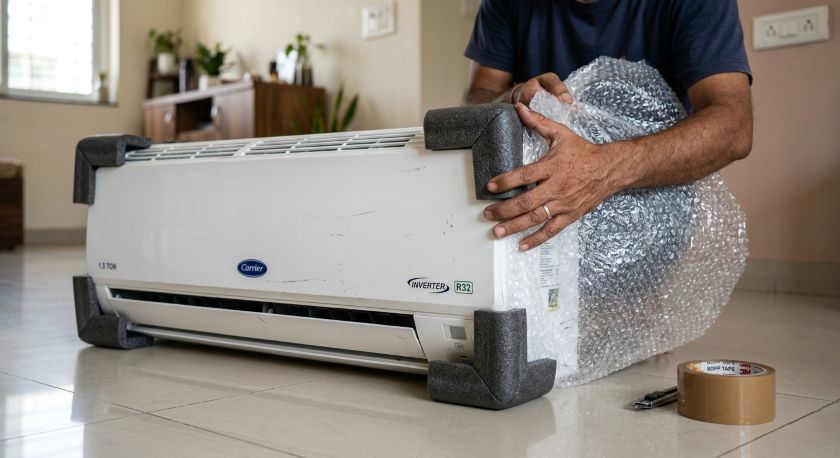
Pack each unit in the correct sequence — sequence matters.
Split AC Indoor Unit:
Window AC:
Step 6 — Pack the Outdoor Unit (Most People Get This Wrong)
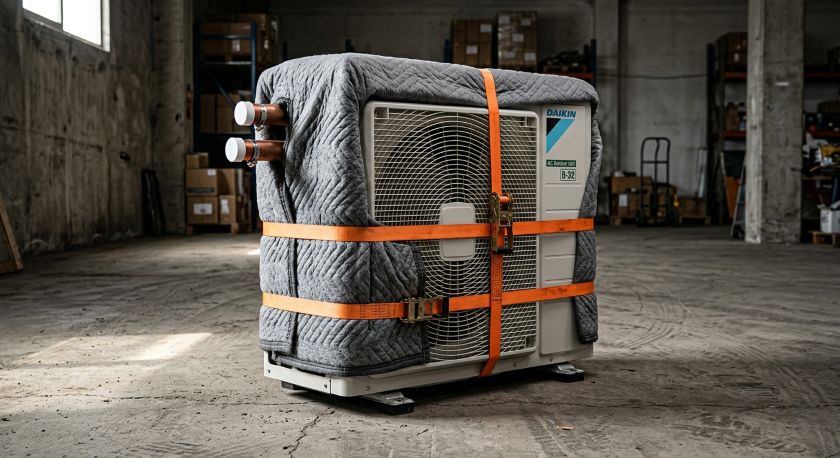
The outdoor compressor is the single most expensive part of your split AC — and the most commonly damaged during moves in India.
How to pack it:
Step 7 — What to Tell Your Movers on Loading Day
Your packers and movers need clear instructions — do not assume they know how to handle ACs. Beyond AC units, here are detailed loading and unloading tips to share with your movers on shifting day.
| Tell Them | Why It Matters |
|---|---|
| Load AC units last in the truck | So they are offloaded first at the destination |
| Both indoor and outdoor units must remain upright throughout — no exceptions | Prevents compressor oil from shifting into refrigerant lines |
| No heavy items on top of the packed AC boxes | Prevents fin and casing damage |
| Use a covered truck body | Open tempos expose units to dust and rain |
| For moves between June and September: extra stretch wrap on outdoor unit after loading | Monsoon moisture protection |
Step 8 — Reinstallation at Your New Home — Do Not Rush This
The AC has arrived. Do not plug it in immediately.
Waiting period:
For split AC — hire a technician for reinstallation:
Same reason as removal — copper pipes, refrigerant pressure, and leak checks require a professional. Book the reinstallation appointment before your moving day, not after you arrive. This is one of the most commonly forgotten steps.
Book through your AC brand's service app or your local technician. Confirm the appointment is for your new address.
What the technician checks at reinstallation:
- Mounts both units correctly at the new location
- Reconnects copper pipes and checks for leaks
- Verifies refrigerant pressure
- Runs a test cooling cycle
Frequently Asked Questions About AC Shifting in India
Final Checklist Before You Move Your AC
Conclusion
Relocating an air conditioner isn’t just about moving it — it requires careful handling, proper positioning during transport, and a safe restart at your new home. Taking the right precautions helps prevent damage and ensures your AC works efficiently after shifting.
If you're planning a complete house shifting, choosing experienced professionals can make the process smoother and safer, especially for delicate appliances like AC units.
Moving soon? Make it stress-free
Planning a home shift? Find trusted packers and movers who handle delicate appliances like ACs with care, ensuring safe transport and smooth setup at your new place.