How to Pack Household Items Yourself: 8 DIY Packing Tips
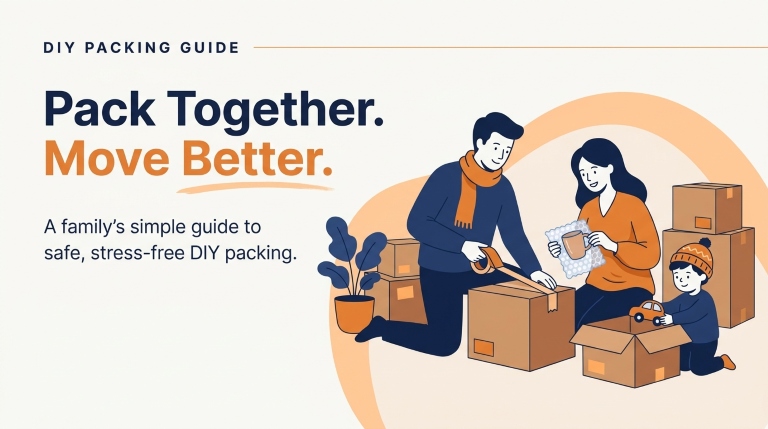
Broken glassware and damaged furniture are the two things every self-mover fears most — and both are avoidable with the right approach. If you're planning to pack your household items yourself, proper wrapping, neat cushioning, and careful handling are what stand between a smooth move and a stressful one. This guide covers 8 practical DIY packing tips to help you pack your entire home the right way — safely, affordably, and without hiring extra help. Start planning your move at least three weeks in advance, and use the tips below to pack every room with confidence.
1. Plan and List What You're Packing
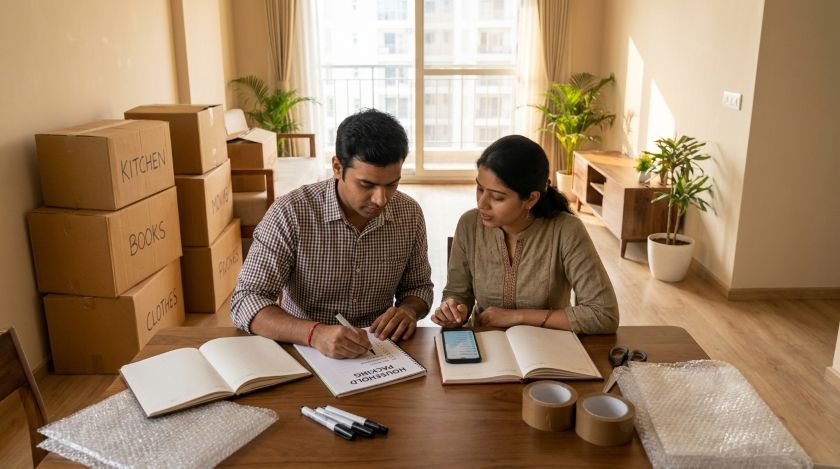
Plan what households you want to pack and move to make the job easy. Make a list of large and small items on a sheet of paper to plan buying packing boxes, and check what cartons or materials you already have at home — see our guide on how to make a moving inventory list for a more detailed approach. Decide on the moving truck you would require, based on the goods you have to pack, and check for an electrician or carpenter to detach any furniture, lights, antennae, air conditioner, or other electronic devices before moving day.
2. Gather Supplies and Save Money on Padding
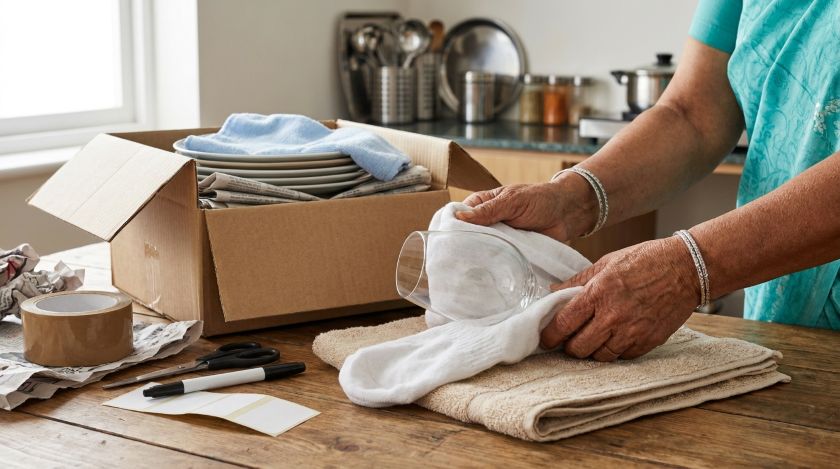
Gather all your packing supplies from home first and buy only the materials you don't already have — wrapping sheets, newspapers, bubble wraps, padding materials, heavy-duty packing tapes, markers, labeling stickers, and scissors. See our complete guide to types of packing materials for more options. By doing your own packing, you save on the charges you'd otherwise pay a moving company, and you can arrange cartons from nearby grocery stores at low prices. Instead of buying bubble wrap or packing peanuts, use old clothes, socks, and bedsheets to cushion your glassware and fragile items.
3. Follow the Right Packing Order
Pack without mental pressure by working in the right order. Goods that aren't important or that you don't need for daily living should be packed first. Take pictures using your camera before disassembling furniture, electronics, or kitchen appliances, so you can reassemble them perfectly later — it's better to disassemble items like your refrigerator, dishwasher, aqua guard, antennas, and computer yourself before loading. If possible, prepare a list of your packed goods and place all boxes in a room near your front door so loading is easier and more efficient.
4. Pack Small and Fragile Items Carefully
It's easier to handle fewer packages than many. Wrap smaller things inside larger ones, then wrap the larger items and place them inside boxes to save space — but don't overpack any carton, as it could give way under the weight and damage your things. Delicate items should be wrapped properly using packing paper, bubble wrap, or tissue paper; old newspapers work well too, as they act as cushioning. For extra care with breakables, check our detailed guide on packing fragile and valuable items. Pack smaller kitchen and home appliances in their original boxes if available, or wrap and pack them neatly, labeling them as fragile.
5. Pack Large Furniture and Appliances
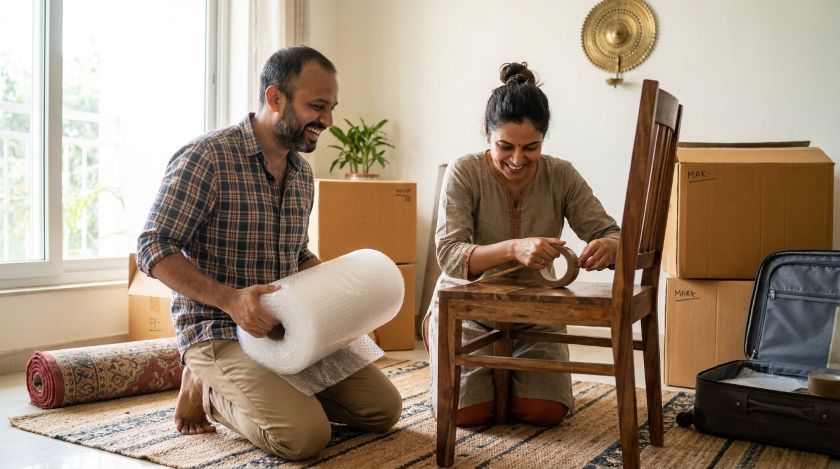
Packing heavier items such as your refrigerator or dining table can be the most challenging job. Wrap them using bubble wraps, carton sheets, and very strong tape. If your furniture has detachable parts such as glass top showcases or center tables, pack the glass separately and keep the bolts and nuts safely inside the packing. Washing machines should be packed intelligently by putting some clothes inside them to balance the weight, so the drum doesn't shift during the move. When shifting a wardrobe, make sure it's fully emptied — leave small items inside the drawer itself and seal the drawer with packing tape.
6. Pack Clothes, Curtains, Bedsheets and Mattresses
Pack and stack your folded clothes in strong cartons, checking the weight of the box as you stack. Sofa covers and curtains can also be packed inside carton boxes, but don't overpack them. Fold your carpets and beds with a rope and tie them safely. Wrap your mattresses using cartons and plastic sheets, and tape them properly — these wrapped items can also double up as cushioning on the truck during your move.
7. Prepare Your Essentials Box
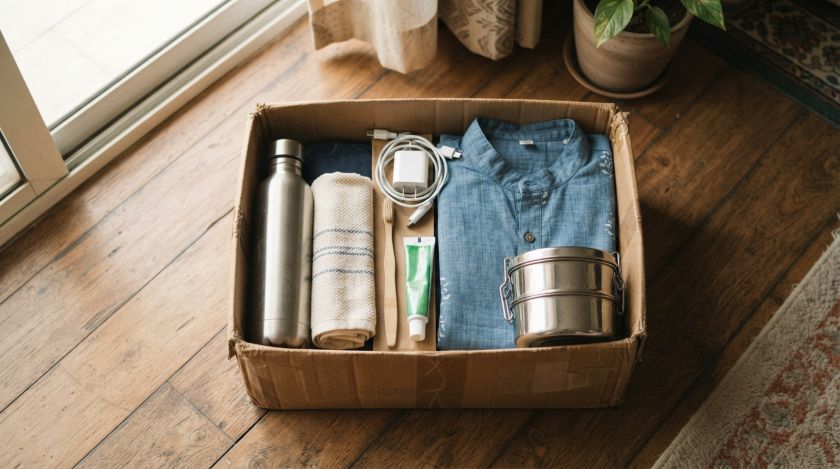
Until your move date and for a few days after, you'll need necessities such as soap, toothbrush, toothpaste, disposable razors, towels, toilet paper, nightwear, and a change of clothes. Pack these in a separate "essentials box" and keep it away from your other packing — it's best placed in your car so it travels with you. You can also add kitchen utilities like pans, pots, cups, plates, stirring utensils, forks, a bottle opener, plastic papers, a washing sponge, and a lighter.
8. Label, Track and Do a Final Walkthrough
Pack your important documents, jewelry, and valuables separately in a bag and keep it inside your suitcase, as movers won't take responsibility for them. Pack grounded adapters and extension cords in a specific box, then label boxes using bright colored tapes such as red and yellow, and number them according to the order you packed them so you can keep track — read our full guide on labeling boxes for household shifting for a more detailed system. Once everything is boxed, go to each room to confirm nothing has been left behind, and make sure all rooms are cleaned before it's time to move.
A Final Word
Even though this packing process involves more time and work, there is a certain limit to how irritated anyone should get. Patience is very important, as packing is a hard job when you want to relocate every item safely. It becomes much easier once you know how to perform the job and have all the packing supplies you need.