The Ultimate Guide for Bachelors Moving to a New City
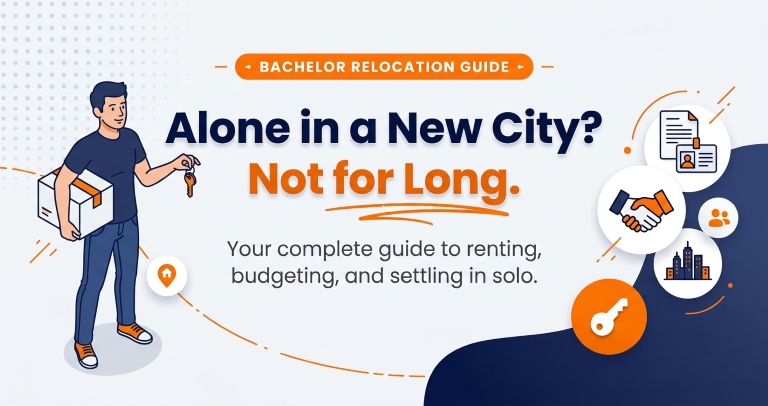
Moving to a new city alone — with no family to help pack, register your documents, or find you a place to live — is one of the most stressful experiences a bachelor can face. Add in the uncertainty of cost, timeline, and whether landlords will even rent to a single tenant, and it's easy to feel overwhelmed before you've packed a single box.
This guide covers everything you need to handle the move — before, during, and after — including budgeting, documentation, finding a rental as a single renter, and settling in emotionally once you arrive.
What's Covered
Before the Move
Can a Bachelor Even Rent Easily? Finding a Place Solo
One of the biggest hurdles a bachelor faces — and one that's rarely talked about — is that many landlords are hesitant to rent to single tenants.
A few ways to improve your odds:
- Go through a verified broker in the new city rather than only searching listings directly — brokers often know which landlords are open to bachelor tenants.
- Carry an employer verification letter and ID/address proof upfront; many landlords ask for this before even showing a property.
- Consider a PG (paying guest) or flatmate-shared setup if a standalone flat proves difficult — these are typically more bachelor-friendly and let you test the neighborhood before committing to a longer lease.
Budgeting for the Move
Cost is usually the first real anxiety for anyone moving alone, so plan for it upfront rather than mid-move. It helps to create a moving budget before you start packing, so every expense is accounted for ahead of time.
| Expense | Typical Range |
|---|---|
| Packing & moving services | Varies by load size and distance |
| Security deposit | Often 1–3 months' rent, depending on city |
| First month's rent + advance | 1–2 months' rent |
| Utility setup deposits | Small one-time charges per connection |
| Essentials buffer (groceries, transport, misc.) | 2–4 weeks of buffer recommended |
Pack Light & Take Inventory
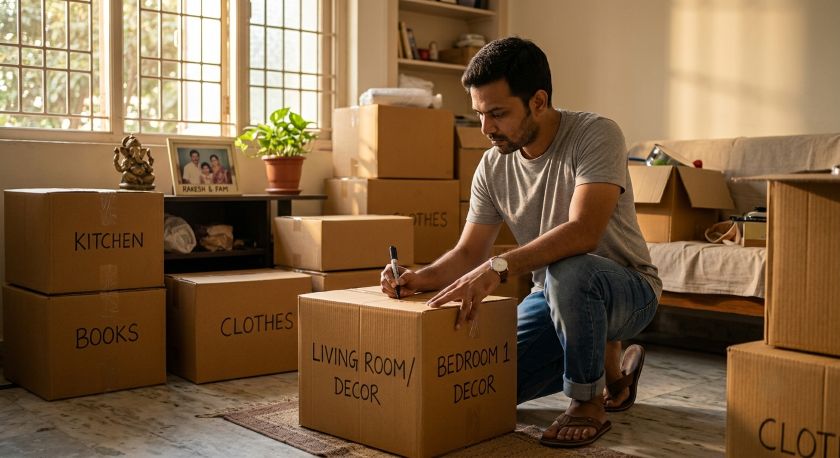
Carry only what you'll actually use in the new city — there's no point moving furniture or belongings you'll just store away until the next move.
Keep Your Essentials Easily Accessible
Pack a separate overnight bag in case your boxes arrive later than you do, or you'd rather not unpack everything on day one. Include a change of clothes, toiletries, basic first aid, your laptop and chargers, and any daily medication.
Hire Packers and Movers
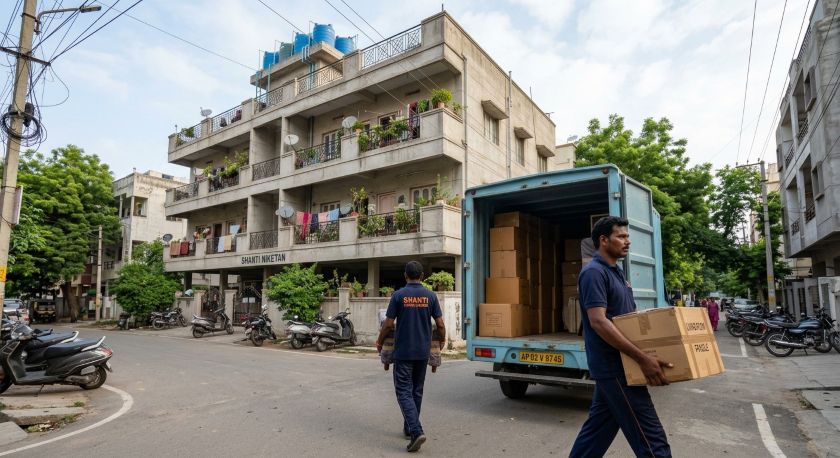
AssureShift's House Shifting Professionals reduce the risk of damage and save you the physical effort. As a bachelor, you likely don't need a full truck; ask about partial-load or shared-truck options, which are usually cheaper for smaller loads.
Clear Dues & Disconnect Utilities (Old City)
Before you leave, contact your utility providers — electricity, water, gas, internet, DTH — at least a week ahead to schedule disconnection. Take final meter readings for electricity, water, and gas.
Moving Day & Documentation
Set Up New Utilities
Arrange electricity, gas, and wifi/broadband connections in your new home as early as possible.
Update Your Address & Documents
Prioritize:
- Aadhaar/address proof update
- Bank account KYC address change (or opening a local bank account)
- Voter ID update, if applicable
Vehicle Registration / NOC
If you're bringing a car or bike, check whether your new city requires a No Objection Certificate (NOC) for your vehicle.
Get Your Apartment Cleaned & Check Appliances
If you saw the property before moving in and it was already clean and presentable, a quick touch-up is usually enough. If you didn't get to inspect it beforehand, it's worth requesting your landlord have it professionally cleaned, or arranging a cleaning service yourself before you unpack.
Settling In as a Bachelor
Unpack & Set Up Room by Room
Unpack and fully set up one room at a time rather than opening every box at once — start with the kitchen, then the bedroom, then the rest of the house. Clearly labeled boxes make this significantly faster.
Build a Routine
Keeping a few familiar anchors from your old life — your regular wake-up time, or a habit like your morning coffee.
Safety Basics for Living Alone
Before you settle in fully, verify your landlord and society/building management are legitimate, and save the local police station's number and at least one emergency contact.
Build a Social Circle
Start with the people closest to you geographically — your neighbors. Beyond that:
- Join local community groups on WhatsApp or Facebook for your neighborhood or building.
- Look into coworking spaces or a nearby gym — both are easy, low-pressure ways to meet people regularly.
- Use city-specific community or meetup apps to find others in a similar position.
Explore the Neighborhood Essentials
In your first week, walk your neighborhood and locate the essentials you'll rely on regularly — the nearest grocery store, pharmacy, ATM, and hospital.
Frequently Asked Questions
Conclusion
Settling into a new city as a bachelor comes down to a handful of manageable steps — budgeting early, sorting your rental and documents, hiring reliable movers, and giving yourself time to build a routine and a social circle.
Budgeting realistically
Sorting documents & rentals
Hiring reliable movers
Building routine & social circle
Ready to move? Share your requirements and AssureShift's team will help you plan the relocation end to end.