Shifting House During Pregnancy: A Practical Guide to Doing It Safely
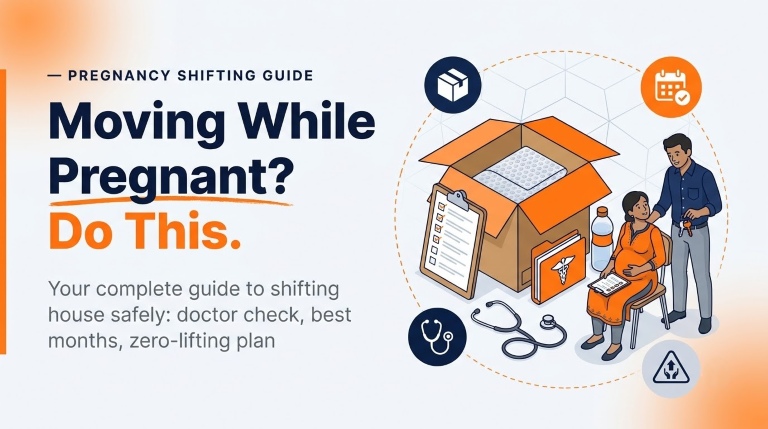
A lease ending or a job transfer does not wait for the right month of pregnancy. If you are planning to shift house during pregnancy, this guide covers when to shift, what to avoid, what to arrange with the doctor and hospital, and how to plan moving day so that she does not lift anything.
It is for everyone involved in the shifting: the pregnant woman, her husband, and the family or friends who are helping.
Shifting house during pregnancy is usually safe if the pregnancy is healthy and the doctor agrees. The best time is months 4 to 6. She should not lift boxes or furniture. Confirm the delivery hospital and health insurance before the move.
Is it safe to shift house during pregnancy?
For most healthy pregnancies, yes. The risk is not the shifting itself. It is the lifting, the long hours on her feet, the skipped meals and the missed check-ups that come with it. Take those away, and a move is quite manageable if the doctor agrees.
Who should ask the doctor before deciding
Speak to the gynaecologist before you fix a date. Be ready to postpone if any of these applies:
- The doctor has said the pregnancy is high-risk.
- There was a miscarriage or early delivery (before 37 weeks) in the past.
- There has been bleeding, or the doctor is watching any other problem.
Ask the doctor three things: is shifting fine at this stage, what should be avoided, and which symptoms mean you should call at once.
Warning signs: stop and call the doctor
At any time during the move, stop work and call the doctor, or go to the hospital, if you notice:
- Bleeding or leaking of fluid
- Regular, painful tightening of the stomach or cramps
- Sudden swelling of the face or hands, or a severe headache with blurred vision
- Dizziness, fainting, chest pain, or difficulty in breathing
- Pain or swelling in one leg (calf)
- The baby moving much less than usual

What is the best time to shift house during pregnancy?
For most women, months 4 to 6 (weeks 13 to 27). Energy is usually better, vomiting and nausea have often reduced, and the stomach is not yet too big.
| Stage | Months | Weeks | What it means for shifting |
|---|---|---|---|
| Early pregnancy | 1 to 3 | 1 to 12 | Tiredness and vomiting are common, so even light packing can be difficult. Shifting is possible if she feels well, but keep the plan flexible and let others do more. |
| Middle pregnancy | 4 to 6 | 13 to 27 | Energy is usually better and nausea reduces for many women. This is the easiest time to shift. |
| Late pregnancy | 7 to 9 | 28 to 40 | Balance, energy, and comfort change, and long journeys become difficult. Shift only if necessary, with a lot of help, and stay close to the delivery hospital. |
If you cannot choose the date
Sometimes the lease or the company decides the date. In that case, let others do most of the work, keep some extra time between packing and moving day, and tell the doctor the date early so that they can advise you for your stage.
What to avoid while shifting house during pregnancy
How much weight can a pregnant woman lift?
Nothing heavy. During shifting, every box and every piece of furniture should be someone else's job.
If you want a number, the National Institute for Occupational Safety and Health (NIOSH) in the USA has given provisional guidance for healthy women with normal pregnancies at work. It suggests occasional lifting of up to about 16 kg (36 lb) before 20 weeks, and about 12 kg (26 lb) after that. It also says not to lift from below knee height or above the head.
There is one more reason to stay well below these numbers. A large study in Denmark of more than 60,000 working pregnant women found that the risk of early delivery increased with the total weight lifted in a day, and it could not find any safe limit. Pregnancy hormones also make the joints and ligaments looser, so back pain and muscle strain happen more easily.
Shifting house involves far more lifting in one day than most jobs. So the safest plan is to lift nothing heavy at all.
Stairs and slippery floors
In pregnancy, balance changes and falls are more likely. During the monsoon, watch out for wet floors and muddy entrances, and ask someone to keep the path dry.
Paint, dust and cleaning chemicals
Finish all renovation work before you move in. A house that is still under renovation is not a good place to visit, because apart from the dust and fumes, there are sharp tools and uneven floors.
If she must wipe something, she should wear gloves, keep the windows open, and use a mild cleaner.
What to arrange with the doctor, hospital and insurance
Keep the medical records with you
Do not pack the medical records in a box. Keep with you the scan reports, blood test reports, current prescriptions, and the mother and child protection card if you have one. Ask the doctor for a short summary or referral letter for the new doctor.
Decide where you will deliver
Find out how long it takes to reach the delivery hospital from the new house. Note the nearest 24-hour emergency service and medical shop. Many hospitals ask you to register for delivery in advance, so check what your hospital needs.
If the new house is far from your current hospital, especially in the last months of pregnancy, ask the doctor whether it is better to change the hospital or to stay with the same one.
Check the health insurance
Check that the current policy works in the new city, and whether there are cashless network hospitals near the new house. If the cover is from the employer, ask whether the move changes it.
Many families think, "We will just buy a new policy." It does not work that way.
It is better to ask your insurer exactly what your present policy covers.
How packers and movers can take all the physical work off you
The easiest way to avoid lifting is to hire a packers and movers company that does everything, from packing to placing the boxes in the right rooms. A full service usually includes packing, opening and refitting furniture, loading, unloading, and arranging things in the new house.

Questions to ask when you book
- Will your team do all the heavy work, including furniture, or do we need to help?
- Will you do a survey before the move, so that the quote matches the actual load?
- Are our goods insured during transit?
- What happens if we need to change the date at short notice?
To choose the right company, read how to find the best packers and movers.
A pregnancy-friendly shifting plan
First fix the date. Avoid the first and last days of the month and festival days if possible, avoid the hottest part of summer, and prefer a weekday when roads are less crowded and the workers are less rushed.
- 6 to 8 weeks before: Tell the doctor the planned date and confirm that shifting is fine at this stage. Book the packers and movers.
- 3 to 4 weeks before: Let the movers or family do the packing. Arrange the medical records, choose the delivery hospital, and check the insurance.
- 1 to 2 weeks before: Confirm the date and timing with the movers, arrange extra help for moving day, and keep the essentials bag ready.
- One day before: Rest. Keep the bag and documents where you can pick them up easily, and make sure everyone knows the plan.
Packing has its own steps, which we have explained in our packing and moving tips.
Shifting to another city during pregnancy
A move to another city also means a journey, and the journey has its own rules.
By road
Stop for a break and a short walk at least every 2 hours, and try not to drive more than 4 hours in a day.
By train or flight
Check with the doctor first.
Send the household goods separately
She should travel by car, train, or flight, not in the moving truck. If possible, reach one or two days early so that the house is set up before she arrives.
Moving day plan
| Who | Does what |
|---|---|
| Pregnant woman | Only light work while sitting: guiding the workers, checking labels against a list, and keeping the important documents. |
| Husband or family | Watching over the workers, running errands, handling keys, payments and handovers, and looking after other children. |
| Packers and movers | All lifting, loading, unloading, and furniture fitting. |
Where she should be during loading
She should sit somewhere comfortable, away from dust and noise, with water and food nearby. If the house is too chaotic, it is a good idea to stay at a relative's house until loading is done. Make sure she can be reached by phone.
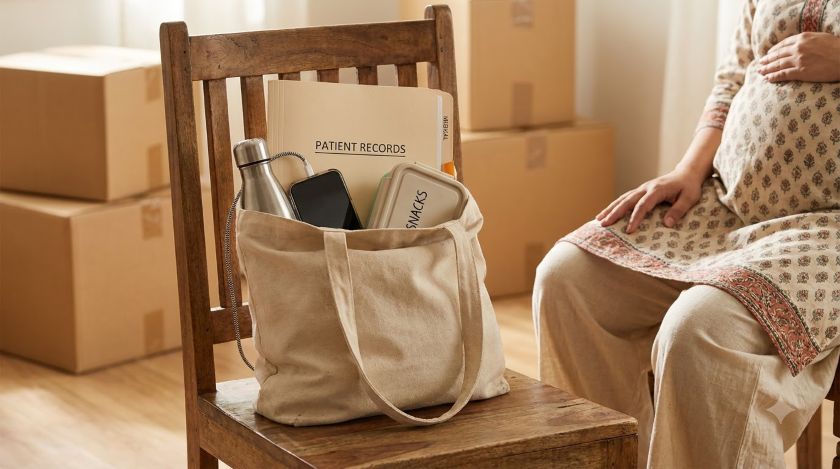
The bag she keeps with her
Keep one bag with her all day. It should not be packed in the truck.
- Medical records, prescriptions, and the due date note
- Regular medicines
- Water and snacks
- Phone, charger, and some cash
- A change of clothes
Have a plan B
Decide in advance which hospital you will go to, who will drive, and who will stay back with the movers if she has to leave.
After the packers leave
Set up the bedroom, kitchen, and bathroom first. Unpack only the essentials, a little at a time.
FAQs
Conclusion
Shifting house during pregnancy does not have to put the mother or baby at risk. Four things matter most:
The rest is only planning. If you want a team to handle the packing and loading through our home shifting services, so that she can rest, share your details with us. On the day of shifting, our moving day checklist will help you stay on track.