Moving to Mumbai for a New Job? Here's What You Should Know
Starting a new job in Mumbai marks an exciting career milestone! As India's financial capital, this vibrant city offers unmatched professional opportunities, a dynamic work environment, and a fast-paced metropolitan lifestyle. However, relocating to Mumbai presents unique challenges—from navigating the bustling neighborhoods to adjusting to the city's distinct rhythm.
This complete guide provides everything you need for a smooth transition: selecting neighborhoods based on your workplace, understanding monthly budgets, navigating Mumbai's rental market, and practical tips for settling into the city's unique lifestyle.
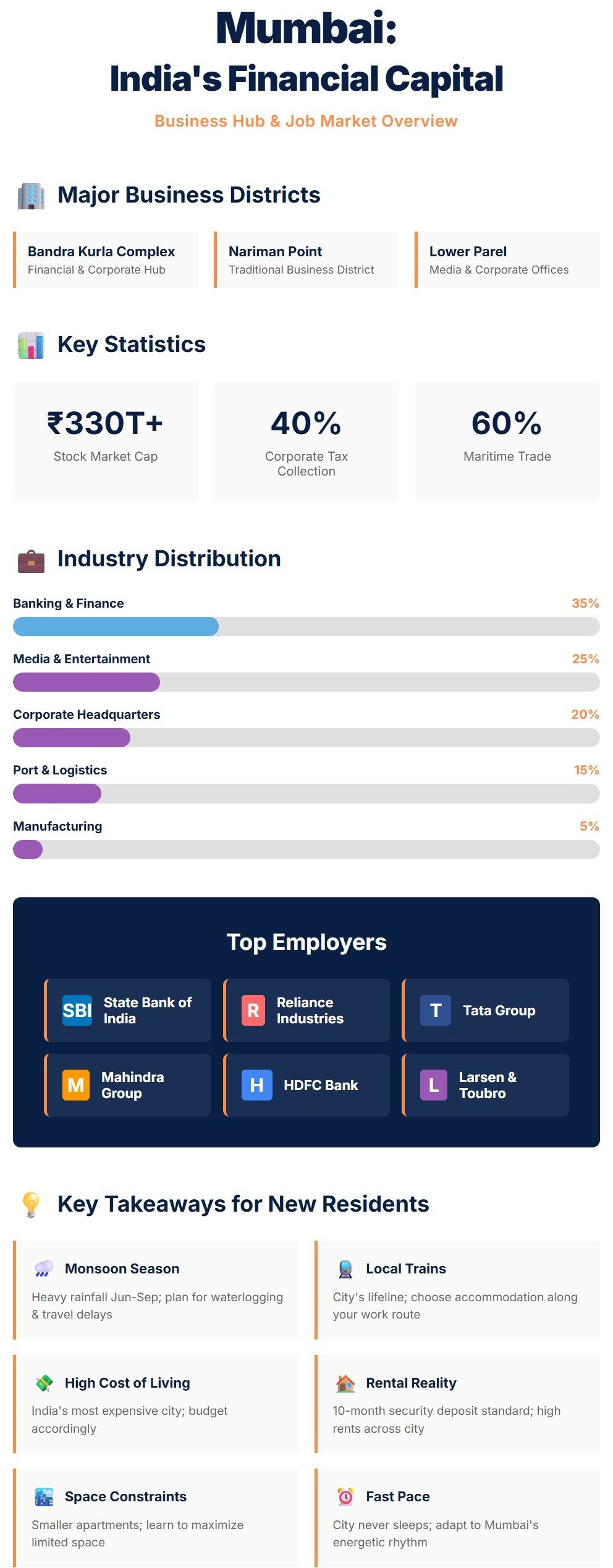
Table of Contents
- Understanding Mumbai: City Basics
- Choosing the Right Neighborhood
- Finding Your Accommodation
- Planning Your Move: Timeline & Checklist
- Getting Around Mumbai
- Cost of Living Breakdown
- Settling In: First Week Essentials
- Work Culture & Professional Life
- Healthcare & Essential Services
- Mumbai Food Scene
- Weekend Exploration & Getaways
- Pro Tips & Common Challenges
- Frequently Asked Questions
Understanding Mumbai: City Basics
Climate and Weather
Mumbai experiences a tropical climate with distinct seasons. The city is known for its high humidity throughout the year.
- Winter (Nov-Feb): 18°C-30°C, mild and pleasant
- Summer (Mar-May): 25°C-38°C, hot and humid
- Monsoon (Jun-Sep): Heavy rainfall, occasional flooding in low-lying areas
- Post-Monsoon (Oct): Warm with decreasing humidity
Packing Tip: Light cotton clothes work best. Waterproof gear is essential during monsoon, especially if you commute via local trains.
Language and Culture
Marathi is the official language, but Mumbai is India's most cosmopolitan city where you'll hear Hindi, English, Gujarati, and numerous other languages.
- Professional Settings: English and Hindi are widely used in offices
- Local Interactions: Basic Hindi works everywhere; Marathi is useful for deeper local connections
- Cultural Blend: Traditional Maharashtrian culture coexists with global influences
- City Vibe: Fast-paced, ambitious, yet famously resilient ("Spirit of Mumbai")
💡 Pro Tip: Learn a few Marathi phrases: "Namaskar" (hello), "Dhanyavad" (thank you), "Kasa aahes?" (how are you?). While not essential for daily life, locals appreciate the effort.
Choosing the Right Neighborhood
In Mumbai, your location significantly impacts your daily commute and quality of life. Consider these factors:
Key Decision Factors:
- Commute Time: Mumbai's local trains define daily life. Living close to your workplace's railway line saves hours
- Western/Central/Harbour Line: Choose accommodation along your office's railway line
- Budget vs. Space: Mumbai has some of India's highest real estate prices; balance location with affordability
- Lifestyle Preferences: Vibrant suburbs vs. quieter residential areas
- Flood Safety: Consider elevation during monsoon; some areas face waterlogging issues
For insights on flood-safe areas, explore our guide on flood-safe areas in Mumbai.
Area Guide Based on Workplace:
Working in South Mumbai (Fort, Nariman Point, BKC):
- Bandra (West): Upscale, excellent connectivity, vibrant nightlife (Rent: ₹40,000-₹1,00,000+ for 1-2BHK)
- Khar: Slightly more affordable than Bandra, good local train access
- Santacruz: Residential with good amenities, near airport
- Worli/Prabhadevi: Premium waterfront locations, close to business districts
Working in Andheri/Lower Parel:
- Andheri (West/East): Commercial hub, good metro connectivity (Rent: ₹30,000-₹80,000)
- Juhu/Versova: Beachfront properties, upscale dining (Premium rents)
- Goregaon/Malad: More affordable options with good local train connectivity
Working in Thane/Navi Mumbai:
- Thane: Rapidly developing, better space for money (Rent: ₹20,000-₹50,000)
- Navi Mumbai (Vashi, Seawoods, Kharghar): Well-planned, family-friendly, more affordable
- Airoli: Industrial area with reasonable housing options
For budget-friendly options, check our detailed guide on Mumbai's affordable housing options.
Budget-Friendly Options:
If you're watching expenses, consider these areas offering better value:
- Western Line: Borivali, Kandivali, Dahisar (farther but more affordable)
- Central Line: Ghatkopar, Mulund, Bhandup
- Harbour Line: Chembur, Govandi, Mankhurd
- Trans-Harbour: Navi Mumbai areas offer best space-value ratio
For comprehensive neighborhood insights, explore our guide on best places to live in Mumbai for every budget.
Finding Your Accommodation
Types of Housing Options:
PG (Paying Guest): ₹10,000-₹25,000/month
- Ideal for: Singles/bachelors new to Mumbai
- Includes: Furnished room, sometimes meals, Wi-Fi
- Benefits: No long-term commitment, minimal paperwork
- Best for: First 3-6 months while you explore the city
Shared Apartments: ₹12,000-₹25,000/person
- Ideal for: Young professionals wanting independence
- Benefits: Split Mumbai's high rents, shared responsibilities
- Platforms: Flatshare, Facebook groups, NoBroker
1BHK/2BHK Independent: ₹25,000-₹1,50,000+
- Ideal for: Couples, families, professionals wanting privacy
- Benefits: Complete independence, can customize space
- Considerations: High security deposits, strict rental agreements
Rental Market Reality:
Mumbai's rental market has unique characteristics:
- Security Deposit: Typically 10 months' rent (sometimes negotiable to 6-8 months)
- Brokerage Fee: 1-2 months' rent (standard practice)
- Lease Period: Usually 11-24 months
- Society Charges: Maintenance fees in housing societies (₹2,000-₹10,000 monthly)
- Documentation: Strict verification processes, especially in housing societies
Finding Properties:
| Method | Pros | Cons |
|---|---|---|
| Online Platforms (NoBroker, MagicBricks) | Wide selection, filters, virtual tours | Premium listings may be expensive |
| Facebook Groups | Direct owner contact, no brokerage sometimes | Requires careful verification |
| Local Brokers | Deep local knowledge, handles society formalities | High brokerage fees (1-2 months rent) |
| Company Assistance | Verified properties, relocation support | Limited to specific areas |
Before finalizing any rental, review our comprehensive guide to renting a house covering all essential considerations.
Planning Your Move: Timeline & Checklist
8-10 Weeks Before Moving:
- Research neighborhoods along your workplace's railway line
- Confirm joining date and obtain offer letter
- Begin decluttering - Mumbai apartments have limited space
- If moving with family, research schools (admissions are competitive)
4-6 Weeks Before Moving:
- Finalize accommodation (consider monsoon timing if possible)
- Book travel to Mumbai
- Start gathering packing supplies
- Notify current landlord and begin handover process
2 Weeks Before Moving:
- Get quotes from professional movers familiar with Mumbai's challenges
- Transfer or close utility accounts
- Update address with banks, subscriptions
- Arrange temporary accommodation if needed
1 Week Before Moving:
- Confirm moving arrangements
- Pack essentials separately (documents, medications, office clothes)
- Prepare inventory of belongings
- Say goodbye to friends and colleagues
What to Bring vs. Buy in Mumbai:
Bring With You:
- Important documents (certificates, IDs, medical records)
- Personal electronics (laptop, phone, chargers)
- Light cotton clothing suitable for humid weather
- Sentimental items (space is premium in Mumbai)
- Essential medications (3-month supply)
Better to Buy in Mumbai:
- Large furniture (Mumbai apartments have unique space constraints)
- Monsoon-specific gear (umbrellas, waterproof bags)
- Kitchen appliances (consider voltage and space)
- Mattresses and bedding (easier than transporting)
For a comprehensive moving checklist, refer to our guide on things to know before moving to a new city.
Getting Around Mumbai
Public Transportation:
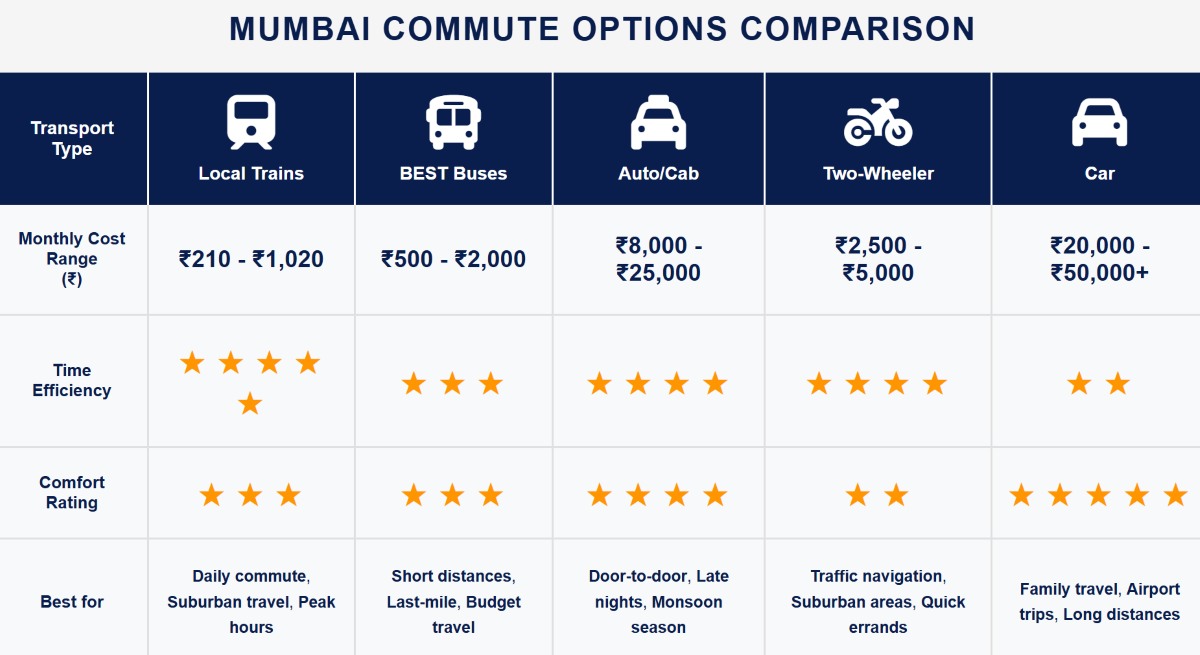
Local Trains (Lifeline of Mumbai):
- Western Line: Churchgate to Dahanu Road (most crowded during peak)
- Central Line: CSMT to Kasara/Khopoli
- Harbour Line: CSMT to Panvel/Goregaon
- Monthly Pass: ₹210-₹1,020 depending on distance
- Timings: 4 AM to 1 AM (approximately)
- Ladies Special: Dedicated compartments during peak hours
Mumbai Metro:
- Line 1: Versova-Ghatkopar (connects Western and Central lines)
- Line 2A & 7: Dahisar to DN Nagar and Andheri East to Dahisar East
- Expanding network with multiple lines under construction
- Fare: ₹10-₹80 depending on distance
BEST Buses:
- Extensive network covering entire city
- Daily pass: ₹50-₹100
- Monthly pass: ₹1,500-₹2,500
- Air-conditioned and non-AC options
- Apps: Chalo, M-Indicator for route planning
Ride-Sharing & Taxis:
- Kaali-Peeli Taxis: Classic black and yellow cabs (metered)
- Auto-Rickshaws: Only in suburbs (not allowed in South Mumbai)
- App Cabs: Ola, Uber widely available
- Rapido: Bike taxis for short distances
Personal Vehicles:
Two-Wheelers:
- Practical for suburban commuting
- Monthly fuel cost: ₹2,500-₹4,000
- Parking challenges in many areas
- Monsoon riding requires extra caution
Car Ownership:
- Consider if: You have family, travel outside peak hours
- Monthly cost: ₹20,000-₹50,000+ (EMI + fuel + parking + tolls)
- Challenges: Traffic, expensive parking, narrow lanes in older areas
- Tolls: Multiple entry points into Mumbai have toll charges
Commute Reality & Tips:
- Peak Hours: 8-11:30 AM and 6-9:30 PM (local trains extremely crowded)
- Average Commute: 15km = 60-90 minutes during rush hour
- Monsoon Impact: Train delays common; plan extra time
- Best Practices:
- Live close to your workplace's railway line
- Travel against the peak flow if possible (suburb to suburb)
- Use first/last class compartments for slightly better comfort
- Keep emergency rain gear in your bag during monsoon
For car owners, check our guide on preparing your car before transporting to a new city.
Cost of Living Breakdown
Monthly Budget Overview:
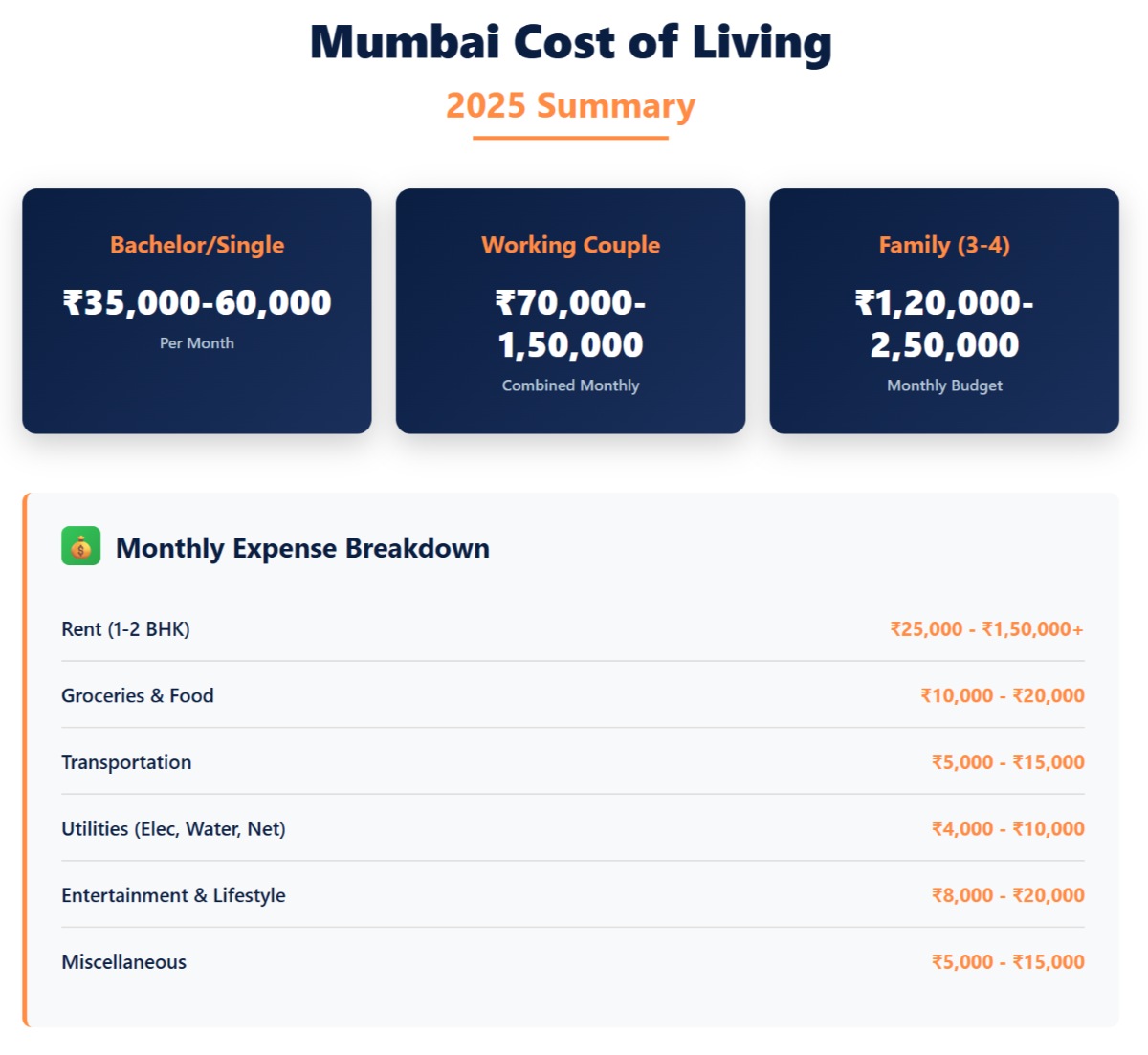
| Living Situation | Basic Budget | Comfortable Budget |
|---|---|---|
| Bachelor/Single | ₹30,000-₹50,000 | ₹60,000-₹1,00,000 |
| Working Couple | ₹60,000-₹1,00,000 | ₹1,20,000-₹2,00,000 |
| Family (3-4 members) | ₹1,00,000-₹1,80,000 | ₹2,00,000-₹3,50,000 |
Detailed Expense Categories:
1. Housing (40-50% of budget):
- Rent: ₹25,000-₹1,50,000+ (highly location-dependent)
- Maintenance: ₹2,000-₹15,000 (housing society charges)
- Electricity: ₹1,500-₹5,000 (AC usage increases costs)
- Water: ₹500-₹2,000
- Internet: ₹800-₹1,500
2. Food & Groceries (20-30%):
- Monthly groceries (per person): ₹4,000-₹8,000
- Eating out: ₹5,000-₹12,000 (Mumbai has excellent food options at all price points)
- Office lunches: ₹3,000-₹6,000
- Weekend dining: ₹3,000-₹8,000
3. Transportation (10-20%):
- Local train pass: ₹210-₹1,020
- Fuel (if own vehicle): ₹3,000-₹6,000
- Cab/Auto expenses: ₹3,000-₹8,000
- Toll charges: ₹500-₹2,000 monthly if using car regularly
4. Lifestyle & Entertainment (10-15%):
- Movies/Events: ₹1,500-₹4,000
- Gym membership: ₹2,000-₹6,000
- Weekend activities: ₹3,000-₹8,000
- Shopping: ₹3,000-₹10,000
5. Miscellaneous (10-15%):
- Mobile recharge: ₹500-₹1,000
- Personal care: ₹1,500-₹3,000
- Subscriptions: ₹500-₹2,000
- Emergency fund: ₹3,000-₹8,000
For a more detailed analysis, read our comprehensive guide on cost of living in Mumbai 2025.
Settling In: First Week Essentials
Immediate Setup Tasks:
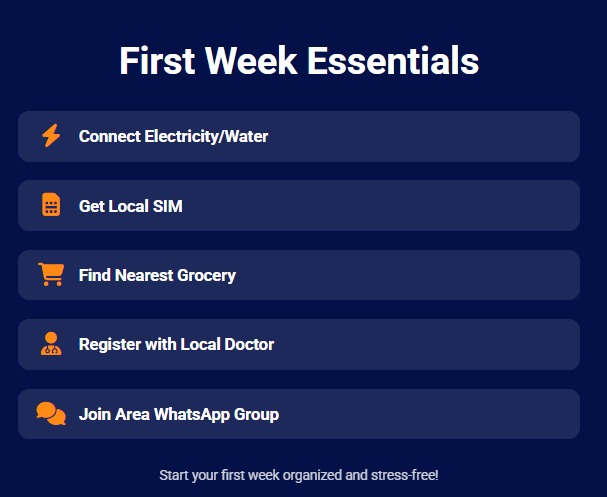
Utilities Connection:
- Electricity: Register with Adani Electricity (Western suburbs) or BEST (island city)
- Water: Municipal connection; many buildings have water timings
- Cooking Gas: Apply for LPG connection (Bharat Gas/HP) - verification process required
- Internet: Popular providers: JioFiber, Airtel Xstream, Hathway
- Cable/DTH: Tata Play, Dish TV, or local cable operators
Local Documentation:
- Aadhar Address Update: Visit nearest center with rental agreement
- Mobile SIM: Get local number (strict KYC in Maharashtra)
- Bank Account: Open account with Mumbai address; easier for local transactions
- Police Verification: Required by many housing societies for tenants
Essential Services to Locate:
- Nearest railway station and bus stops
- Local medical store (24/7 chains: Apollo, Guardian)
- Supermarket and local market for daily needs
- Laundry service (many localities have local dhobis)
- Hospital/Clinic nearby for emergencies
- Nearest ATM (HDFC, ICICI, SBI have wide networks)
Building Your Local Network:
- Join apartment/building WhatsApp groups
- Connect with colleagues from similar backgrounds
- Join Facebook groups: "Mumbai Foodies," "Expats in Mumbai," area-specific groups
- Explore Meetup.com for professional and hobby groups
- Attend company orientation and social events
💡 Pro Tip: In your first week, master your daily commute route. Time it during actual travel hours to understand real travel times.
Work Culture & Professional Life
Mumbai Work Environment:
Corporate Culture:
- Professional, fast-paced environment
- Formal to business casual dress code common
- Emphasis on punctuality (commute considerations)
- Longer working hours in many sectors
Financial & Media Hub:
- BKC (Bandra Kurla Complex): Major financial district
- Nariman Point: Traditional business district
- Lower Parel: Media and corporate offices
- Andheri: Entertainment and corporate mix
Networking Opportunities:
- Industry Events: Regular finance, media, and business conferences
- Professional Associations: Bombay Chamber, industry-specific groups
- Co-working Spaces: WeWork, 91springboard host networking events
- Alumni Networks: Active alumni groups from major colleges
- Social Clubs: Willingdon, Cricket Club of India for professional networking
Work-Life Balance Tips:
- Factor in commute time when planning your day
- Many companies offer flexible timing to avoid peak travel
- Growing acceptance of hybrid work models post-pandemic
- Wellness programs in larger corporations
- Set boundaries: Learn to disconnect after work hours
For more insights, explore our guide on maintaining work-life balance in a new city.
Healthcare & Essential Services
Major Hospitals:
Multi-Specialty Hospitals:
- Kokilaben Dhirubhai Ambani Hospital (Andheri)
- Lilavati Hospital (Bandra)
- Asian Heart Institute (Bandra Kurla Complex)
- Nanavati Hospital (Vile Parle)
- Sir H.N. Reliance Foundation Hospital (Girgaon)
- Jaslok Hospital (Pedder Road)
Government Hospitals:
- K.E.M. Hospital (Parel)
- Sion Hospital
- J.J. Hospital (Byculla)
- Nair Hospital (Mumbai Central)
Healthcare Tips for Newcomers:
- Health Insurance: Essential; verify network hospitals
- Find a General Physician: Locate near home or workplace
- Pharmacies: 24/7 chains: Guardian, Apollo, local chemists
- Online Medicine: PharmEasy, Netmeds, 1mg offer quick delivery
- Emergency Numbers:
- Police: 100
- Ambulance: 108 or 102
- Fire: 101
- Women's Helpline: 1091
- Disaster Management: 1916
For guidance on finding healthcare services, check our guide on navigating health services in a new city.
Mumbai Food Scene
Must-Try Local Dishes:
- Vada Pav: Mumbai's signature street food
- Pav Bhaji: Spiced vegetable mash with buttered buns
- Missal Pav: Spicy curry with sprouts and bread
- Bhel Puri/Sev Puri: Classic Mumbai chaat
- Bombay Sandwich: Grilled vegetable sandwich
- Kheema Pav: Spiced minced meat with bread
Iconic Food Spots:
- Ashok Vada Pav: Legendary vada pav near Kirti College
- Cafe Mondegar: Historic cafe in Colaba
- Bademiya: Famous for late-night kebabs
- Britannia & Co.: Iconic Parsi restaurant
- Kyani & Co.: Historic Irani cafe
- Guru Kripa: Famous for samosas in Sion
Food Streets & Areas:
- Khau Gallis: Ghatkopar, Churchgate, Bandra
- Colaba Causeway: Mix of street food and cafes
- Mohammed Ali Road: Famous during Ramadan
- Juhu Beach: Street food with sea view
- Fort Area: Historic cafes and restaurants
Cooking at Home:
- Local Markets: Crawford Market, Dadar Market, local sabzi mandis
- Supermarket Chains: DMart, Nature's Basket, Reliance Fresh, Big Bazaar
- Online Grocery: Blinkit, Zepto, Swiggy Instamart, BigBasket
- Specialty Stores: For regional ingredients across India
Mumbai is one of India's best cities for food lovers. Explore our guide on best Indian cities for foodies for more culinary adventures.
Weekend Exploration & Getaways
Within Mumbai:
- Marine Drive: Iconic waterfront promenade
- Gateway of India & Taj Mahal Palace: Historic landmarks
- Elephanta Caves: UNESCO World Heritage site (boat ride required)
- Sanjay Gandhi National Park: Large green space within city
- Chhatrapati Shivaji Maharaj Vastu Sangrahalaya: Premier museum
- Hanging Gardens & Kamala Nehru Park: Terraced gardens with city views
- Colaba & Bandra: Shopping, dining, and exploring
Weekend Getaways (2-4 hours drive/train):
Hill Stations:
- Matheran: Vehicle-free hill station, 80km away
- Lonavala/Khandala: Popular monsoon destinations, 80km
- Mahableshwar: Strawberry farms and viewpoints, 240km
- Panchgani: Scenic tableland, 250km
Beach Destinations:
- Alibaug: Beach town with historic forts, ferry available
- Murud-Janjira: Sea fort and beaches, 165km
- Dapoli/Guhagar: Less crowded beaches, 200-250km
Historical & Cultural:
- Pune: Cultural and educational hub, 150km
- Ellora & Ajanta Caves: UNESCO sites (longer weekend required)
- Kolhapur: Historic city known for temples and cuisine
Hobby & Interest Groups:
- Trekking: Mumbai Hikers, Maharashtra Adventure Council
- Running/Cycling: Multiple groups along Marine Drive, Bandra-Worli Sea Link
- Photography: Mumbai Photography Club
- Theater/Arts: Prithvi Theatre, NCPA events
- Water Sports: At Gorai, Mandwa, and other beaches
For family-friendly exploration, check our guide on best cities in India for raising a family.
Pro Tips & Common Challenges
Adapting to Mumbai Life:
- Master Local Travel: Understand train routes, peak hours, and alternative options
- Embrace the Pace: Mumbai moves fast; adapt to its rhythm
- Weather Preparedness: Light clothes for humidity, rain gear for monsoon
- Space Management: Learn to live comfortably in smaller spaces
- Community Connection: Build networks through work and interests
Common Challenges & Solutions:
1. Long Commutes:
- Challenge: 2-3 hours daily commute common for many
- Solution: Live along your workplace's railway line, travel against peak flow if possible
2. High Cost of Living:
- Challenge: Mumbai is India's most expensive city
- Solution: Budget carefully, consider shared accommodation, explore suburban areas
3. Monsoon Challenges:
- Challenge: Waterlogging, transport delays, humidity
- Solution: Waterproof everything, plan extra travel time, keep emergency contacts
4. Space Constraints:
- Challenge: Small apartments, limited storage
- Solution: Embrace minimalism, use vertical storage, declutter regularly
Safety Tips:
- Be aware of surroundings in crowded local trains
- Use registered app cabs late at night
- Keep emergency numbers saved on speed dial
- Share live location with trusted contacts when traveling unfamiliar routes
- In monsoon, avoid walking through flooded areas (risk of open manholes)
- Join neighborhood safety groups
For a balanced perspective, read our guide on the good and challenging aspects of living in Mumbai.
Frequently Asked Questions
Q1: What salary do I need to live comfortably in Mumbai?
For singles: ₹60,000-1,00,000 monthly for comfortable living with savings. For couples: ₹1,20,000-2,00,000 combined. This allows for decent accommodation, reasonable commute, and lifestyle expenses.
Q2: Is knowing Marathi necessary for daily life?
Not necessary but helpful. Hindi and English work in most situations. Basic Marathi helps with deeper local connections and understanding cultural nuances.
Q3: How much should I budget for initial setup costs?
Budget ₹2-5 lakhs for:
- Security deposit: ₹2-4 lakhs (10 months rent)
- Brokerage: ₹25,000-50,000 (if using agent)
- Basic furnishings: ₹50,000-1,00,000
- Utility connections: ₹10,000-20,000
- Society charges: ₹10,000-30,000 (advance maintenance)
Q4: Which area is best for finance professionals?
Depends on your workplace:
- BKC: Live in Bandra, Khar, Santacruz
- Nariman Point: Colaba, Churchgate, Marine Lines
- Lower Parel: Prabhadevi, Worli, Mahalaxmi
- Andheri: Juhu, Versova, Lokhandwala
Q5: How do I survive Mumbai local trains during peak hours?
Tips: Travel in first class if budget allows, use ladies compartments if applicable, avoid extremely crowded trains (8:30-10:30 AM, 6:30-8:30 PM), stand near doors for easier exit, keep belongings secure.
Q6: What documentation do I need for renting?
Typically required:
- Government ID (Aadhar, PAN, passport)
- Employment letter and salary slips
- Previous address proof
- Passport-size photographs (4-6)
- Bank statements (3-6 months)
- Police verification may be required by society
Q7: Is Mumbai safe for women professionals?
Generally safe with normal precautions. Ladies compartments in local trains, women-only cabs/taxis available. Be aware in crowded areas, avoid isolated spots late at night, use reputable transport services.
Q8: How do I find accommodation without paying brokerage?
Options:
- NoBroker platform (paid subscription)
- Facebook groups ("Flats without Brokerage Mumbai")
- Company housing assistance
- Referrals from friends/colleagues
- Direct owner contacts in housing societies
Q9: What's the best way to commute to airport?
Options:
- App cabs (Ola/Uber): Most convenient, book in advance for flights
- Airport buses: BEST runs services from various locations
- Local train to Andheri/Vile Parle + auto/cab
- Pre-paid taxis at airport
- Metro connectivity expanding to airport
Q10: How do I meet people and make friends?
- Join hobby and interest groups on Meetup.com
- Participate in company social events
- Join sports clubs or fitness classes
- Connect with alumni networks
- Attend cultural events and workshops
- Engage with neighbors in your building
Q11: What emergency funds should I have?
Keep 6-9 months of living expenses:
- Bachelor: ₹1,80,000-3,00,000
- Couple: ₹3,60,000-6,00,000
- Family: ₹6,00,000-12,00,000
Q12: Is health insurance necessary in Mumbai?
Absolutely essential. Medical costs are high. Most companies provide insurance; verify coverage limits and network hospitals. Individual policies cost ₹8,000-20,000/year depending on coverage.
Q13: How do I handle monsoon in Mumbai?
Preparation is key: Waterproof bags for electronics, multiple umbrellas, quick-dry clothes, waterproof footwear. Keep emergency contacts, monitor weather alerts, plan extra travel time, avoid flooded areas.
Q14: What are the best schools for families moving to Mumbai?
Top areas for schools: Bandra, Juhu, Malabar Hill, Powai. Popular schools: Dhirubhai Ambani International, Cathedral & John Connon, Jamnabai Narsee, Bombay Scottish. Admissions are competitive; start early.
Conclusion: Starting Your Mumbai Journey
Moving to Mumbai for a new job is an exciting adventure that offers unparalleled professional opportunities and personal growth. While the city presents challenges like high costs and long commutes, its vibrant energy, career prospects, and cultural richness make it a rewarding destination.
Your Success Checklist:
- Choose accommodation along your workplace's railway line
- Budget for high initial setup costs (₹2-5 lakhs)
- Master the local train system for daily commute
- Build local networks through work and interests
- Explore Mumbai's incredible food and culture
- Maintain work-life balance despite the fast pace
The most challenging part of relocation is often the physical move itself. For a smooth transition, consider professional assistance. AssureShift connects you with trusted packers and movers in Mumbai, offering transparent pricing, comprehensive services including household shifting and vehicle transportation, and expertise in navigating Mumbai's unique challenges.
Remember: Every newcomer experiences an adjustment period. Mumbai can be overwhelming initially, but its infectious energy and opportunities will grow on you. Give yourself time to adapt, be open to new experiences, and soon you'll find yourself embracing the city's unique spirit.
For an even more comprehensive look at relocating to India's financial capital, explore our Ultimate Guide for Moving to Mumbai covering every aspect of your transition.
Ready for Your Mumbai Move? Get free quotes from verified moving partners.
Welcome to Mumbai – the city of dreams awaits your arrival!