The Ultimate Guide to Moving and Living in Bangalore
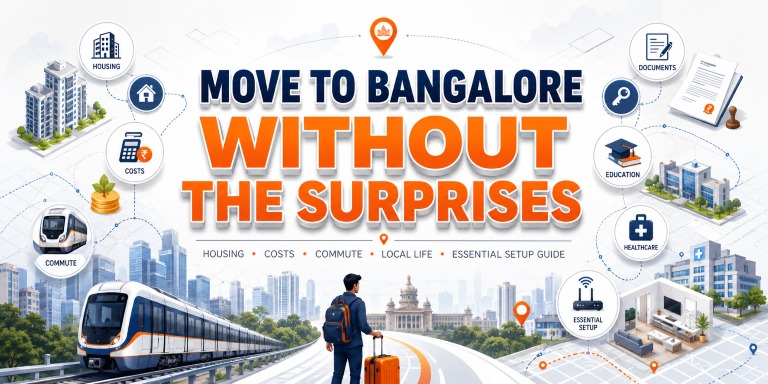
Planning a move to India's IT capital? Whether it's a job offer, a transfer, or a fresh start pulling you to Bengaluru, the city rewards people who prepare — and frustrates those who don't.
Moving to Bangalore means navigating sharp rent variation by locality, some of the country's worst traffic, a multilingual culture, and a fair bit of paperwork most newcomers don't expect. Whether you're arriving solo or with a family, working with trusted House Shifting Experts in Bangalore makes the logistics significantly easier. This guide breaks down exactly what you need to know before and after you land — housing, costs, transport, safety, documentation, and the everyday logistics of relocating to Bangalore — so your first few months go smoothly instead of becoming a scramble.
Jump to Section
1. Why People Move to Bangalore
Bangalore is India's largest technology and startup hub, home to thousands of IT companies, a dense base of engineering and research institutions (ISRO, DRDO, HAL, IISc), and one of the country's most cosmopolitan job markets. It draws professionals from every state and a sizeable expat community — which is also why the city's neighborhoods, languages, and cost of living vary so widely from one part of town to another.
2. Cost of Living in Bangalore
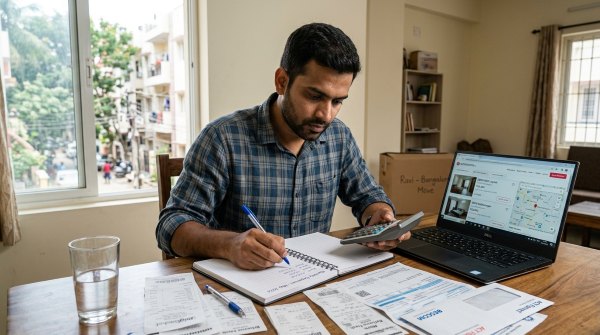
A single person living in Bangalore typically spends between ₹25,000–₹40,000 per month, including rent, food, transport, and utilities. A family of four usually budgets ₹60,000–₹1,00,000+ per month, largely driven by rent and school fees.
| Expense Category | Single Person (Monthly) | Family of 4 (Monthly) |
|---|---|---|
| Rent (1BHK / 3BHK) | ₹12,000 – ₹22,000 | ₹25,000 – ₹50,000 |
| Food & Groceries | ₹6,000 – ₹9,000 | ₹15,000 – ₹22,000 |
| Transport | ₹1,500 – ₹4,000 | ₹4,000 – ₹8,000 |
| Utilities (Electricity, Water, Gas, Internet) | ₹2,500 – ₹4,000 | ₹5,000 – ₹8,000 |
| Miscellaneous/Lifestyle | ₹3,000 – ₹6,000 | ₹8,000 – ₹15,000 |
3. Best Areas to Live in Bangalore
Best Localities for Job Seekers & IT Employees
| Locality | Approx. Rent (1BHK) | Why It Works |
|---|---|---|
| Sarjapur Road | ₹15,000 – ₹25,000 | Close to ORR tech parks |
| HSR Layout | ₹18,000 – ₹28,000 | Central, well-connected, lively |
| Electronic City | ₹10,000 – ₹16,000 | Affordable, near IT SEZs |
| Marathahalli | ₹14,000 – ₹22,000 | Good metro/bus connectivity |
| Whitefield | ₹15,000 – ₹25,000 | Tech park density, metro access |
| Hebbal | ₹14,000 – ₹20,000 | North Bangalore IT corridor |
Best Localities for Families
| Locality | Why It Works |
|---|---|
| Malleshwaram | Established, green, good schools |
| Jayanagar | Family-friendly, well-planned |
| Banashankari | Affordable, good schools nearby |
| Kanakapura Road | Quieter, newer developments |
| RR Nagar | Spacious housing, growing infra |
Things to Check Before Renting
4. Utilities Setup: Water, Power, Gas, Internet
5. Documentation & Paperwork After Moving
Bangalore has a few mandatory administrative steps that catch many newcomers off guard:
6. Is Bangalore Safe to Live In?
Bangalore is generally considered one of India's safer major cities, with a large working population, decent street lighting in central and IT-corridor areas, and an active police presence around tech hubs. As with any large city, exercise standard precautions — avoid poorly lit or isolated stretches late at night, and prefer registered cabs/autos after dark. Localities like HSR Layout, Indiranagar, Jayanagar, and Malleshwaram are commonly cited as comfortable for solo movers and families alike, partly due to their walkability and density of amenities.
7. Getting Around: Transport & Traffic in Bangalore
Public Transport
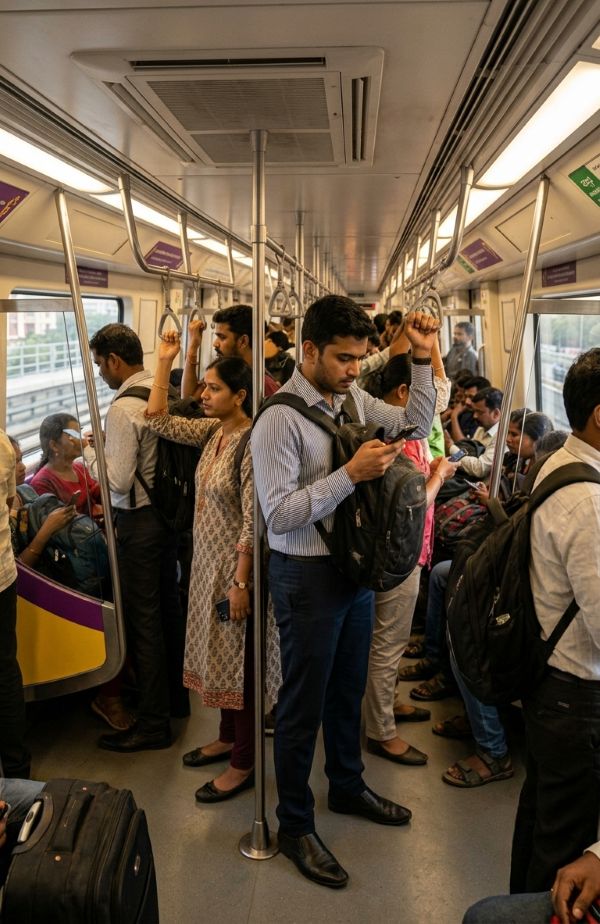
Namma Metro currently runs three operational lines — Purple, Green, and Yellow — covering roughly 86 stations across the city, including IT-corridor connectivity to Electronic City via the Yellow Line. The Pink and Blue Lines are under construction, with the Blue Line (a key IT corridor connecting KR Puram and Silk Board) expected to open in phases through 2026–2027; airport connectivity via the metro is targeted for the later part of this decade. Until then, the airport remains best reached by road.
BMTC buses remain the backbone of public transport, with extensive coverage across the city and suburbs.
Bus Pass Types & Cost (2026 rates)
| Pass Type | Approx. Cost |
|---|---|
| Ordinary Monthly Pass (Non-AC) | ~₹1,200 |
| Vajra Gold Monthly Pass (AC) | ~₹2,000 |
| Vayu Vajra Monthly Pass (Airport AC) | ~₹4,000 |
| Ordinary Weekly Pass | ~₹300 |
| Day Pass | ~₹32 – ₹75 |
Auto-Rickshaws: What to Expect
Unlike app-based cabs, street-hailed autos in Bangalore often negotiate before agreeing to a trip — don't be surprised if a driver asks your destination and declines before you even get in. This is common practice, not a sign of overcharging by default, though non-Kannada speakers should confirm the meter or fare upfront.
Traffic Hotspots & Peak Hours
| Heaviest Traffic Zones | Peak Hours |
|---|---|
| Silk Board Junction, Bannerghatta Road, Tin Factory, KR Puram, St. John's Signal, Sarakki Junction, KR Market | 8:30 AM – 11:30 AM & 5:30 PM – 8:00 PM |
Airport Connectivity
Kempegowda International Airport sits well outside the city core. With no direct metro link yet, budget 2.5–3.5 hours for airport runs during peak traffic, even from relatively central localities.
8. Arriving in Bangalore by Train or Bus
If you're arriving without personal transport, knowing which station or bus stand serves your destination zone saves significant time.
By Train
- North Bangalore: Yeshwantpur, KR Puram
- South Bangalore: KSR Railway Station
- East Bangalore: KR Puram, Whitefield
- West Bangalore: Yeshwantpur, JnanaBharathi, Kengeri
By Bus
- North Bangalore: KR Puram, Yelahanka, Chikkabanavara
- South Bangalore: Majestic, Jayanagar, Mysore Road Satellite Bus Stand, Kengeri
- East Bangalore: Sarjapur Road, Silk Board, Marathahalli, Whitefield
- West Bangalore: Yeshwantpur, Magadi Road, Vijayanagar, Rajajinagar, Malleshwaram
If you're coordinating a full household move rather than just personal travel, it's worth understanding Bangalore moving charges before you hire, so you can budget accurately and avoid surprises — especially for interstate relocations where timing your arrival with your move-in date matters.
9. Healthcare in Bangalore
Bangalore has strong private healthcare infrastructure, including Manipal Hospitals, Fortis, Apollo, and Narayana Health, alongside NIMHANS for specialized neuro and mental health care. Most employers provide group health insurance, but it's worth arranging independent coverage if you're moving without employer-sponsored insurance. Keep local emergency numbers (108 for ambulance) saved as soon as you arrive.
10. Language & Culture: What to Know Before You Move
Six languages are commonly spoken across Bangalore — Kannada, Tamil, Telugu, Malayalam, Hindi, and English — so most newcomers get by comfortably in at least one. One thing locals do care about: the language is Kannada, not "Kannad." Mispronouncing it is a minor but real friction point with Kannadigas, who are otherwise known for being accommodating to newcomers.
If you're relocating from North India, this guide on adjusting to life in South India covers cultural differences in more depth.
11. Settling In: Food, Shopping & Local Life
Bangalore's food scene blends traditional South Indian staples — masala dosa, idli-vada, bisibele baath — with virtually every global cuisine, thanks to its cosmopolitan population. Filter coffee is practically a local institution.
For budget shopping, Chickpet and Avenue Road are go-to wholesale areas for textiles and books, while Commercial Street and KR Market cover everyday essentials and fresh produce.
The city is also known as the "Garden City of India," with green cover and lakes (Lalbagh, Cubbon Park, Ulsoor Lake) offering weekend breathing room from the traffic.
12. Weather & Climate: What to Expect
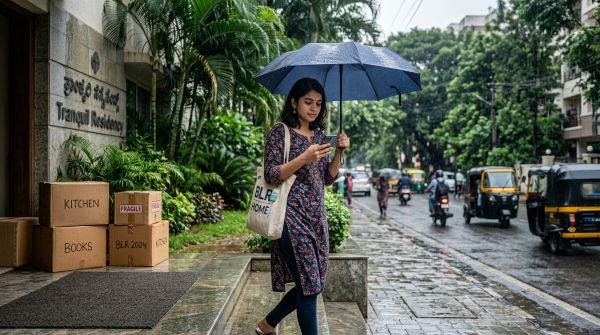
Bangalore has a moderate climate year-round compared to most Indian cities, but planning your move around the seasons helps.
| Season | Months | Temperature Range | What to Pack |
|---|---|---|---|
| Summer | March – May | 24°C – 35°C | Light cottons, sun protection |
| Monsoon | June – September | 20°C – 28°C | Rain gear; expect waterlogging and traffic delays |
| Winter | November – February | 14°C – 26°C | Light woolens for mornings/evenings |
13. Education: Schools & Colleges (For Relocating Families)
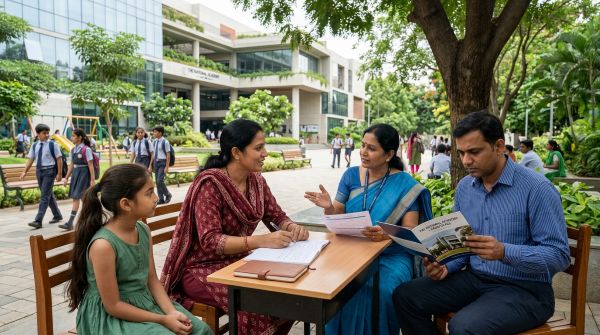
Bangalore has a dense concentration of reputed schools and colleges, which is part of why it's a popular destination for relocating families. If you're moving mid-academic-year, start school admission inquiries early — many reputed schools have limited mid-year seats and waitlists.
Notable institutions: IIMB (management), RVCE & BMSCE (engineering), NLSIU (law), NIFT (fashion design), St. John's Medical College & BMC (medical).
Frequently Asked Questions
Conclusion
Moving to Bangalore doesn't have to be overwhelming once you know what's actually involved — choosing the right locality for your budget and commute, setting up utilities correctly, handling mandatory paperwork like tenant police verification, and planning around the city's traffic and monsoon patterns.
At AssureShift, we've helped thousands of families and professionals relocate to Bangalore smoothly, connecting them with verified, background-checked packers and movers across the city. If you're planning your move, hire trusted packers and movers in Bangalore and get up to 40% off on your booking.