8 Common Furniture Moving Mistakes and How to Avoid Them
Moving furniture seems straightforward — until a wardrobe's corner gets gouged on a staircase railing, or a glass table top arrives in pieces. These are not accidents; they are the predictable result of avoidable furniture moving mistakes. A large percentage of furniture damage during relocation happens due to avoidable mistakes — not accidents.
If you are planning a furniture relocation — whether across a neighbourhood or across cities — this guide walks you through 8 of the most common furniture moving mistakes, why they happen, and exactly what to do instead. From packing materials and truck loading to transit insurance and heavy furniture handling, every section is built for practical use by anyone working with packers and movers in India — where narrow staircases, monsoon season, and long-distance truck transport add real complexity to every move.
Mistake 1: Not Planning Your Move Early Enough
Leaving planning to the last week leads to rushed packing, unavailable movers, and no opportunity to measure access points — all of which increase the risk of damage and delay. In cities like Mumbai or Delhi, building access restrictions and narrow corridors make pre-measurement non-negotiable.
Consequences of poor planning:
- No time to source correct types of packing materials
- Booked movers are unavailable on your preferred dates
- Furniture too large for doorways discovered on moving day — not before
4-Week Moving Countdown
Mistake 2: Skipping Furniture Preparation Before Moving Day
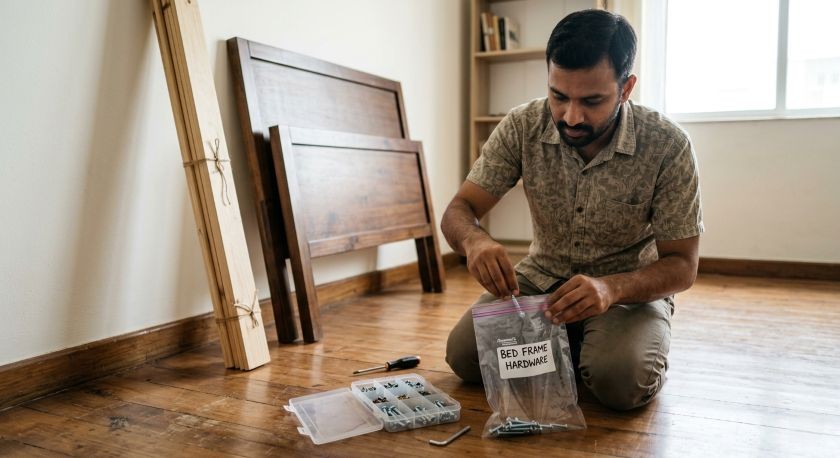
Furniture that goes into a truck unprepared — dirty, unphoto-documented, still assembled — is far more likely to arrive damaged or unaccountable. Preparation is not optional; it is part of the move itself.
Why photographing before disassembly matters: Photograph every piece of furniture before taking it apart. This gives you reassembly reference images and doubles as pre-move evidence if you need to file a damage claim later. This step is skipped on most moving checklists — do not skip it.
What to disassemble: Beds, large wardrobes, dining tables, and bookshelves should be broken down where possible. Store all screws, bolts, and fittings in labelled zip-lock bags taped to the corresponding furniture piece.
Mistake 3: Using the Wrong Packing Materials for Furniture
What NOT to use:
- Newspaper — ink transfers and provides minimal cushioning
- Regular adhesive tape directly on wood — leaves residue, strips finish
- Single-layer bubble wrap on glass — inadequate for transit impact
| Furniture Type | Recommended Material |
|---|---|
| Wooden furniture | Moving blankets + stretch wrap |
| Glass tops / mirrors | Bubble wrap + corrugated cardboard + edge protectors |
| Upholstered sofa / chairs | Sofa covers + stretch wrap |
| Marble tops | Foam padding + wooden crating |
| Metal parts | Bubble wrap + sealed zip-lock bags |
Mistake 4: Failing to Protect Fragile Furniture Parts
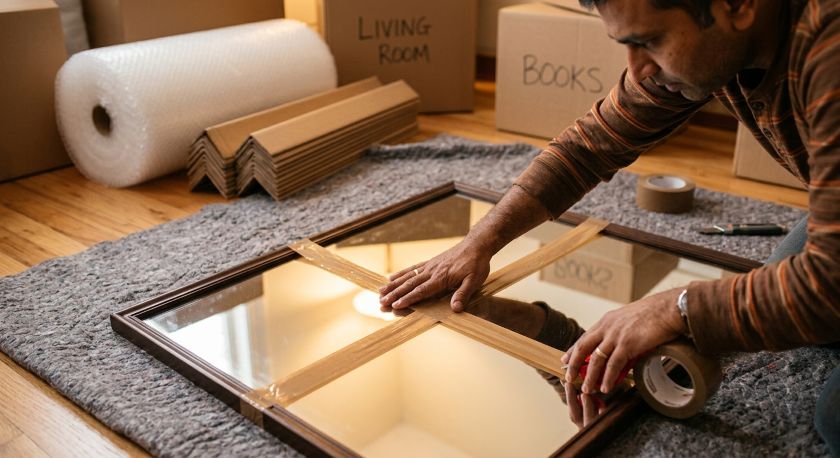
Glass Elements (Tables, Cabinets, Mirrors)
- Apply cross-tape on the glass surface before wrapping — holds the glass together if it cracks during transit
- Use moving blankets for wooden furniture, bubble wrap for packing fragile items, and stretch wrap for upholstered items.
- Use foam edge protectors on all corners
- Always transport glass items vertically — never flat
Delicate Wood Finishes
- Never allow stretch wrap to contact bare wood directly — it can trap moisture and damage the finish
- Use moving blankets as the first layer, then secure with stretch wrap over the blanket
- Pay extra attention to table edges and cabinet corners
Marble and Stone Tops
- Marble tops must be removed from dining tables before moving — never transport assembled
- Wrap in thick foam padding, then crate in custom-cut cardboard or wooden boards
- Transport vertically, never flat — marble cracks under its own weight when laid horizontal
Mistake 5: Loading Furniture Into the Moving Truck Incorrectly
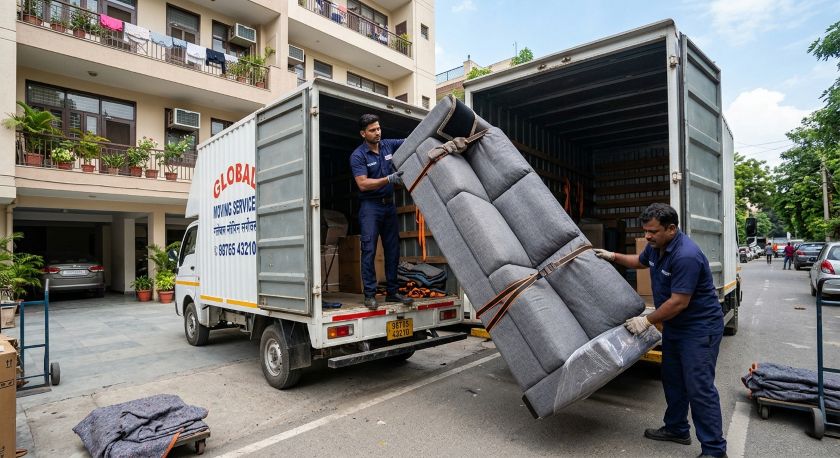
How furniture is arranged inside the truck is just as important as how it is packed. Incorrect loading — items stacked wrong, gaps left unfilled, furniture oriented incorrectly — causes as much damage as poor packing.
Do
- Load heaviest items against truck walls first
- Use straps to secure all pieces
- Load sofas vertically on their side
- Cover with waterproof sheets in monsoon
Don't
- Stack heavy items on top of boxes
- Leave gaps unfilled between furniture
- Lay a sofa flat if it damages the frame
- Assume closed trucks are waterproof
Mistake 6: Moving Furniture Without Adequate Insurance Coverage
Most people only think about furniture moving insurance after something has already gone wrong. In India, where long-distance truck transport across varying road conditions is common, transit insurance is not optional — it is essential.
Carrier liability vs. transit insurance: Carrier liability compensates based on the weight of damaged goods — not their actual value. Transit insurance covers the declared value of your items. For a home move, transit insurance is the correct choice.
Also check: Whether your existing home insurance covers goods in transit. Many policies in India include this — most policyholders are unaware.
| Insurance Type | What It Covers | Best For |
|---|---|---|
| Basic carrier liability | Weight-based compensation | Low-value items |
| Transit insurance | Declared value of goods | Most home moves |
| Full-value protection | Replacement cost | Antiques, expensive furniture |
What to Do If Furniture Is Damaged on Delivery
- Photograph the damage immediately before moving anything
- Note the damage on the delivery receipt before signing
- Contact your insurer within 24–48 hours with photographs and your delivery receipt
Mistake 7: Skipping the Labeling and Inventory Process
Without a complete inventory, you cannot file a complete insurance claim. Missing labels also mean boxes end up in wrong rooms, fragile items are stacked incorrectly, and unpacking becomes a slow, disorganised process.
- Label all 4 sides of a box, not just the top
- Use colour-coded stickers per room
- Mark boxes with fragile symbols on every visible face
- Use Google Sheets or an app like Sortly for a digital inventory
- Photograph items before packing — this record doubles as insurance documentation
Mistake 8: Moving Heavy Furniture Without Professional Help or Proper Equipment
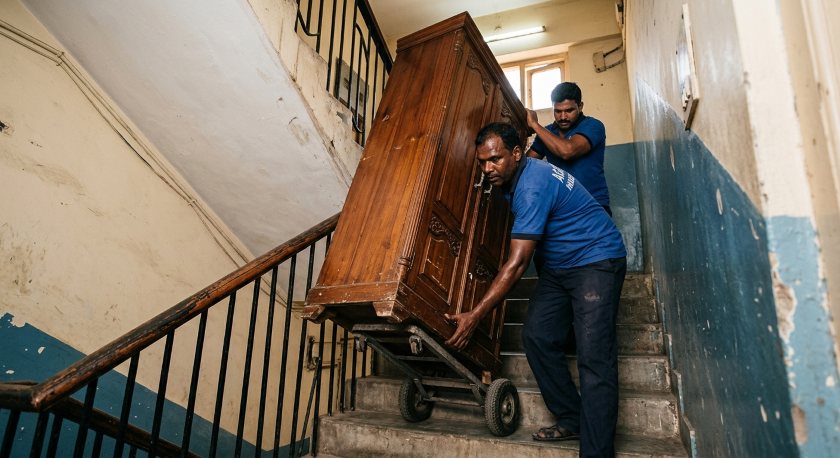
Back injuries are the most common moving-related injury, and heavy furniture is the leading cause. Attempting to move a double wardrobe, large sofa, or heavy dining table without the right equipment is a risk to both people and the furniture itself — following proven steps to move furniture easily makes a real difference.
Equipment that helps: Furniture dollies, floor sliders, and lifting straps dramatically reduce injury risk and protect floors and door frames during heavy item transport.
When to call professionals: In multi-floor apartments across Bangalore, Hyderabad, or Chennai — where lifts are often unavailable or too small — professional movers with staircase handling experience are essential. For heavy, fragile, or antique furniture, professional house shifting services with the right equipment are always the safer choice.
Frequently Asked Questions
Key Takeaways
Moving furniture safely is entirely achievable — it requires preparation, not luck. When you avoid these 8 mistakes, the result is a relocation where your furniture arrives intact, your move completes on schedule, and there are no unexpected repair or replacement costs waiting at the other end.
Looking for experienced packers and movers who handle your furniture with care? Compare verified moving companies on AssureShift and get free quotes today.