Moving to Delhi for a New Job? Here's What You Should Know

Starting a new job in Delhi is a significant career milestone! As India's capital and a major economic hub, this city offers incredible opportunities, a rich historical legacy, and a dynamic urban lifestyle. However, moving to a new metropolis can be overwhelming—from selecting the right locality to understanding the local pace of life.
This complete guide provides everything required for a seamless transition: choosing neighborhoods based on your office location, managing monthly budgets, navigating Delhi's rental landscape, and practical advice for settling into the capital's unique rhythm.
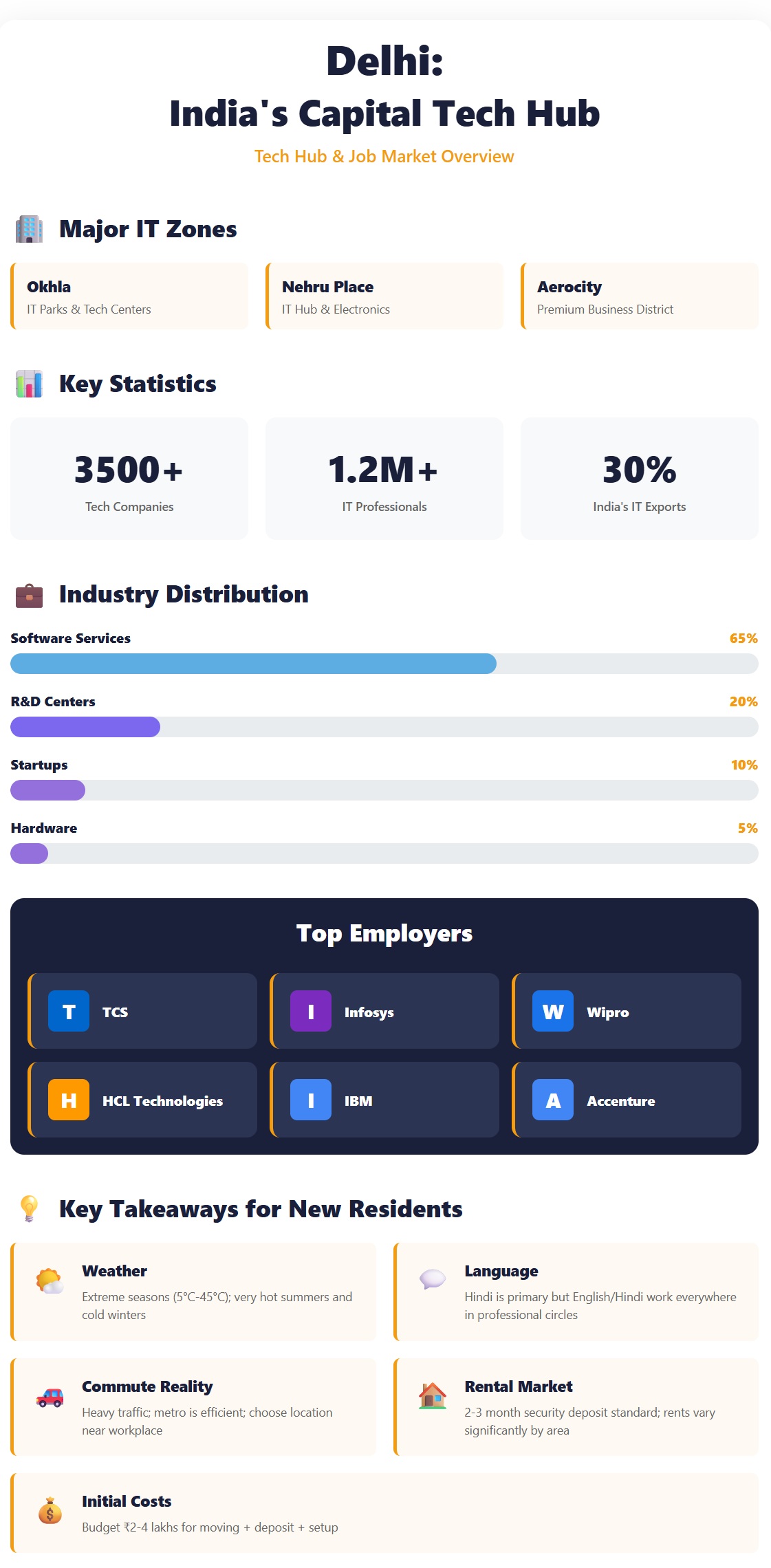
Table of Contents
- Understanding Delhi: City Basics
- Choosing the Right Neighborhood
- Finding Your Accommodation
- Planning Your Move: Timeline & Checklist
- Getting Around Delhi
- Cost of Living Breakdown
- Settling In: First Week Essentials
- Work Culture & Professional Life
- Healthcare & Essential Services
- Delhi Food Scene
- Weekend Exploration & Getaways
- Pro Tips & Common Challenges
- Frequently Asked Questions
Understanding Delhi: City Basics
Climate and Weather
Delhi experiences a wide range of seasons, from very hot summers to chilly winters. Being prepared for these extremes is key.
- Summer (Apr-Jun): 32°C-45°C, hot and dry, with occasional dust storms (loo)
- Monsoon (Jul-Sep): Moderate to heavy rainfall, high humidity
- Autumn (Oct-Nov): 20°C-30°C, pleasant and comfortable
- Winter (Dec-Feb): 5°C-20°C, cold with dense fog (kohra) affecting transport
Packing Tip: Heavy woolens, jackets, and thermals are essential for winter. Light cotton clothes, sunscreen, and a hat are must-haves for summer.
Language and Culture
Hindi is the most widely spoken language, but Delhi is a true melting pot. You'll hear Punjabi, Urdu, English, and many other Indian languages across the city.
- Professional Settings: English and Hindi are commonly used in corporate offices
- Local Interactions: Basic Hindi phrases are very helpful in markets and with local transport
- Cultural Blend: A unique mix of historical Mughal and British influences with a fast-paced modern lifestyle
💡 Pro Tip: Learn a few Hindi phrases: "Namaste" (hello), "Shukriya" (thank you), "Kitna hua?" (how much?). While English is understood in many places, using Hindi helps build rapport with locals.
Choosing the Right Neighborhood
Your daily commute and quality of life are heavily influenced by your locality. Consider these factors:
Key Decision Factors:
- Commute Time: Delhi's traffic is notorious. Use Metro connectivity as a primary filter.
- Metro Connectivity: Areas near Delhi Metro stations are premium for daily commuters.
- Air Quality: Some areas consistently have better AQI. Consider this for long-term health. Check our guide on Delhi areas with better air quality.
- Budget: Rent varies dramatically from South Delhi's posh colonies to affordable options in West or North Delhi.
- Lifestyle: Vibrant nightlife in South Delhi vs. quieter, family-centric neighborhoods.
Area Guide Based on Workplace:
Working in Connaught Place/CP & Central Delhi:
- Karol Bagh: Well-connected, great markets, mix of old and new (Rent: ₹15,000-35,000 for 1-2BHK)
- Paharganj: Budget-friendly, close to New Delhi Railway Station (Rent: ₹10,000-25,000)
- Golf Links & Sunder Nagar: Ultra-premium, diplomatic enclaves (Rent: ₹70,000+)
Working in Gurgaon (Corporate Hubs):
- South Delhi (Near Gurgaon Border): Vasant Kunj, Hauz Khas. Upscale, good connectivity via MG Road (Rent: ₹25,000-50,000)
- Dwarka: Planned sub-city, excellent Metro connectivity to Gurgaon via Blue Line (Rent: ₹15,000-30,000)
- Palam Vihar (Gurgaon): Directly in Gurgaon, slightly more affordable than upscale sectors.
Working in Noida:
- East Delhi: Mayur Vihar, Patparganj. Good connectivity via Blue Line and bridges (Rent: ₹12,000-28,000)
- Noida itself: Sector 62, 50. Modern apartments, often better infrastructure (Rent: ₹14,000-30,000)
- Vaishali, Ghaziabad: Affordable options with Metro access.
Working in South Delhi (Defence Colony, Nehru Place, Saket):
- Greater Kailash (GK): Upmarket, excellent markets, family-friendly (Rent: ₹25,000-60,000)
- Lajpat Nagar: Vibrant, famous for markets, central location (Rent: ₹18,000-40,000)
- Hauz Khas: Bohemian vibe, cafes, nightlife (Rent: ₹30,000-60,000+)
Explore a detailed comparison in our guide: Delhi NCR for Families: Comparing Gurgaon, Noida and Delhi Proper.
Budget-Friendly Options:
If you're watching your expenses, consider these areas:
- West Delhi: Uttam Nagar, Janakpuri, Tilak Nagar (good Metro connectivity)
- North West Delhi: Rohini, Pitampura (well-planned, family-oriented)
- Outer Delhi: Narela, Burari (most affordable, but check connectivity)
💡 Pro Tip: Prioritize living near a Metro station, even if the rent is ₹2,000-₹4,000 higher. The reliability, time savings, and comfort during extreme weather are invaluable.
Finding Your Accommodation
Types of Housing Options:
PG (Paying Guest): ₹7,000-₹18,000/month
- Ideal for: Singles/bachelors new to the city
- Includes: Furnished room, meals (often), Wi-Fi, sometimes laundry
- Benefits: Low commitment, built-in community, no heavy deposits
- Best for: First few months while you explore and understand the city
Shared Apartments (Flatmates): ₹9,000-₹20,000/person
- Ideal for: Young professionals wanting independence but lower costs
- Benefits: More privacy than a PG, shared expenses
- Platforms: Facebook groups ("Flat and Flatmates Delhi NCR"), Nestaway, NoBrokerHood
1BHK/2BHK Independent: ₹12,000-₹50,000+
- Ideal for: Couples, families, or professionals wanting complete privacy
- Benefits: Your own space, freedom to customize
- Considerations: High security deposit, need to manage all utilities and furnishings
Rental Market Reality:
Be prepared for these standard practices in Delhi:
- Security Deposit: Typically 2-3 months' rent in many modern apartments, but can be 10 months in older Delhi houses (DDA flats often have lower deposits).
- Brokerage Fee: Usually 1 month's rent or 15-20% of annual rent if using an agent.
- Lease Period: Most common is 11 months (to avoid rent control act).
- Rent Escalation: 5-10% annual increase is standard.
- Advance Rent: First month's rent paid upfront.
Finding Properties:
| Method | Pros | Cons |
|---|---|---|
| Online Platforms (NoBroker, MagicBricks, 99acres) | Wide selection, filters, photos, owner contact | Listings may be outdated; need verification |
| Facebook Groups ("Flats and Flatmates Delhi") | Direct contact, no brokerage, good for shared accommodations | Can be time-consuming, requires careful screening |
| Local Brokers (Property Dealers) | Local area expertise, handles paperwork and negotiation | Brokerage fee, quality varies greatly |
| Company Tie-ups/Relocation Services | Verified properties, often corporate standards | Limited choice, might be pricier |
Before signing, know your rights and responsibilities. Read our guide on Rent Rules and Regulations for property owners and tenants.
Planning Your Move: Timeline & Checklist
6-8 Weeks Before Moving:
- Research neighborhoods based on confirmed office location and budget.
- Get your offer letter and joining date confirmed.
- Begin decluttering – decide what to move, sell, or donate.
- If moving with family, start researching schools using our guide on finding the best schools in a new city.
4 Weeks Before Moving:
- Finalize accommodation (PG/rental) after a virtual or physical visit if possible.
- Book travel tickets to Delhi.
- Start collecting packing supplies (boxes, tape, bubble wrap).
- Notify your current landlord (if applicable).
2 Weeks Before Moving:
- Get quotes from professional packers and movers. Understand the standard charges for household shifting in India.
- Transfer or close utility accounts (electricity, gas) at your current home.
- Begin the address change process for banks and subscriptions.
- Arrange for temporary accommodation in Delhi if your rental isn't ready.
1 Week Before Moving:
- Confirm moving arrangements
- Pack essentials separately (documents, medications, valuables)
- Prepare inventory of belongings
- Say goodbye to friends and colleagues
Getting Around Delhi
Public Transportation:
Delhi Metro:
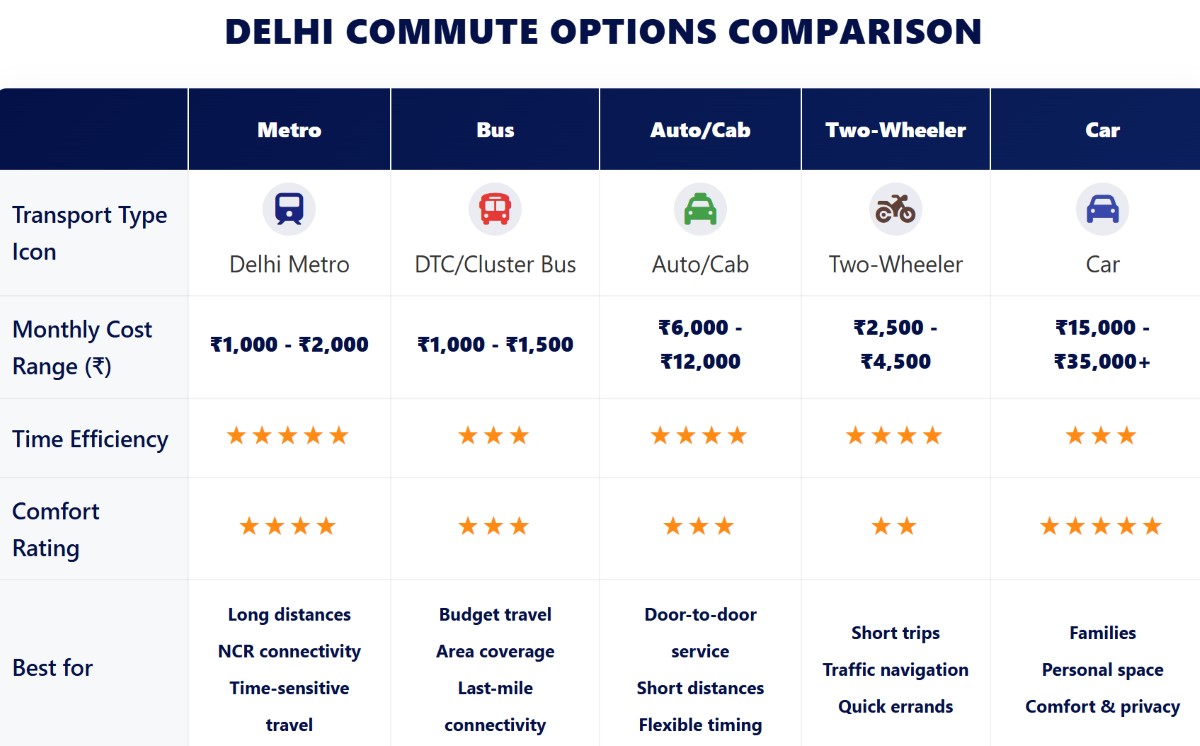
- The backbone of Delhi's commute. Fast, reliable, and air-conditioned.
- Extensive network covering almost all major areas and connecting to Noida, Gurgaon, Ghaziabad, Faridabad.
- Fare: ₹10-₹60 depending on distance.
- Smart Card (recommended): Offers 10% discount, easy recharge via app.
- Timings: Approximately 5:30 AM to 11:30 PM.
DTC & Cluster Buses:
- Extensive network reaching areas not covered by Metro.
- Daily pass: ₹50 (DTC) or ₹70 (Cluster).
- Monthly pass: ₹1,000-₹1,500.
- Use apps: 'Delhi Traffic Police', 'Chalo' for routes and real-time tracking.
Ride-Sharing & Taxis:
- Ola/Uber: Widely available. Consider 'Ola Metro' for last-mile connectivity from stations.
- Auto-Rickshaws: Abundant. Always insist on the meter (fare chart is inside). For longer trips, agree on a fare beforehand.
- E-Rickshaws: Common for short distances in residential areas and near Metro stations.
- Cycle Rickshaws: Found in older parts of Delhi (Chandni Chowk, Old Delhi).
Personal Vehicles:
Two-Wheelers (Scooter/Motorcycle):
- Excellent for navigating traffic and narrow lanes.
- Monthly fuel cost: ₹2,500-₹4,000.
- Consider traffic, pollution, and safety (always wear a helmet).
Car Ownership/Usage:
- Consider if: You have a family, travel frequently outside peak hours.
- Monthly cost: ₹15,000-₹35,000+ (EMI/Depreciation + fuel + maintenance + parking).
- Major Challenges: Traffic jams, finding parking (especially in South/Central Delhi), high pollution, odd-even rules (winters).
Commute Reality & Tips:
- Peak Hours: 9 AM - 12 PM and 5 PM - 8:30 PM. Avoid if possible.
- Average Commute: A 15km drive can easily take 60-90 minutes during rush hour.
- Winter Fog Impact: Dense fog in Dec-Jan severely affects flight, train, and road schedules. Allow extra time.
- Best Practices:
- Plan your life around the Metro map.
- Use a combination of Metro + Auto/E-Rickshaw for the most efficient commute.
- Negotiate flexible work hours with your employer to avoid peak traffic.
- Download essential apps: Delhi Metro, Ola/Uber, Google Maps (with traffic).
Cost of Living Breakdown
Monthly Budget Overview:
| Living Situation | Basic Budget | Comfortable Budget |
|---|---|---|
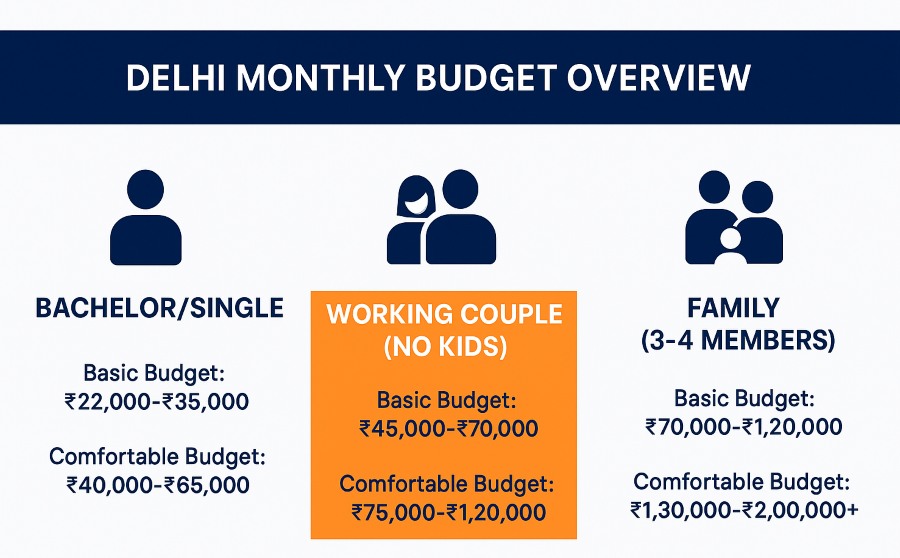
| Bachelor/Single | ₹22,000-₹35,000 | ₹40,000-₹65,000 |
| Working Couple (No Kids) | ₹45,000-₹70,000 | ₹75,000-₹1,20,000 |
| Family (3-4 members) | ₹70,000-₹1,20,000 | ₹1,30,000-₹2,00,000+ |
Detailed Expense Categories:
1. Housing (35-45% of budget):
- Rent (1BHK): ₹12,000 - ₹35,000 (varies massively by location)
- Maintenance/Society Charges: ₹1,000-₹5,000
- Electricity: ₹1,500-₹4,000 (AC usage in summer spikes this)
- Water: ₹300-₹800
- Internet (Fiber): ₹700-₹1,200
2. Food & Groceries (25-30%):
- Monthly groceries (per person): ₹3,000-₹6,000
- Eating out (street food to restaurants): ₹3,000-₹10,000
- Office lunches/coffee: ₹2,500-₹5,000
3. Transportation (10-15%):
- Metro Smart Card recharge: ₹1,500-₹3,000
- Fuel (if own vehicle): ₹3,000-₹6,000
- Cab/Auto for occasional trips: ₹2,000-₹4,000
4. Lifestyle & Entertainment (10-15%):
- Movies/Events: ₹1,000-₹3,000
- Gym membership: ₹1,000-₹3,500
- Shopping (clothes, etc.): ₹2,000-₹6,000
- Weekend outings: ₹2,000-₹5,000
5. Miscellaneous (10%):
- Mobile recharge: ₹300-₹600
- Personal care: ₹1,000-₹2,500
- Streaming subscriptions: ₹500-₹1,000
- Contingency/Emergency fund: ₹2,000-₹5,000
For a comprehensive, updated analysis, read our dedicated guide: Cost of Living in Delhi 2025: Complete Guide & Prices.
Settling In: First Week Essentials
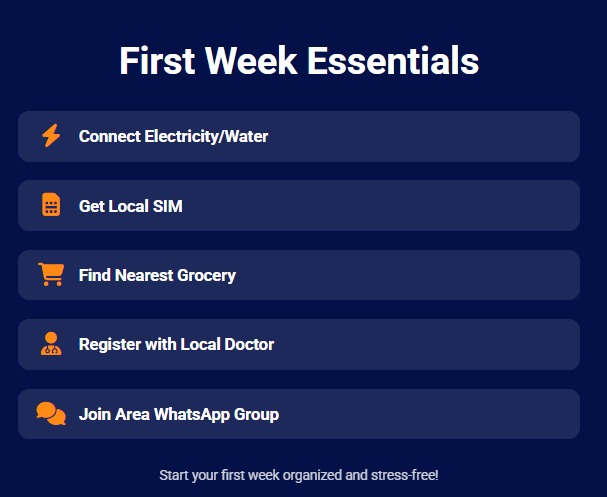
Immediate Setup Tasks:
Utilities Connection:
- Electricity: BSES (BRPL/BYPL) or TPDDL (Tata Power). Apply online or at the customer care center. Keep a copy of your rental agreement and ID proof.
- Water: Delhi Jal Board (DJB). Often included in society maintenance; if not, apply separately.
- Cooking Gas: Apply for a new Indane/HP/Bharat Gas connection (requires address proof). Can take 1-2 weeks. Alternatively, use cylinder delivery apps (e.g., BharatGas on Blinkit) or piped natural gas (PNG) if available.
- Internet: Popular providers: Airtel Xstream, JioFiber, ACT. Installation usually within 2-3 days.
Local Documentation:
- Aadhar Address Update: Visit a nearby Common Service Centre (CSC) or update online via UIDAI portal.
- Mobile SIM: Get a local number. Delhi has excellent 4G/5G coverage from all major operators.
- Bank Account: Open an account with a bank having wide ATM network (HDFC, ICICI, SBI, Axis).
- Delhi Voter ID: Apply online through the National Voter's Service Portal (NVSP).
Essential Services to Locate:
- Nearest Metro station and bus stop.
- Local market (sabzi mandi) and a supermarket (More, Big Bazaar, Reliance Fresh).
- 24x7 Medical Store (Apollo, MedPlus, local chemist).
- Hospital/Clinic for emergencies (know the nearest multi-specialty).
- Laundry service (many local 'dhobi ghats' or app-based services like UClean).
- ATMs of your bank.
Building Your Local Network:
- Introduce yourself to your neighbors.
- Join your apartment/society's WhatsApp group.
- Connect with colleagues from your hometown or college.
- Join Facebook/Meetup groups based on hobbies (e.g., "Delhi Foodies", "Delhi Photography Club").
- Attend your company's onboarding and social events.
💡 Pro Tip: In your first week, don't try to do everything. Focus on getting your bed, internet, and basic kitchen set up. Exploration can follow.
Work Culture & Professional Life
Delhi-NCR Work Environment:
Corporate Culture (Gurgaon/Noida):
- Professional, fast-paced, and competitive.
- Formal to business-casual dress code common in MNCs and corporate offices.
- Emphasis on hierarchy and formal communication initially.
- Often have structured work hours, but flexibility is growing.
Government & PSU Culture (Central Delhi):
- More structured and formal with fixed timings.
- Process-driven environment.
- Job security and defined benefits.
Startup & Media Culture (South Delhi, Mehrauli-Gurgaon Road):
- Casual, dynamic, and fluid work hours.
- High energy, focus on innovation and agility.
- Open office layouts, informal interactions.
Networking Opportunities:
- Industry Events: Frequent conferences, seminars, and workshops held at hotels/convention centers.
- Co-working Spaces: WeWork, 91springboard, etc., host regular networking evenings.
- Chambers of Commerce: FICCI, CII, PHD Chamber events.
- Alumni Networks: Strong alumni chapters for most major universities.
- Cultural & Social Clubs: Gymkhana Club, India International Centre (IIC) events.
Work-Life Balance Tips:
- Commute is the biggest work-life balance challenge. Minimize it.
- Many companies offer transport facilities or cab allowances.
- Delhi's social scene is vibrant – make time for weekends to explore.
- Set clear boundaries between work and personal time, especially when working hybrid/remote.
- Utilize your earned leaves for short getaways to nearby hills (Shimla, Mussoorie).
Healthcare & Essential Services
Major Hospitals:
Multi-Specialty Private Hospitals:
- All India Institute of Medical Sciences (AIIMS) - Premier government institution.
- Apollo Hospitals (multiple branches - Sarita Vihar, Jasola, Delhi-NCR)
- Fortis Escorts Heart Institute, Fortis (multiple locations)
- Max Super Speciality Hospitals (Saket, Patparganj, etc.)
- Sir Ganga Ram Hospital (Rajinder Nagar)
- Indraprastha Apollo Hospital (Sarita Vihar)
Government Hospitals:
- Dr. Ram Manohar Lohia Hospital (Central Delhi)
- Safdarjung Hospital
- Lady Hardinge Medical College
- Lok Nayak Hospital (near Delhi Gate)
Healthcare Tips for Newcomers:
- Health Insurance: Most employers provide it. Verify the network hospitals and coverage limits.
- Find a Local GP: Ask colleagues or neighbors for recommendations for a good family doctor or clinic nearby.
- Pharmacies: 24/7 chains are common: Apollo Pharmacy, MedPlus, Netmeds (delivery).
- Emergency Numbers:
- Police: 100
- Ambulance: 102 or 108 (centralized emergency)
- Women's Helpline: 1091
- Delhi Police Helpline: 112 (all-in-one emergency)
Delhi Food Scene
Must-Try Local & Street Food:
- Chole Bhature: Fluffy fried bread with spicy chickpeas.
- Paranthas (at Paranthe Wali Gali, Chandni Chowk)
- Butter Chicken & Naan (Iconic Mughlai cuisine)
- Chaat (Papdi Chaat, Aloo Tikki, Golgappe) - Try at Bengali Market, Chandni Chowk.
- Kebabs (at Jama Masjid area - Karim's, Al Jawahar)
- Desserts: Rabri Faluda, Kulfi, Jalebi.
Iconic Food Areas & Streets:
- Old Delhi (Chandni Chowk, Jama Masjid): Historic street food paradise.
- Khan Market: Upscale cafes, international cuisine, bookstores.
- Hauz Khas Village & Main Market: Trendy cafes, pubs, and restaurants with a view.
- Connaught Place (CP): Mix of old iconic restaurants (United Coffee House) and new chains.
- Satya Niketan (Near Delhi University): Budget-friendly, vibrant student hub.
- Majnu ka Tilla: Tibetan colony offering authentic momos and thukpa.
Cooking at Home:
- Local Markets (Sabzi Mandi): Cheapest for fresh vegetables and fruits. Every locality has one.
- Supermarkets: More, Reliance Fresh, Big Bazaar, Spencer's for packaged goods.
- Online Grocery: BigBasket, Blinkit (10-15 min delivery), Zepto, Swiggy Instamart.
- Specialty Stores: INA Market (for international ingredients), Khari Baoli (Asia's largest spice market).
Weekend Exploration & Getaways
Within Delhi:
- Historical: Red Fort, Qutub Minar, Humayun's Tomb, India Gate, Rashtrapati Bhavan.
- Cultural: National Museum, National Gallery of Modern Art (NGMA), Crafts Museum.
- Spiritual: Lotus Temple, Akshardham Temple, Bangla Sahib Gurudwara, Jama Masjid.
- Markets: Dilli Haat (crafts & food), Sarojini Nagar (budget shopping), Lajpat Nagar, Janpath.
- Greenery: Lodhi Gardens, Garden of Five Senses, Nehru Park.
Weekend Getaways (3-5 hours drive):
Hill Stations:
- Shimla: 350 km, classic British-era hill station.
- Mussoorie: 280 km, "Queen of the Hills."
- Nainital: 300 km, beautiful lake district.
- Rishikesh/Haridwar: 230 km, spiritual retreat & adventure sports.
Historical & Cultural:
- Agra (Taj Mahal): 230 km, day trip possible.
- Jaipur: 280 km, the Pink City (part of Golden Triangle).
- Neemrana: 120 km, for the famous Neemrana Fort Palace stay.
- Mathura-Vrindavan: 150 km, sacred towns associated with Lord Krishna.
Hobby & Interest Groups:
- Trekking: Delhi has many groups organizing weekend treks to nearby hills.
- Sports: Book courts via Playo app; many clubs for badminton, swimming, squash.
- Books & Literature: Attend events at India International Centre, Habitat World, or book launches in bookstores.
- Photography Walks: Groups often organize photo walks in Old Delhi or Lodhi Gardens.
Pro Tips & Common Challenges
Adapting to Delhi Life:
- Learn Basic Hindi: It significantly eases daily interactions in markets, autos, and with support staff.
- Respect the Pace: Delhi is fast, assertive, and can feel aggressive initially. Develop a thick skin for driving and crowded places.
- Dress for the Season: Extreme weather requires wardrobe adjustments. Invest in a good winter jacket and summer cottons.
- Embrace the Contrasts: Delhi is a city of stark contrasts – ancient monuments next to glossy malls, luxury cars alongside cycle rickshaws.
Common Challenges & Solutions:
1. Pollution & Air Quality (Oct-Feb especially):
- Challenge: Very poor to severe AQI, health concerns.
- Solution: Use N95/99 masks outdoors, invest in a good air purifier for your home, consider living in areas with relatively better AQI, monitor AQI apps.
2. Traffic and Commute Stress:
- Challenge: Long, unpredictable travel times.
- Solution: Live near Metro, use Metro + last-mile options, negotiate flexible work hours, plan errands outside peak times.
3. Safety Perceptions (especially for women):
- Challenge: Need for heightened awareness, especially at night and in certain areas.
- Solution: Use trusted cab services (share live location), avoid isolated areas/parks after dark, be assertive, join women's safety groups, install safety apps.
4. Finding a Trustworthy Community:
- Challenge: The city can feel impersonal and lonely initially.
- Solution: Proactively join hobby groups, connect with colleagues, participate in society events. Check our guide on building a local network.
Safety Tips:
- Always use pre-paid taxi/auto counters at airports and railway stations or app-based cabs.
- Keep emergency contacts on speed dial.
- Be cautious with your belongings in crowded markets and Metro.
- Learn about the safer and less-safe areas of your neighborhood from colleagues or neighbors.
- For women: Trust your instincts. Delhi has a strong community of women who support each other – find yours.
To get a balanced view before your move, read our detailed analysis: Moving to Delhi? Here are The Pros and Cons You Need to Know.
Frequently Asked Questions
Q1: What salary do I need to live comfortably in Delhi?
For a single person: ₹40,000-65,000 per month allows for a comfortable lifestyle in a decent 1RK/1BHK near Metro, eating out occasionally, and saving. For a couple without kids: ₹75,000-1,20,000 combined is a good range.
Q2: Is knowing Hindi mandatory in Delhi?
Not mandatory, but highly recommended for daily life. You can manage in professional settings, malls, and upscale restaurants with English. However, for interacting with local shopkeepers, auto drivers, and in many residential areas, basic Hindi is extremely useful.
Q3: How much should I budget for initial setup costs?
Budget approximately ₹1.5 - ₹3 lakhs for:
- Security deposit: ₹30,000 - ₹1,50,000 (2-10 months rent)
- Brokerage: ₹15,000-₹40,000 (if using an agent)
- Basic furnishings/appliances: ₹50,000-₹1,00,000
- Utility connections & advances: ₹10,000-₹20,000
Q4: Which area is best for working professionals?
It depends entirely on your workplace:
- Gurgaon offices: Dwarka, South Delhi areas near MG Road, or Gurgaon itself (Sectors 45-57).
- Noida offices: East Delhi (Mayur Vihar, Preet Vihar) or Noida sectors.
- Central/South Delhi offices: Look for accommodation along the same Metro line (Yellow, Violet, Magenta).
Q5: How bad is Delhi's traffic and pollution really?
Traffic: Peak hour congestion is severe, especially on key corridors. A 15km commute can take over 90 minutes. Pollution: Winter air quality (Oct-Jan) is often "Severe" to "Hazardous," posing real health risks. It's a significant factor to consider for long-term living.
Q6: What documents are needed for renting?
Typically required:
- Photo ID (Aadhar, PAN, Passport)
- Employment Letter/Last 3 months payslips
- Passport-size photographs
- Previous address proof
- Some landlords may ask for a guarantor's papers.
Q7: Is Delhi safe for women professionals?
Safety requires vigilance. While millions of women live and work successfully in Delhi, it's important to take precautions: avoid isolated areas after dark, use trusted transport, be aware of your surroundings, and connect with other women for local advice. The city has improved policing and women-centric initiatives.
Q8: How can I find accommodation without paying high brokerage?
Options:
- Use "No Broker" type platforms (subscription fee).
- Search in Facebook groups like "Flats and Flatmates Delhi NCR".
- Ask your company HR for leads or society contacts.
- Look for "To Let" boards directly in societies you like.
Q9: What's the best way to commute from the airport?
Delhi Airport (IGI) is well-connected:
- Delhi Airport Metro Express (Orange Line): Fastest and most reliable to New Delhi (NDLS) and Dwarka Sector 21.
- App Cabs (Ola/Uber): Convenient, available at designated pickup points.
- Pre-paid Taxis: Official counters inside terminals, fixed fares.
- DTC Buses: Low-cost option to various parts of the city.
Q10: How do I meet people and make friends in Delhi?
- Join hobby-based groups on Meetup.com or Facebook.
- Participate in activities at your apartment complex.
- Attend workshops, book readings, or cultural events.
- Connect with colleagues outside of work.
- Find your "tribe" through alumni networks or people from your home state/city.
Q11: What emergency funds should I keep?
Maintain 3-6 months of living expenses as a liquid emergency fund:
- Bachelor: ₹70,000 - ₹2,00,000
- Couple: ₹1,50,000 - ₹3,60,000
- Family: ₹2,50,000 - ₹6,00,000
Q12: Is health insurance necessary in Delhi?
Absolutely essential. Quality healthcare in private hospitals is expensive. A single hospitalization can cost lakhs. Most employers provide group insurance. Ensure you understand its coverage. Consider a top-up plan if needed. Individual policies start from around ₹6,000-₹15,000 per year depending on age and coverage.
Conclusion: Starting Your Delhi Journey
Relocating to Delhi for a new job is a journey into one of India's most powerful and historic cities. It offers unmatched professional opportunities, cultural depth, and a vibrant, if sometimes challenging, urban experience. While pollution, traffic, and initial adjustment can be hurdles, the city's energy, career prospects, and rich life can be incredibly rewarding.
Your Success Checklist:
- Prioritize Metro connectivity when choosing a home.
- Budget wisely for high initial deposits and seasonal expenses (AC in summer, heaters in winter).
- Invest in your health - consider air purifiers and good winter gear.
- Proactively build your social and professional network.
- Explore the city's incredible historical and culinary heritage.
- Stay patient and resilient during the initial adjustment phase.
The physical move itself can be the most stressful part. For a seamless relocation, consider professional help. AssureShift connects you with verified packers and movers in Delhi, offering transparent pricing, comprehensive services including packing, loading, and transit insurance, ensuring a hassle-free move to your new life in the capital.
Remember: Every newcomer experiences a period of adaptation. Give yourself time to learn the rhythms of the city. With an open mind and some preparation, you'll soon navigate Delhi's chaos and charm with confidence, calling it your new home.
For an even deeper dive, explore our comprehensive resource: Rich History & Delicious Cuisine: Ultimate Guide to Move to Delhi covering every aspect of your transition.
Ready for Your Delhi Move? Get free quotes from verified moving partners.
Welcome to Delhi – your new adventure in the heart of India awaits!