Pros and Cons of Living in Delhi: A Complete Relocation Guide
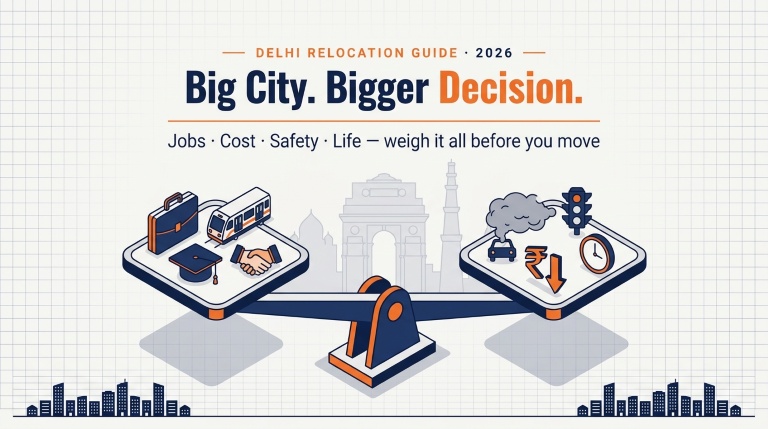
Delhi adds hundreds of thousands of new residents every year — but for every person who thrives here, another struggles with the traffic, cost, and air quality that don't show up in the tourist brochures. If you're weighing a move to India's capital, you need more than a highlight reel.
This guide breaks down what to genuinely expect from living in Delhi — the real opportunities and the real trade-offs — so you can decide with clear eyes, not just excitement. Whether you're relocating for a job, family, or retirement, you'll find a straightforward look at the pros and cons of moving to Delhi, plus a practical checklist to help you prepare. For a deeper walkthrough of the city itself, check out our complete relocation guide for Delhi.
Pros of Moving to Delhi
Career and Business Opportunities
Delhi offers some of the strongest job markets in North India, anchored by the wider National Capital Region (NCR):
- Government and public sector — concentrated in central Delhi
- IT and startups — largely based in Gurugram and Noida
- Finance, consulting, and media — spread across Delhi and Gurugram
- Multinational corporate offices — mainly Gurugram and parts of South Delhi
If you're relocating to Delhi for a new job, it's worth noting that many "Delhi" job opportunities are actually based in Gurugram or Noida, both a short commute from central Delhi. Understanding this NCR spread can help you make a smarter decision about where to actually live, not just where to work.
Infrastructure and Connectivity
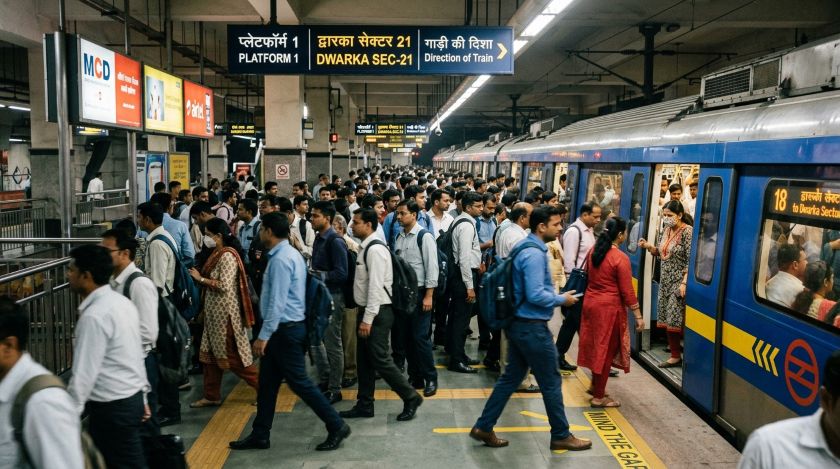
Getting around Delhi is easier than in most Indian metros, largely thanks to the Delhi Metro, which covers a large part of the city and continues to expand. The Regional Rapid Transit System (RRTS) is also improving connectivity between Delhi and neighboring NCR cities.
Delhi is also served by Indira Gandhi International Airport, one of the busiest and best-connected airports in the country, which matters if you'll be traveling frequently for work or visiting family elsewhere.
Education and Healthcare Access
For families and retirees especially, this is often a deciding factor:
- Schools — a large concentration of CBSE, ICSE, and international curriculum institutions, offering more choice than most smaller cities
- Hospitals — major private hospital networks alongside government facilities, with several specialty and multi-specialty centers
- Emergency care — generally faster access to specialists compared to smaller cities, given the density of healthcare infrastructure

This combination makes Delhi a practical choice for families prioritizing school options and retirees prioritizing medical access.
Cultural Diversity and Community
Delhi's population draws from every part of India and beyond, which has one very practical upside for newcomers: you're likely to find a community of people from your own state, language group, or background fairly quickly. This can make the adjustment period after a move considerably easier, from finding familiar food to building a social circle.
Cons of Moving to Delhi
Air Pollution
Delhi's air quality is a genuine and well-documented concern, particularly between October and January, when pollution levels regularly spike due to a combination of factors. If you or a family member has respiratory sensitivities, this is worth researching seriously before you move.
Traffic and Commute Times
Peak-hour traffic in Delhi can turn a short distance into a long commute, especially on major arterial roads. The Delhi Metro helps mitigate this significantly for routes it covers, so factoring metro connectivity into your choice of neighborhood can meaningfully reduce your daily commute stress.
Cost of Living
Delhi is one of the more expensive cities in India to live in, and housing is typically the largest expense. As a rough guide:
| Area Type | Examples | Rent Level |
|---|---|---|
| Premium areas | South Delhi, parts of Central Delhi | Higher rents, reflecting proximity and amenities |
| Mid-range areas | West Delhi, parts of NCR like Noida/Gurugram | Moderate rents, good connectivity |
| Budget-friendly areas | Outer Delhi, parts of East Delhi | Lower rents, longer commute trade-offs |
Actual rents vary by locality and property type, so it's worth researching current listings for your target area before finalizing a budget.
Housing and Accommodation Challenges
Finding a rental in Delhi often involves working with local brokers, who typically charge a commission (commonly one month's rent). Landlords generally expect a security deposit ranging from one to several months' rent, along with proof of identity, employment, and sometimes references.
Safety Considerations
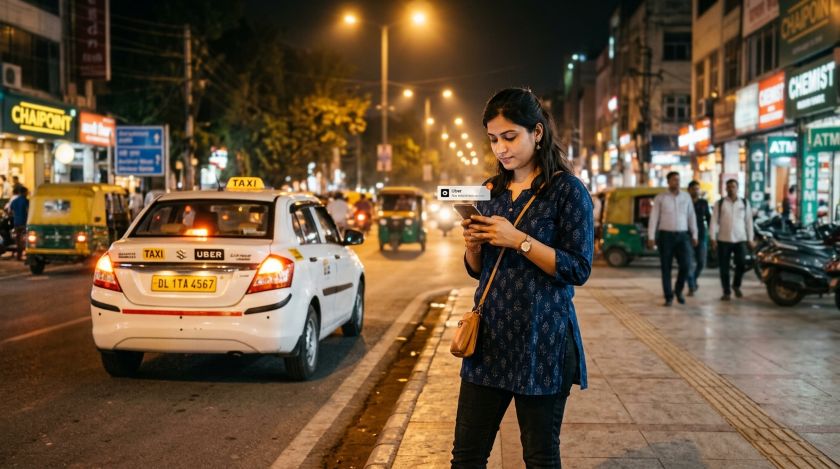
Delhi is generally safe for day-to-day living, but like any large city, petty theft and pickpocketing can occur in crowded markets and public transport. Some areas warrant more caution after dark, and women in particular may want to research neighborhood safety reputations before choosing where to live.
Basic precautions that go a long way:
- Use registered cabs or the Delhi Metro over unmarked transport at night
- Avoid poorly lit or isolated areas after dark
- Stay alert in crowded markets and public transport (common spots for pickpocketing)
- Research a neighborhood's safety reputation before signing a lease
Weather Extremes
Delhi has a harsh continental climate. Summers regularly exceed 40°C between April and June, while winters can drop below 5°C in December and January, sometimes accompanied by dense fog that affects flight and train schedules. The monsoon season (July-September) can bring waterlogging in low-lying areas.
Frequently Asked Questions
Conclusion
Moving to Delhi means weighing genuine opportunity against genuine challenges. The city offers strong career prospects, solid infrastructure, and access to good schools and healthcare — but it also comes with real costs in the form of pollution, traffic, and a competitive housing market. The right decision depends on your specific priorities, budget, and how much these trade-offs matter to your day-to-day life.
Career and Business Opportunities
Infrastructure and Connectivity
Air Pollution
Cost of Living
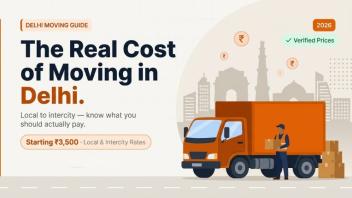
If you've weighed the pros and cons and are ready to move forward, planning your logistics early — from choosing a locality to hiring reliable packers and movers in Delhi — will make your transition to Delhi considerably smoother.