Moving to an Apartment Without an Elevator: A Practical Guide
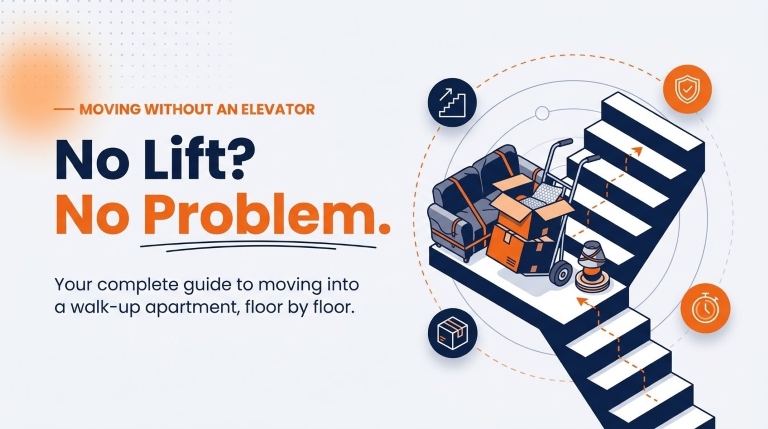
Moving to an apartment without an elevator can make house shifting much more challenging. Carrying moving boxes, furniture and appliances up several flights of stairs takes extra time, effort and planning, especially when you're shifting to a 3rd, 4th or 5th-floor flat. A no-lift move also requires you to consider staircase access, furniture size, available helpers and the right moving equipment.
In this guide, you'll learn how to move to an apartment without an elevator, whether a DIY move is practical for your floor, what equipment can make the process easier, and why professional movers may charge extra for staircase or no-lift access. You'll also understand when hiring professional packers and movers can make your move safer, faster and more convenient.
How Many Floors Make DIY Difficult?
Before you decide to do it yourself, be honest about how many floors you're dealing with. Moving to the 2nd floor is very different from moving to the 5th.
| Floor Range | Recommendation |
|---|---|
| Ground – 2nd floor | Manageable on your own or with 1–2 helpers, especially for smaller homes |
| 3rd – 4th floor | Doable, but plan for extra help, more breaks, and maybe some rented equipment |
| 5th floor and above | Strongly consider hiring movers. The risk of injury and damage goes up fast with each extra floor |
If you're moving to the 3rd floor or higher with anything bigger than boxes and light furniture, read the cost section below before you decide.
DIY Moving Tips for a No-Elevator Apartment
If you've decided to move yourself, it's not a lost cause. You just need to plan around the stairs.
Rent the Right Equipment
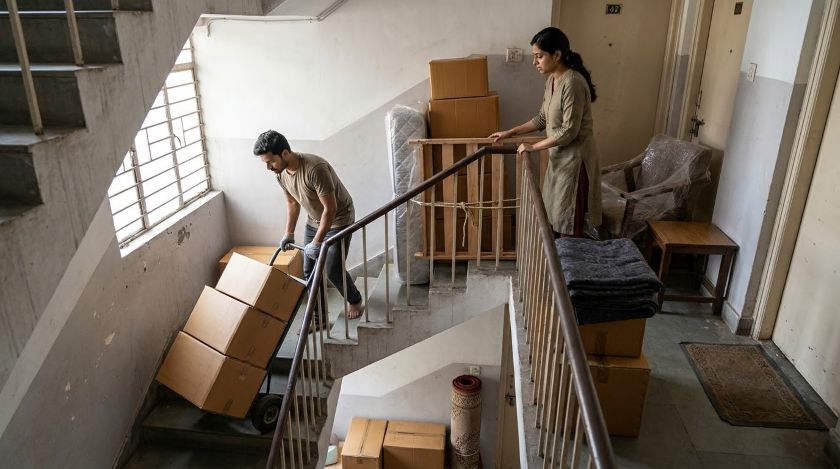
Hand trucks, furniture dollies, and moving straps are worth renting, even for just one day. They take weight off your back and make it easier to turn corners on the stairs.
Get Extra Hands on Deck
Stairs are where a short-handed move falls apart. One person can't carry a heavy item up several floors alone without a real risk of dropping it or getting hurt, so headcount matters here more than in a normal move.
Measure Furniture and Stairwells Before Moving Day
This step gets skipped a lot, and it causes the most last-minute stress. Measure your biggest furniture, like sofas, wardrobes, and mattresses, against the width of your staircase and any turns or landings.
Move Heavy Items First and Take Apart What You Can
Each extra floor makes a heavy item harder to carry, so tackle the biggest pieces while everyone still has the energy for repeated flights of stairs, not after they're already worn out. Take apart anything you can, like bed frames, large wardrobes, and table legs.
Protect Furniture and Prevent Injury on the Stairs
Narrow staircases and tight turns are where furniture gets scratched or dented. Wrap large pieces in moving blankets or padding before you start.
Does It Cost More to Move Without an Elevator?
The exact amount depends on the mover, your city, how many floors are involved, and how much you're moving. Rather than guess at a number, it's best to get a custom quote for your building. What stays true across the board is that this extra fee is usually much smaller than the cost of a damaged sofa or a hurt back.
Why Hiring Professional Movers Is the Easier Choice
Professional movers change the game on a walk-up move, and not just because there are more of them. They bring equipment built for narrow staircases and tight turns, a trained team that knows how to handle tricky angles without damaging walls or furniture, and the speed that comes from doing this job again and again.
It's fair to weigh the extra cost against doing it yourself. But it helps to count the full cost of DIY too: the time it takes, the real risk of injury from carrying heavy items up several floors, and the chance of denting a wall or damaging furniture on a tight turn. Careful packing and handling on the stairs is exactly what a professional team is built for, and it's the part of a no-lift move that tends to go wrong most often. Read more about the hidden dangers of moving heavy furniture without help.
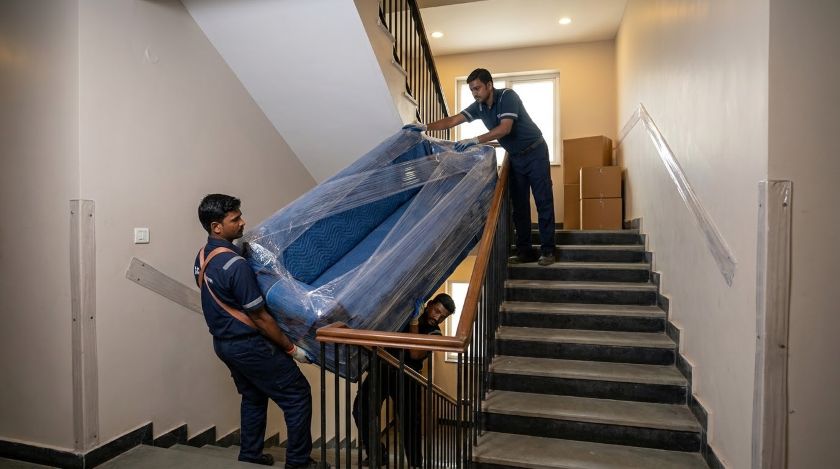
If you're not sure which way to go, getting a quote costs nothing and gives you a real number to compare against doing it yourself. Explore our professional house shifting services to see how we handle no-lift moves.
Frequently Asked Questions
Conclusion
Moving into a walk-up apartment takes more planning than a normal move, but it's manageable, whether you do it yourself with the right equipment and enough help, or bring in a team that does this every day. Be honest about your floor count, your furniture, and your timeline. And if the stairs start to feel like too much, let our team handle them for you.