Tips to Declutter Your Home for a Stress-Free Move
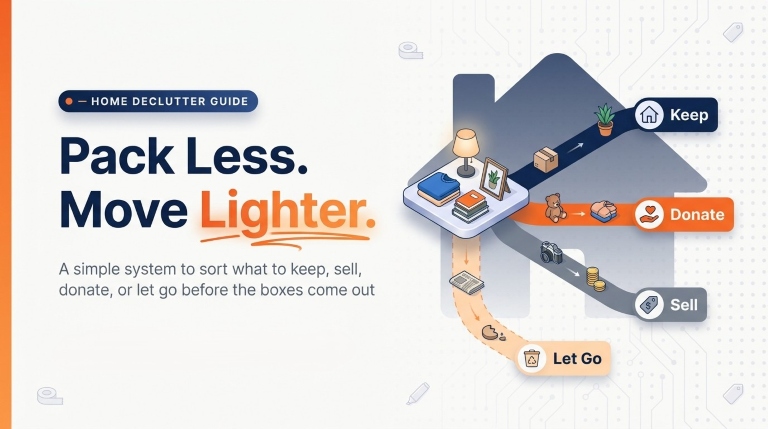
Most people don't realize how much they've accumulated until moving day forces them to pack it all up. Learning how to declutter your home before a move fixes that — it lowers your moving costs, speeds up packing, and means you're only unpacking things you actually want in your new home.
Whether you're downsizing, relocating across town, or planning a long-distance move, decluttering before you pack is the single best way to keep the process simple and affordable. Below are 7 practical decluttering tips for moving — covering when to start, how to sort and organize your belongings, and what to do with everything you decide to sell, donate, or discard.
1. Start Early and Plan Ahead
Give yourself at least 4-6 weeks before moving day. Starting late leads to rushed decisions — or worse, everything gets boxed up without sorting at all. Working from a step-by-step moving timeline makes it much easier to stay on track.
A simple timeline to follow:
- 6 weeks out: Low-use spaces — attic, garage, storage closets, spare rooms
- 4 weeks out: Everyday spaces — bedroom, kitchen, living room
- 2 weeks out: Sentimental items and anything you've been putting off
2. Sort Your Belongings by Category
Sort by category, not room — it's the easiest way to spot duplicates and avoid packing things you don't need.
- Clothing and shoes
- Kitchenware and appliances
- Books, paperwork, and documents
- Electronics and cables
- Sentimental and keepsake items

3. Decide What to Keep, Sell, or Donate
For each item, ask three questions:
- Have you used it in the last 12 months?
- Would it be worth anything if you sold it?
- Would you buy it again today?
If the answer is no to all three, sell, donate, or discard it. For items with resale value — furniture, electronics, designer clothing — marketplace apps like Facebook Marketplace, OfferUp, or ThredUp make it easy to sell quickly.
4. Rethink Large or Bulky Furniture
Big furniture needs its own decision. Movers often charge by weight or volume, so a large sofa or wardrobe can cost more to move than to replace.

Before moving a large item, compare:
- What it costs to move it
- What it costs to replace it after you move
- Whether it will actually fit and suit your new space
5. Dispose of Unwanted Items Responsibly
Skip the trash bin as your default. Instead:
- Donate usable items to Goodwill, Salvation Army, or local donation drives — many offer pickup for larger items
- Recycle electronics and e-waste through city drop-off points or retailer take-back programs
- Sell anything with resale value through marketplace apps

6. Use Temporary Storage When You're Not Ready to Decide
Storage makes sense when:
- There's a gap between moving out and moving in
- You're downsizing but not ready to part with everything yet
- You have seasonal items that don't need to travel with you right away
7. Get Help from Decluttering or Junk Removal Professionals
If the process feels overwhelming, professional help is a practical shortcut, not a failure. Professional organizers can guide your sorting and decisions; house shifting professionals can clear large volumes in a single visit.
Frequently Asked Questions
Conclusion
Decluttering before a move comes down to 7 steps: start early, sort by category, decide what earns a place in your new home, rethink large furniture, dispose of the rest responsibly, use storage if you're not ready to decide, and get help if it's too much to handle alone. Done well, it saves you money, time, and the headache of moving clutter into a fresh start.
If you'd rather not tackle it alone, professional packing, storage, and moving support can take the heaviest parts off your plate — so you can focus on settling into your new home.