How to Pack and Move a Sofa Like a Professional: Step-by-Step Guide
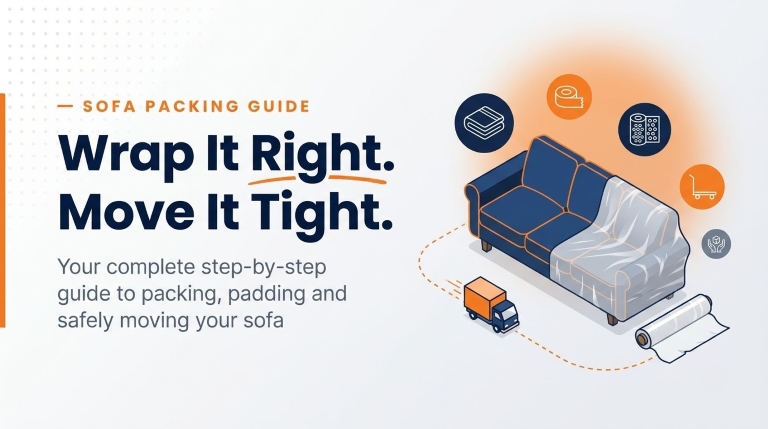
A sofa is the single most common piece of furniture damaged during a home move — and one of the easiest to injure yourself lifting. If you're packing and moving a sofa yourself, the process comes down to four things: dismantle what you can, wrap the cushions separately, fully wrap the frame in stretch wrap and blankets, then move it with the right equipment and enough hands. This guide walks through each step in order, along with the materials, equipment, and safety tips you'll need to do it without damaging the sofa, your walls, or your back.
Table of Contents
Materials & Equipment You'll Need
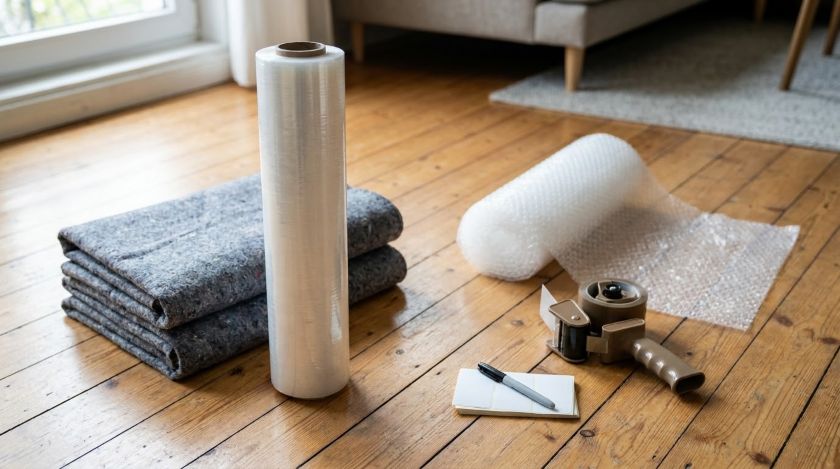
Gather everything before you start — running out mid-wrap leaves the sofa exposed while you make a supply run. For a deeper breakdown of what each item is for, see our guide to types of packing materials.
How to Pack a Sofa for Moving: Step-by-Step
Step 1: Measure Your Doorways and Hallways
Before you wrap anything, measure the width of every doorway, hallway, and staircase turn between the sofa's current spot and the truck. This takes five minutes and prevents the far more common problem of a fully wrapped sofa getting stuck mid-move.
Step 2: Dismantle What You Can
Remove the legs. Remove the cushions. Remove any armrests or sections that detach. Bag and label the hardware for each part so reassembly is straightforward at the other end — see our guide on furniture disassembly before a move for the full process.
Step 3: Wrap the Cushions
Wrap each cushion individually in plastic stretch wrap — cushions tear and pick up stains easily, so full coverage matters. Once wrapped, group them together in a single moving blanket. If you have more than a few cushions, split them across two or three blankets rather than overstuffing one.
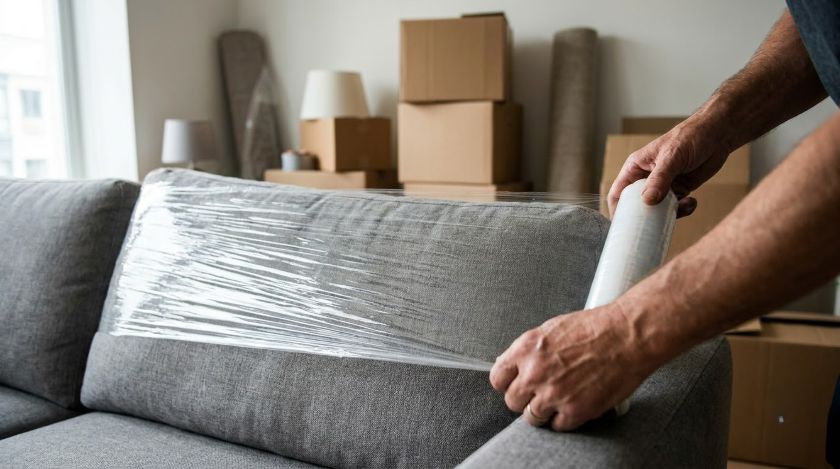
Step 4: Elevate the Sofa and Wrap It Vertically
Place the sofa on sturdy boxes so you have clearance to wrap underneath. Wrap the stretch wrap vertically from one end to the other, tilting the sofa onto its side if needed to reach every section.
Step 5: Wrap Horizontally and Pad the Edges
Set the sofa back down and wrap it horizontally, going around at least twice for full coverage. Then pad every edge — legs, armrests, corners — using towels or blankets, which double as protection and save packing space elsewhere.
Step 6: Cover with Moving Blankets and Tape
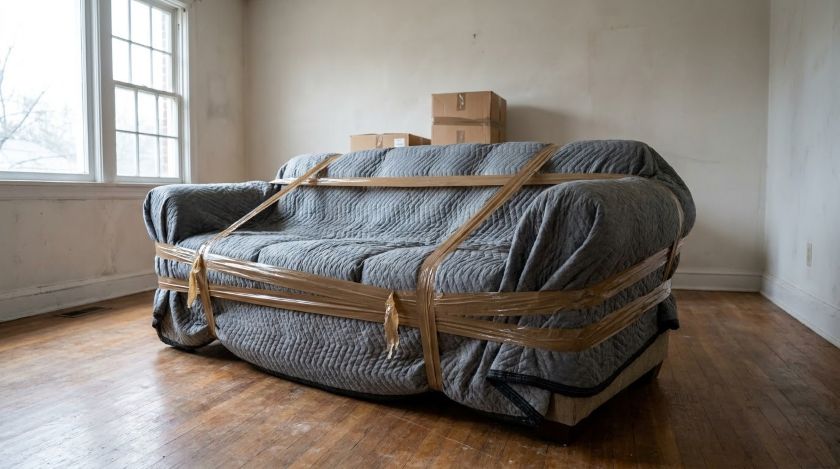
Wrap the entire sofa in moving blankets, following the same vertical-then-horizontal pattern. Secure with tape every 20–30 cm, both directions, so the blankets stay in place during transit.
Packing Notes by Sofa Type
How to Move a Sofa Safely
Step 1: Book a Properly Sized Transport Truck
This is the foundation of the move — an undersized truck costs more in the end through extra trips or damage.
Step 2: Load with Dollies or Sliders
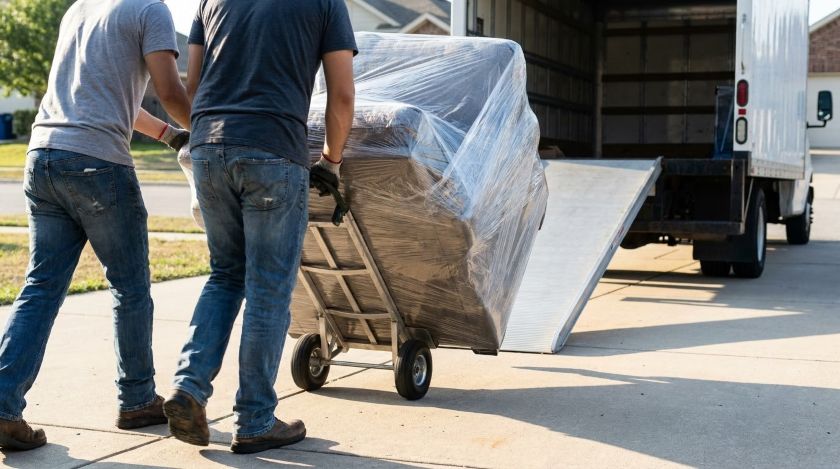
Place the wrapped sofa on the equipment and guide it toward the truck. For any stairs, you'll need to carry it manually — check stair and elevator access in advance so you're not figuring it out on move day. These same techniques apply to moving furniture of any kind, not just sofas.
Step 3: Lift Correctly
Two people can manage a loveseat; a standard 3-seater sofa is safer and easier with three. Lift from the corners, bend at the knees rather than the waist, and communicate each step out loud with your team, especially at corners and doorways.
When to Hire a Professional Mover Instead
DIY sofa moving works fine for a single-story home with a short truck-loading distance and a couple of capable helpers. It's worth handing off to professionals instead if any of the following apply:
FAQs
Conclusion
Packing and moving a sofa comes down to six steps: dismantle the removable parts, wrap the cushions, wrap the frame vertically then horizontally, pad the edges, cover it in blankets, and move it with the right equipment and enough people. Done carefully, it holds up just as well as a professional job — it's just more physically demanding.