An estimated 83 people fall for fake moving companies every day in India — most lured in by paid ads using brand names nearly identical to trusted movers. Learning how to avoid fraud packers and movers is the first step, but with thousands of packers and movers to choose from, spotting a reliable one isn't always easy at first glance.
Here's exactly how to choose reliable packers and movers — the licensing, reviews, and insurance checks that matter, plus the moving company red flags that mean it's time to walk away — so nothing catches you off guard once your belongings are in someone else's hands.
7 Tips to Find Reliable Packers and Movers
1. Ask for Recommendations from Friends and Family
Start with people you trust. A referral from someone who's actually used a mover is worth more than any ad.
Especially since scam operators often rely on paid search ads and lookalike brand names to get discovered, rather than genuine word of mouth.
Before you go further — this video covers the 5 questions every mover should answer clearly before you book, plus the biggest red flag most people miss.
2. Verify Licensing, GSTIN, and IBA Approval
Before booking, confirm the company is properly licensed and registered — this includes a shop and establishment license from the local municipality, along with KYC documentation. Cross-check their GSTIN on the official GST portal.
Also look for IBA (Indian Banks' Association) approval. This is a specific, checkable credential that verifies a transporter has met a recognized industry standard — it's often required for bank employees claiming relocation reimbursement, and it's a strong signal of legitimacy even if you don't work in banking.
3. Check Reviews on the Right Platforms
Look beyond the company's own website. Check Google Business Profile, JustDial, and MouthShut for independent customer feedback — these are the platforms Indian movers are actually reviewed on.
Pay attention to patterns: a string of very recent, oddly similar five-star reviews with no detail can be a sign of inflated or fake reviews.
4. Confirm a Local, Physical Office
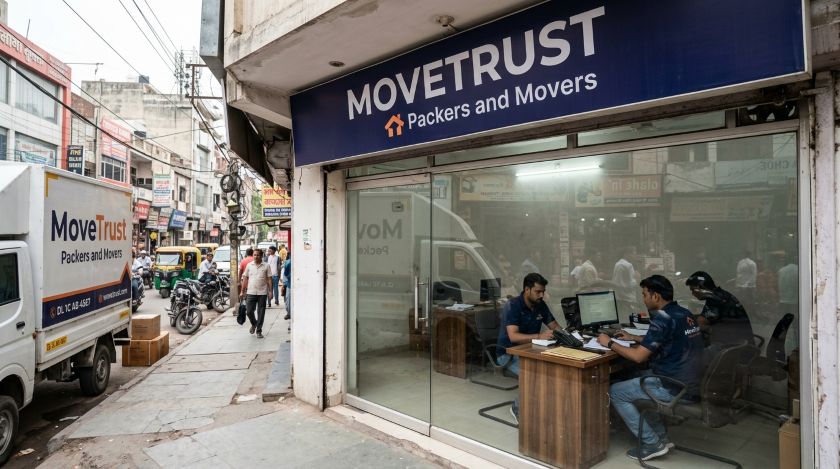
A reliable moving company should have a real, verifiable office in your area — not just a phone number and a website.
![A packers and movers branch office with staff visible through the storefront window and a company signboard outside]()
This gives you a point of contact should any issue arise during the move, and it demonstrates a genuine commitment to the local market rather than a fly-by-night operation.
5. Evaluate Experience and Specialization
Look at how long the company has been in business and what kind of moves they specialize in.
If your relocation involves specific needs — pianos, antiques, artwork, or a complex multi-city move — choose a mover with proven expertise in handling those items, not just general household shifting.
6. Review the Contract Carefully
Before signing anything, go through the agreement line by line. Make sure it clearly states the services included, the total cost breakdown, the delivery timeline, and the cancellation policy.
Don't rely on verbal promises — get everything in writing.
7. Ask About Insurance and Get It in Writing
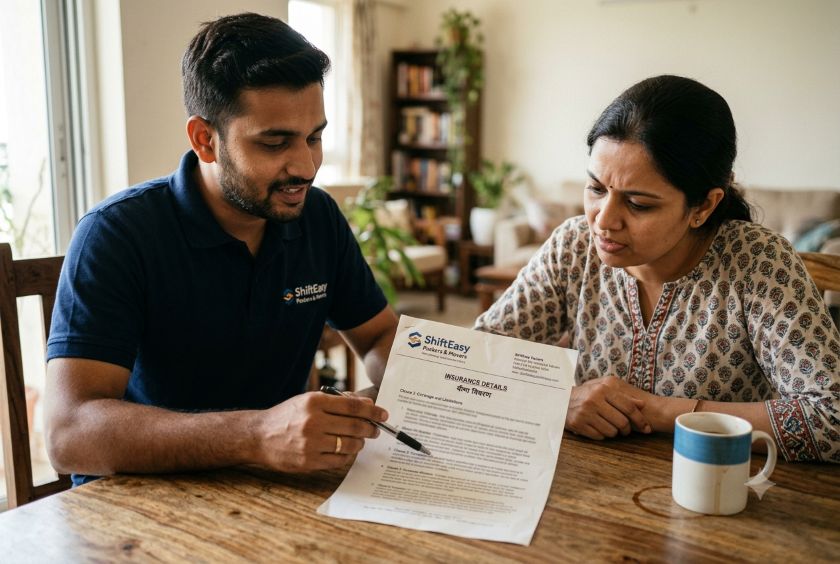
Transit insurance typically costs 1.5% to 3% of your goods' declared value — a useful benchmark to sanity-check what you're being quoted.
![A moving company agent pointing to an insurance clause on a printed document while a customer reviews it across the table]()
Ask specifically about
Full Value Protection versus
Released Value Protection, since the two offer very different levels of coverage if something is lost or damaged. Our
home relocation insurance guide breaks down both options in detail. Never accept a verbal assurance — insurance terms should always be documented.
5 Red Flags to Watch Out For
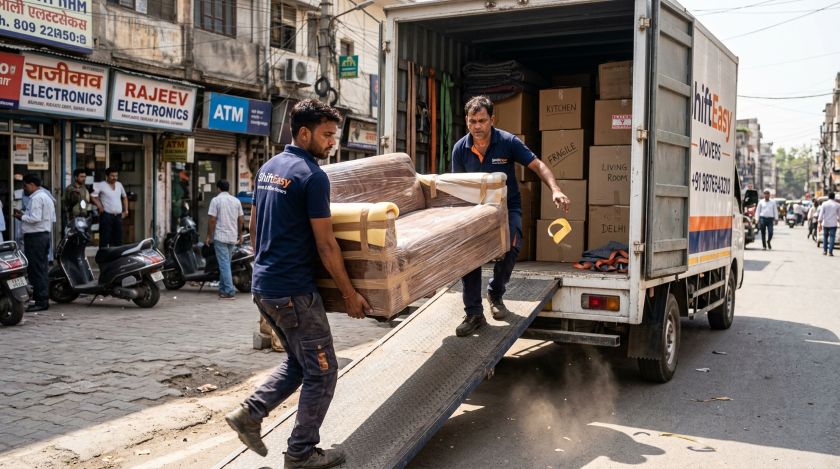
![ShiftEasy moving crew carrying a wrapped sofa up the ramp into a branded moving truck]()
Red Flag #1: Extremely Low Quotes
Why it's risky: A quote significantly below every other estimate you've received is rarely a good deal — it's often a sign of a company that cuts corners or plans to add hidden charges later.
What to do instead: Get at least three quotes and treat any outlier low bid with suspicion rather than excitement.
Red Flag #2: Online or Phone-Only Operations
Why it's risky: A mover with no verifiable physical address is very difficult to hold accountable if something goes wrong.
What to do instead: Confirm a real office address exists and, if possible, visit it before booking.
Red Flag #3: Large Upfront Deposits
Why it's risky: Reputable movers don't typically demand a large payment before the job is done — this is a common tactic among fraudulent operators.
What to do instead: Expect to pay the bulk of the amount on or after delivery; be cautious of anyone insisting otherwise.
Red Flag #4: No In-Home or Video Estimate
Why it's risky: A company that quotes you a price without seeing your belongings — in person or via video — is more likely to give you an inaccurate number that balloons later.
What to do instead: Insist on an in-home or video-based estimate so the quote reflects the actual scope of your move.
Red Flag #5: Fake or Copied Reviews
Why it's risky: Some fraudulent movers use brand names nearly identical to well-known, trusted companies, paired with a batch of fake five-star reviews, to appear legitimate in search results and ads.
What to do instead: Cross-check the company's exact registered name against its GSTIN and license details, and be skeptical of reviews that all sound alike or were posted in a short burst.
Frequently Asked Questions
Look at reputation, years of experience, genuine customer reviews, the specific services offered, and pricing transparency. Confirm licensing (GSTIN, shop license) and, where possible, IBA approval before booking.
IBA approval means the transporter has been verified by the Indian Banks' Association, a recognized industry benchmark. It's often required for bank employees filing relocation claims, and it's a useful trust signal for any customer.
Transit insurance typically costs between 1.5% and 3% of your goods' declared value. Always get the insurance terms in writing rather than relying on a verbal promise.
Full Value Protection means the mover is liable to repair, replace, or reimburse the full value of lost or damaged items. Released Value Protection offers only minimal, weight-based compensation — far less than the item's actual worth. Full Value Protection costs more but offers meaningfully stronger coverage.
| Coverage Type |
What It Means |
|---|
| Full Value Protection |
Mover repairs, replaces, or reimburses the full value of lost or damaged items |
| Released Value Protection |
Only minimal, weight-based compensation — far less than the item's actual worth |
Treat it as a warning sign. Reputable movers rarely require a large deposit before the move; ask why it's needed, and consider getting quotes from other companies if the request feels excessive.
Start by raising the issue directly with the company in writing, referencing your signed contract. If unresolved, you can escalate to consumer forums or relevant local authorities, depending on your city and the nature of the dispute. Read our full guide on how to
resolve disputes with movers for step-by-step help.
Conclusion
Choosing the right mover comes down to a few consistent checks: verify licensing and IBA approval, read reviews on trustworthy platforms, get an in-home estimate, review the contract carefully, and confirm insurance in writing.
Ask for personal recommendations
Verify GSTIN, license, and IBA approval
Check reviews on Google Business Profile, JustDial, MouthShut
Confirm a real, local office
Get an in-home or video estimate
Review the contract and insurance terms in writing
Walk away from extremely low quotes or large upfront deposits
A reliable mover protects your belongings, communicates clearly, and never pressures you into a decision. Ready to book trusted house shifting services?
Share Requirements