How to Prevent Property Damage While Moving: A Complete Guide
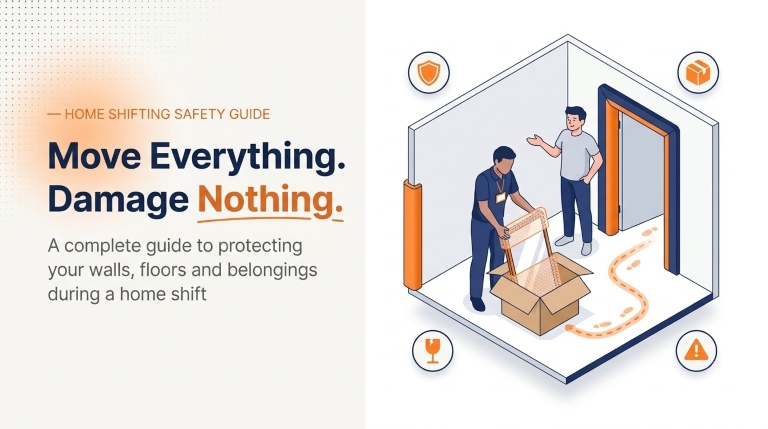
Moving homes is stressful enough without the added worry of a scratched wall, a chipped door frame, or a cracked tile from a dropped box. Whether you're vacating your old home or moving into a new one, heavy furniture, bulky appliances, and stacks of boxes all carry the risk of damaging the very property you're trying to protect.
The good news is that most of this damage is entirely preventable with the right precautions and the right equipment. This guide walks you through exactly how to protect your walls, doors, banisters, flooring, appliances, and fragile items during a move — along with the tools professional packers and movers rely on to keep both homes damage-free.
What to Protect During Home Shifting
Property damage during a move tends to happen in the same predictable spots — walls, doorways, banisters, floors, and the goods themselves. Here's how to protect each one.
Protect the Walls
To protect walls during a move, identify the areas most likely to get bumped — narrow hallways, staircases, and doorway corners — and cover them before moving day. Use old bedsheets, cardboard sheets, or boxes taped over these high-risk sections. For heavy furniture or appliances with sharp corners, corner guards add an extra layer of protection against dents and scuffs on the wall surface.
Protect Door Frames
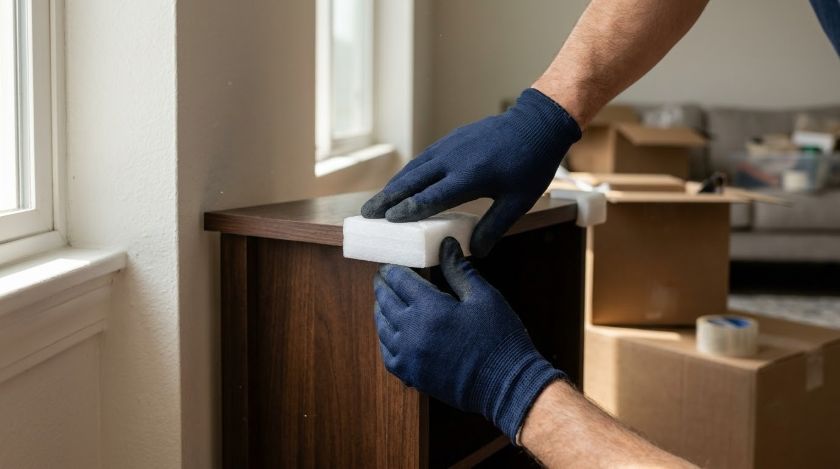
Door frames take a lot of impact during a move. Refrigerators, washing machines, dining tables, and chairs frequently bump against them, chipping the edges or leaving scratches. Cover door frames with foam sheets or moving blankets before carrying large items through. Just as importantly, wrap the sharp corners and edges of bulky furniture and appliances in bubble wrap, corrugated sheets, or foam before moving them — this protects the door frame from the object, not just the object from the frame.
Protect the Banisters
Banisters — the handrails along staircases — are especially vulnerable when large items are carried up or down. Wrap them in packing foam, bedsheets, or corrugated sheets, securing the covering with tape. One important caution: avoid taping directly onto the banister itself, as it can strip the polish or leave a sticky residue once removed.
Protect the Flooring
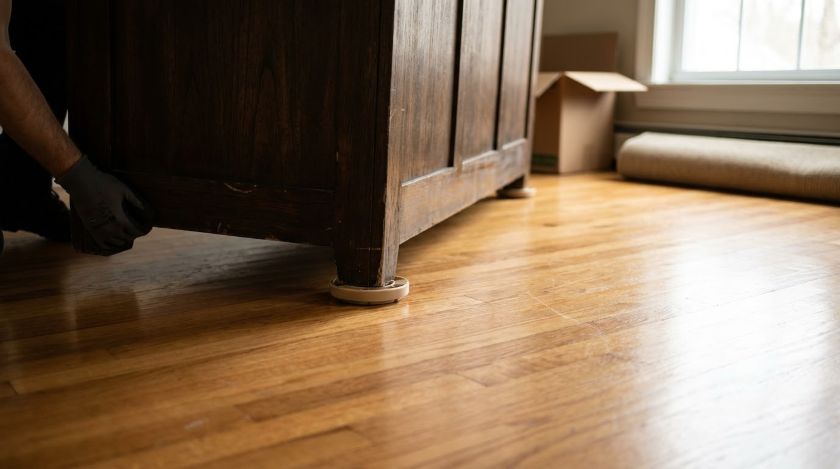
Dragging furniture or dropping heavy boxes is one of the most common causes of floor damage during a move, whether the flooring is tiled, marble, or wooden. To prevent scratches and cracks, lay down flattened moving boxes to create a protective pathway, or use furniture sliders under heavy items so they can be moved without dragging. Avoid lifting boxes that are too heavy to carry steadily — a dropped box is often what causes a cracked tile.
Protect Electronics & Appliances
Appliances like TVs, air conditioners, and refrigerators need careful handling during transit to avoid internal and external damage. Keep them upright wherever possible, and use corner guards or padding on exposed edges to prevent impact damage while they're being carried through doorways or loaded for transport. Read our full guide to safeguarding appliances and electronics for move-specific precautions.
Pack and Protect Fragile Items
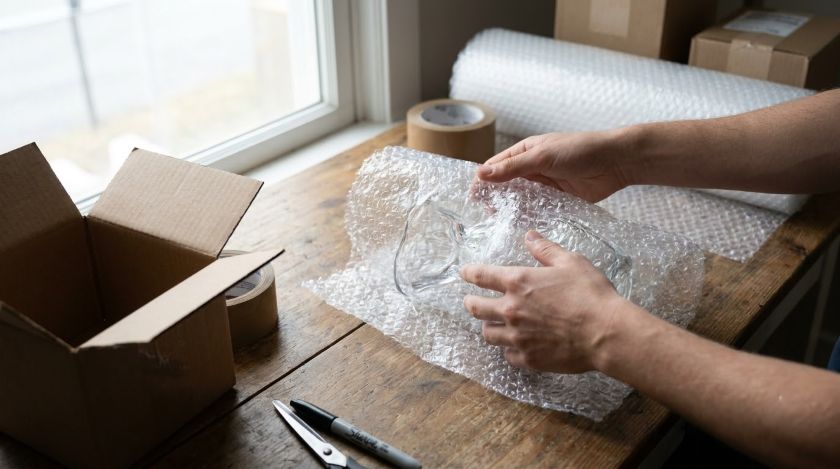
Fragile and glass items — mirrors, glass tabletops, showpieces, crockery — are most often damaged not during transit itself, but from poor packing. Sort items by weight and fragility before boxing them up. Wrap fragile pieces individually in bubble wrap, and pack heavier items in smaller boxes rather than overloading large ones — an overpacked box is harder to carry steadily and more likely to be dropped. Keeping boxes at a manageable weight also reduces the chances of it being set down carelessly, which can damage both the item inside and the floor beneath it. For a full breakdown, see our guide to packing fragile and valuable items.
Equipment to Use for Protecting Property
The right equipment does most of the work in preventing damage during a move. Here's what to have on hand — see our full list of essential loading and unloading equipment for more.
Frequently Asked Questions
Conclusion
Preventing property damage while moving comes down to protecting the right spots — walls, door frames, banisters, and flooring — and using the right equipment to handle heavy or fragile items safely. A little preparation with corner guards, moving blankets, and careful packing goes a long way toward keeping both your old and new home free of scratches, dents, and cracks. If you'd rather leave this to trained hands, consider AssureShift's professional home shifting services, where trained teams use exactly this equipment and technique to move your belongings without putting either property at risk.