Loading and Unloading Tips: 7 Ways to Move Smarter
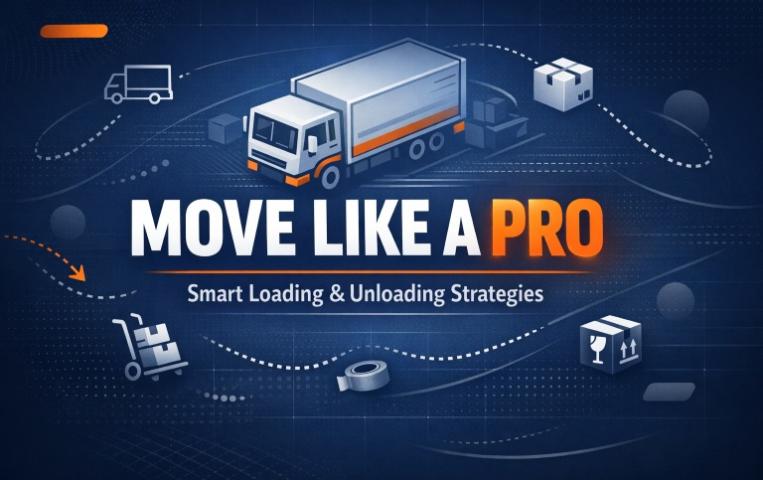
Most self-moves go wrong at the same stage — loading and unloading. Without a proper plan, moving day can quickly turn chaotic, leaving you with damaged furniture, an injured back, or hours lost to trial and error.
The good news is that most of these problems are completely avoidable with the right approach. This guide shares 7 practical loading and unloading tips used by professional movers, along with the right equipment, a simple safety checklist, and answers to common questions — so you can move your home smarter, faster, and without damage.
What is Loading and Unloading in Moving?
Loading and unloading refers to the process of moving your belongings from your home onto a truck, and then off the truck into your new home. It is the most physically demanding phase of any move.
Without a proper plan, this stage often results in broken items, strained muscles, and wasted hours. Done right, it makes your entire relocation smooth, safe, and stress-free.
7 Loading and Unloading Tips for a Smooth Move
Plan Your Move Before Moving Day
Pre-move planningA smooth loading and unloading process starts well before moving day. Without a solid plan, things get chaotic quickly. Prepare the following in advance:
- Make a complete inventory list
- Decide on packing supplies
- Plan your loading order in advance
- Arrange the right equipment
- Confirm truck size and booking
- Plan the route to your new location
Choose the Right Size Moving Truck
Truck selectionPicking the right moving truck size is critical to efficient loading and unloading. A truck too small forces multiple trips; too large and items shift during transit — both cause damage and delays.
| Home Size | Truck Type |
|---|---|
| 1 BHK | Small (Tata Ace / 407) |
| 2 BHK | Medium (Eicher / Mini) |
| 3 BHK+ | Large (Full-size Truck) |
Get the Right Loading and Unloading Equipment
Essential toolsLoading and unloading by hand is slow, tiring, and risky. The right equipment makes the process faster and far safer. Here is what you need:
Most equipment can be rented from truck rental companies or local moving supply stores at a low cost.
Pack and Label Your Boxes Smartly
Packing strategy
How you label your boxes directly affects how fast and smooth your unloading goes at the new location. Follow these simple practices:
- Pack room by room — never mix rooms
- Write room name on top and side of box
- List key contents on each box
- Mark FRAGILE / HEAVY / THIS SIDE UP
- Use different color tape per room
- Keep box weight under 20–25 kg
Follow the Right Loading Order
Loading sequenceThe order in which you load items into the truck is the single most important factor in preventing damage during transit. Follow this exact sequence:
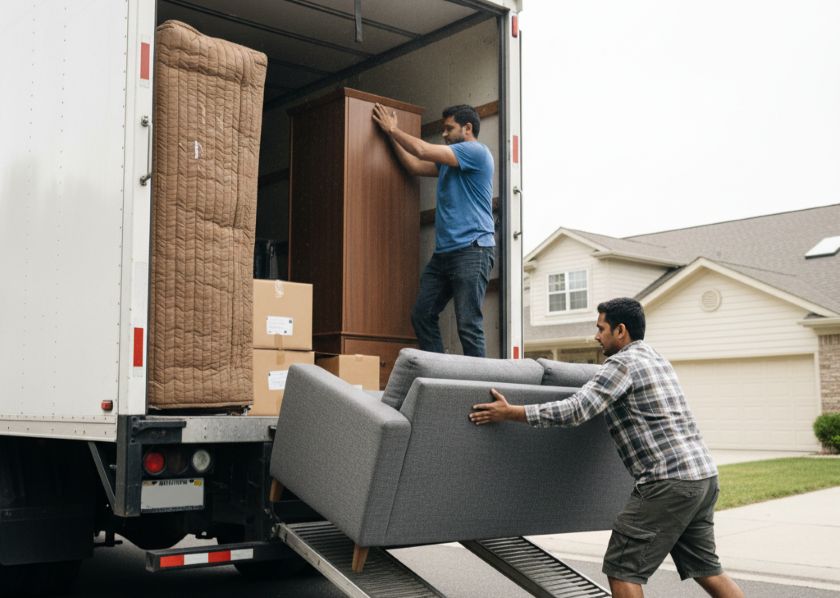
Refrigerator, washing machine, sofa — against the truck cab wall for stability.
Wardrobes, bed frames, cupboards — flat against the truck's side walls.
Stack in the centre of the truck — always heavier boxes at the bottom.
Lamps, artwork, glassware, plants — always on top.
Pillows, bedding, and clothing act as natural cushioning to fill empty spaces.
Secure Your Belongings in the Truck
Transit protectionLoading items correctly is only half the job. Securing them properly ensures nothing shifts, topples, or breaks during the journey — especially on bumpy Indian roads.
- Straps & Ropes — Tie to side rails to prevent lateral movement
- Load Bars — Block items shifting forward or backward
- Moving Blankets — Cushion between furniture pieces
- Dunnage — Airbags or wood blocks fill empty gaps
- Tarps — Protect against dust, moisture, road debris
- Load Locks — Mechanical bars for long-distance moves
Plan Your Unloading Strategically
Unloading strategyMost people focus entirely on loading and forget that unloading needs just as much planning. A strategic unloading process saves you from chaos at your new home:
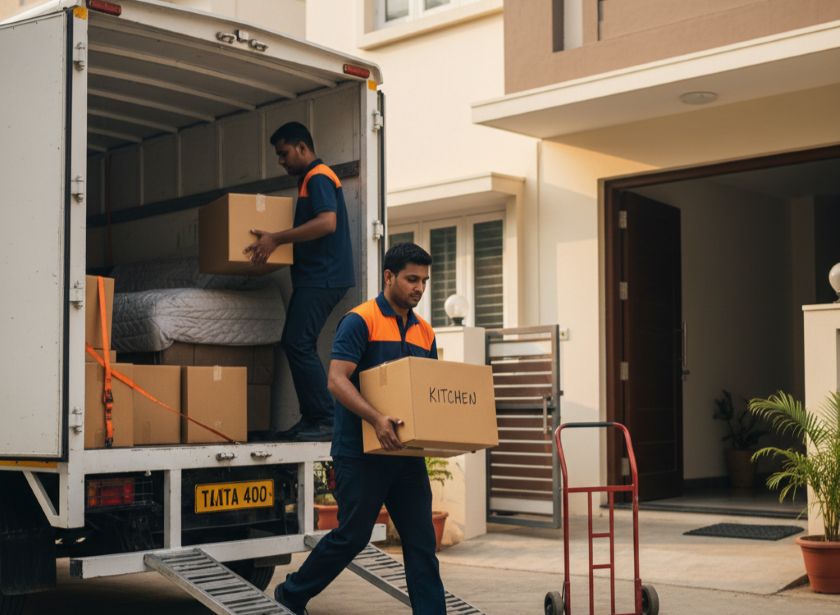
- Unload in reverse order — fragile items first
- Station one helper in truck, one to direct
- Use box labels — direct items straight to room
- Use dolly for heavy appliances — never drag
- Set up large furniture before unpacking boxes
- Final walkthrough of truck before returning
Safety Tips for Loading and Unloading While Moving
Loading and unloading injuries are more common than most people think. Back strains, foot injuries, and cuts from broken items are real risks. Follow these safety precautions:
- Always lift with your legs, not your back — bend at the knees, keep back straight
- Wear closed-toe shoes — never load or unload in slippers or sandals
- Use gloves to protect your hands and improve grip on heavy items
- Keep all pathways, staircases, and doorways completely clear before starting
- Do not overload boxes — keep weight under 20–25 kg per box
- Always use at least two people for heavy appliances — never attempt alone
- Take regular breaks, especially in hot weather — dehydration causes accidents
Frequently Asked Questions
Everything you need to know about loading and unloading for a house move — answered clearly.
Conclusion
Loading and unloading is genuinely hard work — but with the right plan, it does not have to be overwhelming. To recap:
Let Professionals Handle the Heavy Lifting
DIY moving demands time, effort, and coordination. If the process feels too demanding, our house shifting services handle everything for you — safely, efficiently, and at the right price. Our trained movers come equipped with all the tools and experience needed to make your relocation completely stress-free.