Types of Packaging Materials and Their Uses: A Complete Guide

Last updated: 3 March 2026

Types of Packaging Materials and Their Uses

One cracked LCD screen. One shattered heirloom vase. That's all it takes to realise you picked the wrong packaging material. Packaging materials — also referred to as packing materials — are any materials used to wrap, contain, cushion, or secure goods during storage or transit. Whether you're relocating a home in Mumbai, shipping ecommerce orders, or moving fragile cargo across India's long-haul routes and unpredictable monsoons, the material you use is your first and only line of defence. This guide breaks down every major type — what it is, what it protects, and exactly when to use it.

What Are Packaging Materials?

Packaging materials are any materials used to wrap, contain, cushion, or secure goods during storage or transit. The terms packing materials and packaging materials are interchangeable — both refer to the same category of supplies. Different materials serve different functions: some form the outer shell that holds everything together, some absorb shock from the inside, and others wrap directly around the item to protect its surface. Understanding these distinctions is what separates a damage-free move from a costly one.

Types of Packaging Materials

Packaging materials fall into three functional groups — each playing a distinct role in protecting your goods from item to destination.

Containment Materials

These form the outer shell — they hold, carry, and protect everything inside. Your entire packing effort depends on these being the right size and strength.
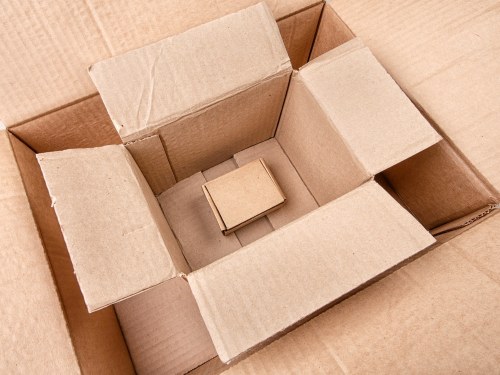
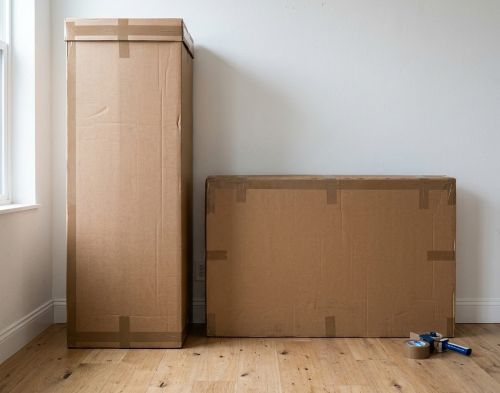
Corrugated boxes used as packaging material for moving and shipping
Corrugated Boxes

Multi-layered cardboard boxes with a fluted inner sheet — providing rigidity and built-in cushioning in one lightweight structure. Available in multiple sizes and strengths; stackable and often reusable.


Best For

  • Books, clothes, kitchen utensils
  • Groceries & general household goods
India: Most widely available, easily reused
Specialty packaging boxes for wardrobe, electronics and heavy-duty items
Specialty Boxes

Purpose-built boxes engineered for specific item categories — not generic, not interchangeable. Each type provides a custom fit that standard boxes simply cannot match.


Types Available

  • Wardrobe boxes — hanging rod for clothes
  • Electronics boxes — LCDs, TVs, computers
  • Heavy-duty boxes — lampshades, crockery
Best for items needing custom-fit protection
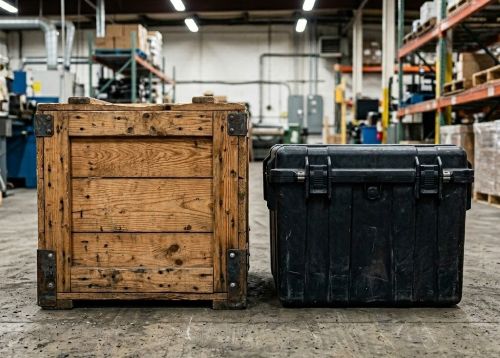
Wooden and plastic crates for heavy-duty and high-value item packaging
Wooden & Plastic Crates

Rigid, heavy-duty outer containment built for items too valuable or irregularly shaped for standard boxes — compare wooden crates vs thermocol boxes to pick the right option for your high-value cargo.


Best For

  • Antiques, sculptures, fine art
  • High-value & irreplaceable cargo
India: Interstate relocation of valuables

Cushioning & Shock Absorption Materials

These go inside the box — absorbing impact, preventing breakage, and filling void space so items don't shift or collide during transit.
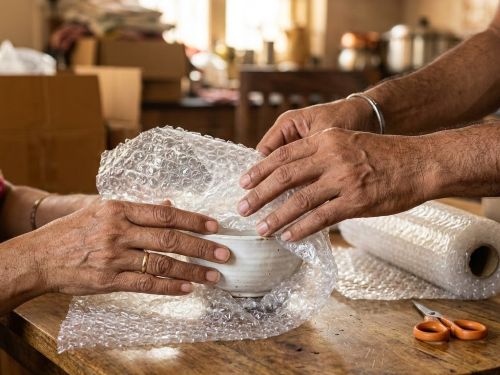
Bubble wrap used as cushioning and shock absorption packaging material for fragile items
Bubble Wrap

Transparent plastic sheeting with regularly spaced air-filled pockets that compress on impact — the most versatile cushioning material for packing fragile items of any shape or size.


  • Crockery, glassware & ceramics
  • Electronics & fragile artefacts
  • Any breakable item regardless of shape
Go-to material for all fragile item packaging
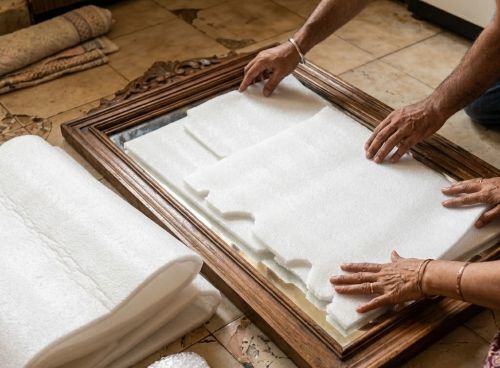
Plastic foam sheets for surface scratch and dent protection during transit
Plastic Foam Sheets

Thin, flexible polyethylene foam sheets that create a soft protective barrier between surfaces — preventing scratches, scuffs, and dents. Protects surfaces, unlike bubble wrap which absorbs impact.


  • Furniture, mirrors, washing machines
  • Refrigerators & car windshields
  • Steel almirahs & wooden furniture corners
India: Large appliances & wooden furniture
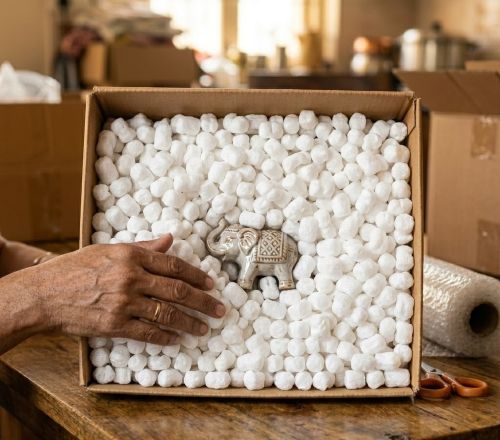
Foam peanut filling used to fill void space inside boxes during shipping
Foam Peanut Filling

Small expanded polystyrene pieces that fill empty space inside boxes, preventing items from shifting or colliding with box walls. Lightweight and especially effective for irregularly shaped items.


  • LCDs, artwork & glasses
  • Small antique items
  • Kitchen crockery sets
Eliminates void space & item shifting
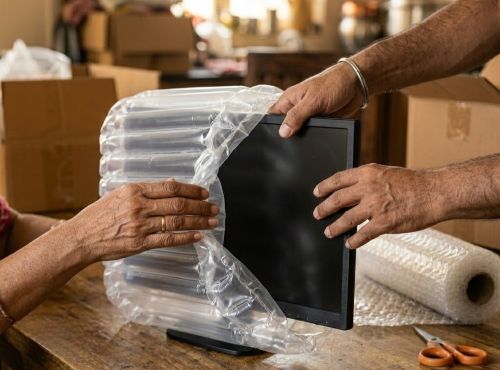
Inflatable air bubble pouches for premium protection of highly fragile items
Inflatable Packing / Air Bubble Pouches

Sealed, air-filled cushions that fully encase an item — providing premium, all-around impact protection superior to standard wrap sheets. Higher cost, maximum protection.


  • TV screens & computer monitors
  • Fine china & highly fragile cargo
vs Bubble Wrap: Pouches fully encase the item; bubble wrap is a wrap-around sheet.
Use when maximum protection is non-negotiable

Wrapping, Surface Protection & Sealing Materials

Wrapping materials go directly on the item first to protect its surface — while sealing materials like stretch wrap go on last to lock, bundle, and weatherproof everything for transit.
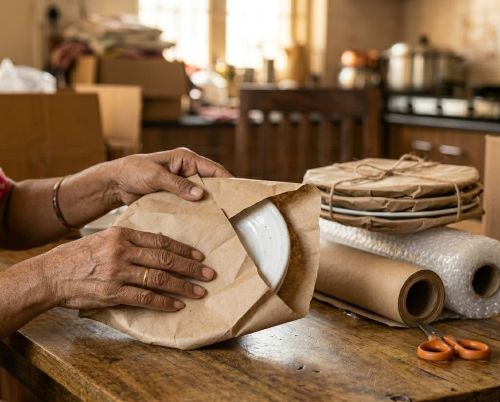
Packing paper and brown kraft paper used as first wrapping layer for fragile items
Packing Paper / Brown Paper

Plain kraft paper used as the very first layer around items — creating a clean, ink-free barrier before bubble wrap or boxing. Protects from dust, dirt, and surface contact.


  • Glass, porcelain & ceramics
  • Delicate figurines & showpieces
  • Puja items & heirloom crockery
India: First layer before bubble wrap on all breakables
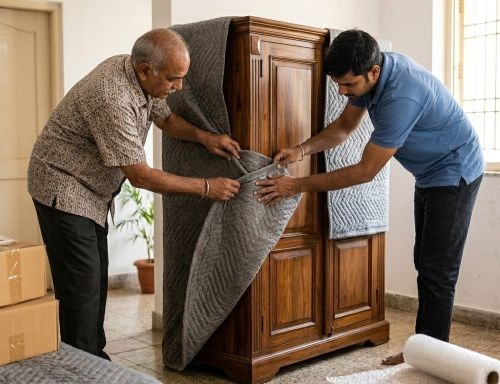
Packing blankets and moving pads used to protect furniture during relocation
Packing Blankets & Pads

Thick fabric covers that wrap bulky furniture and large items, providing a soft protective layer against scratches, dents, and impact during transit. Blankets cover large furniture; pads handle surface scratch prevention.


  • Sofas, mattresses & wooden furniture
  • Large home appliances
Almirahs, sofa sets, dining tables
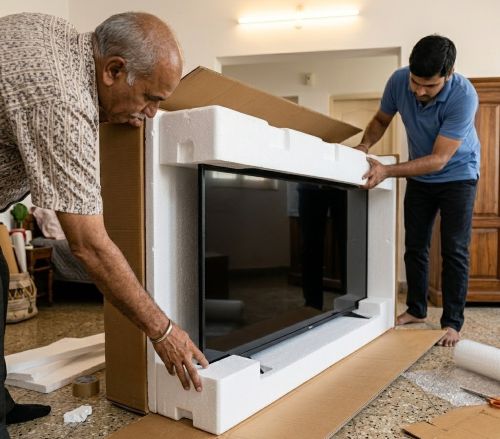
Thermocol EPS sheets used for packaging electronics and appliances during transit
Thermocol Sheets

Expanded polystyrene (EPS) panels — lightweight yet highly rigid, offering both shock resistance and moisture resistance. A standard material for packing electronics for moving and large appliances.


  • TVs, computers, ACs
  • Major electronic appliances
Critical for monsoon shifting
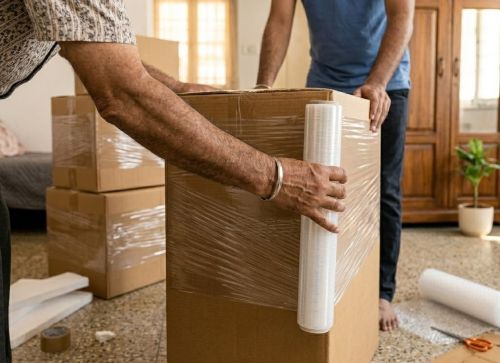
Stretch wrap polythene film used for waterproofing and tight bundling of packed goodsFinal Layer
Stretch Wrap

Self-adhesive thin polythene film that clings tightly to itself without tape — serving the dual function of waterproofing and tight bundling. Applied as the final layer over boxes, furniture, or any wrapped item.


  • All goods — especially moisture-sensitive items
  • Bundling multiple boxes together
Essential for monsoon shifting & long-haul transport

Frequently Asked Questions

Quick, direct answers to the most searched questions about packaging materials for moving, shifting, and transit in India.

There are three main types of packaging materials. Containment materials — such as corrugated boxes, specialty boxes, and wooden or plastic crates — form the outer shell that holds everything together. Cushioning and shock absorption materials — including bubble wrap, plastic foam sheets, foam peanuts, and inflatable air pouches — go inside the box to absorb impact and prevent breakage. Wrapping, surface protection, and sealing materials — such as packing paper, moving blankets, thermocol sheets, and stretch wrap — go directly on the item first to protect its surface from scratches, dust, and moisture. Using the right combination of all three types is what ensures goods arrive undamaged.

For fragile items, always use a layered approach. Start with packing paper or brown kraft paper as the first layer directly on the item to protect its surface from scratches and dust. Wrap that with bubble wrap to absorb impact from drops and vibrations during transit. Place the wrapped item in a correctly sized box and fill all remaining void space with foam peanuts to prevent shifting. For extremely fragile items like TV screens, crystal, or fine china, use inflatable air bubble pouches instead of bubble wrap for complete all-around enclosure. In India, this layered method is standard practice among professional packers and movers for crockery, glassware, electronics, and showpieces.

The best packaging materials for furniture depend on the item type. For wooden furniture like almirahs, dining tables, and beds, use plastic foam sheets on all surfaces to prevent scratches, then cover fully with packing blankets or moving pads to protect against dents and impact. Secure the blankets with stretch wrap to hold everything in place and add a waterproof outer layer — especially important during India's monsoon season. For sofas and mattresses, stretch wrap alone applied tightly works well for surface protection and moisture resistance during short-distance moves. For glass-top tables and mirrors, always use thermocol corner protectors and foam sheets before blanket-wrapping.

Packing electronics safely for relocation requires multiple layers of protection. First, wrap the item in thermocol sheets — these provide both shock resistance and moisture protection, which is critical for electronics during long-distance moves or monsoon shifting in India. Then wrap with bubble wrap for additional impact absorption. Place the item in the original manufacturer's box if available, or in a purpose-built electronics specialty box with fitted foam inserts. Fill any remaining gaps with foam peanuts to prevent movement inside the box. For flat-screen TVs, always transport upright — never flat — to protect the screen panel. Seal the box with strong packing tape and clearly mark it as Fragile – Handle With Care – This Side Up.

Stretch wrap is the most effective packaging material for moisture protection — it forms a tight, continuous waterproof seal over boxes, furniture, and wrapped items without requiring tape or adhesive. Thermocol (EPS) sheets also offer moisture resistance in addition to shock absorption, making them the preferred choice for electronics and appliances during monsoon shifting. For complete protection during India's rainy season or long-haul road transport, the recommended approach is: wrap sensitive items in thermocol sheets, then overwrap the entire packed box or item with two to three layers of stretch wrap before loading. This combination protects against both rain exposure and humidity buildup during extended transit.

Professional packers and movers use a complete set of packaging materials selected based on the item type, fragility, weight, and transit distance. For a standard household relocation in India, professionals typically use corrugated boxes in multiple sizes for general goods, specialty wardrobe and electronics boxes for clothes and appliances, bubble wrap and packing paper for all breakables, plastic foam sheets for furniture surfaces, thermocol sheets for electronics, moving blankets for large furniture, and stretch wrap as the final protective and waterproofing layer on everything. The key difference between DIY packing and professional packing is not just the materials used — it is knowing exactly which combination to apply to each specific item to eliminate any risk of damage during loading, transit, and unloading.

Yes — several packaging materials can be reused if handled and stored carefully after a move. Corrugated boxes can be reused for a second move if they remain structurally intact, dry, and free of crushing or water damage — flatten and store them in a dry area. Bubble wrap is reusable as long as the air pockets are still inflated and the plastic has not torn. Plastic foam sheets and packing blankets are among the most reusable materials and can last across multiple relocations. Thermocol sheets can be reused if they have not crumbled or cracked. Stretch wrap and packing paper are typically single-use due to their nature, but both are inexpensive and easy to replace before the next move.

The quantity of packaging materials needed depends on the size of your home. As a general estimate for Indian households: a 1BHK typically requires 15–20 medium corrugated boxes, 3–5 rolls of bubble wrap, 2 rolls of stretch wrap, and 1–2 packets of foam sheets. A 2BHK typically needs 30–40 boxes, 8–10 rolls of bubble wrap, 4–5 rolls of stretch wrap, foam sheets, packing paper, and 4–6 moving blankets. A 3BHK or larger may require 50–70 boxes and proportionally more of every other material. These are estimates — the actual quantity varies based on the number of fragile items, electronics, and large furniture pieces in your home. Professional packers and movers assess your inventory in advance and bring exactly the right quantity and type of materials needed, eliminating guesswork and last-minute shortages.

Conclusion

Choosing the right types of packaging materials comes down to understanding three functional groups: containment materials that form the outer structure, cushioning and shock absorption materials that protect from impact inside, and wrapping and sealing materials that go directly on the item first. Match the right material to the right item — accounting for fragility, size, transit distance, and India's monsoon conditions — and your goods will arrive without damage. Professional packers and movers understand this material selection process intuitively, applying the right combination based on item type and transit risk. If you want your goods packed correctly the first time, explore house shifting services to connect with verified professionals.


Share Requirements


Get Charges Estimation
Moving Type
Shifting Types
House Size
House Items
Vehicle Types
Car Types
Bike Types
Scooty Types
Office Size
Plants Quantity
Pet Type
Check Credit