Moving to Pune for a New Job? Here's What You Should Know

Starting a new job in Pune is an exciting leap forward! Known as the "Oxford of the East" and a major IT hub, Pune blends a rich educational heritage with a dynamic, growing economy. It offers a unique lifestyle—less frantic than Mumbai but equally cosmopolitan. However, relocating to a new city comes with its own set of challenges, from picking the right locality to understanding the local Marathi culture.
This comprehensive guide provides all you need for a seamless transition: selecting neighborhoods based on your office, planning your monthly budget, navigating the rental market, and practical tips for settling into Pune's vibrant life.
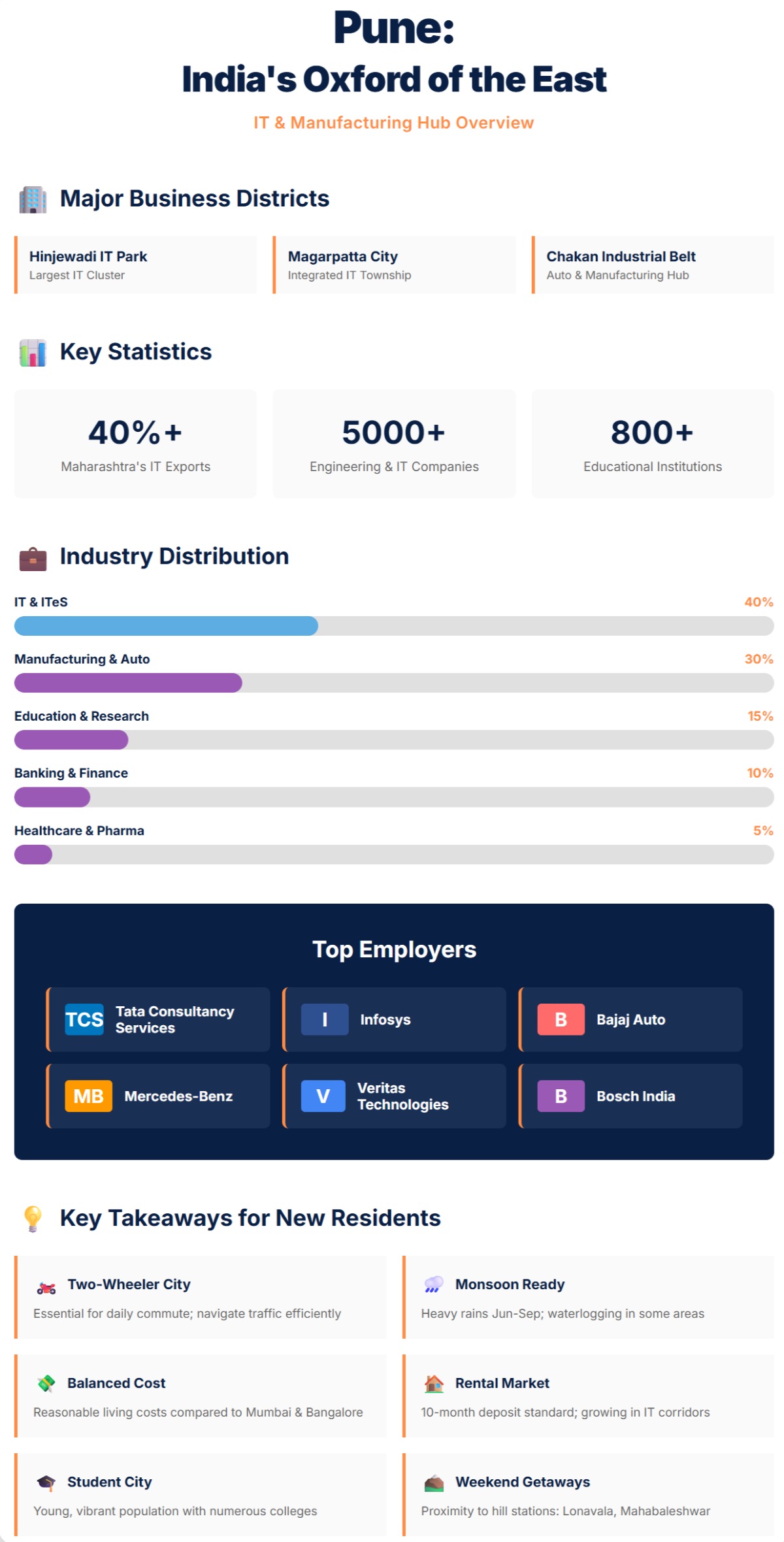
Table of Contents
- Understanding Pune: City Basics
- Choosing the Right Neighborhood
- Finding Your Accommodation
- Planning Your Move: Timeline & Checklist
- Getting Around Pune
- Cost of Living Breakdown
- Settling In: First Week Essentials
- Work Culture & Professional Life
- Healthcare & Essential Services
- Pune Food Scene
- Weekend Exploration & Getaways
- Pro Tips & Common Challenges
- Frequently Asked Questions
Understanding Pune: City Basics
Climate and Weather
Pune enjoys a pleasant climate for most of the year, often called the "Queen of the Deccan" for its weather.
- Summer (Mar-May): 25°C-38°C, dry and hot afternoons, cooler evenings
- Monsoon (Jun-Sep): Moderate to heavy rainfall, city turns lush green
- Winter (Oct-Feb): 10°C-28°C, cool and crisp, perfect weather
Packing Tip: Light cotton for summers, a good umbrella/raincoat for monsoon, and light to medium woolens for winter nights are essential.
Language and Culture
Marathi is the official language, but Pune is a melting pot of cultures due to its student and professional population.
- Professional Settings: English is commonly used in corporate offices and IT parks.
- Local Interactions: Basic Marathi phrases are appreciated in local markets and with auto-rickshaw drivers.
- Cultural Blend: A strong Maharashtrian culture coexists with a modern, youthful vibe from numerous colleges and multinational companies.
💡 Pro Tip: Learn a few Marathi phrases: "Namaskar" (hello), "Dhanyavaad" (thank you), "Kiti?" (how much?). While Hindi and English work in most places, locals appreciate the effort.
Choosing the Right Neighborhood
Your daily commute significantly impacts your quality of life in Pune. Traffic can be heavy during peak hours.
Key Decision Factors:
- Commute Time: Pune's traffic is growing. A 15km drive can take 45-75 minutes during peak hours (9-11 AM, 6-8 PM).
- Public Transport: Proximity to PMPML bus routes or upcoming metro lines (Hinjewadi-Shivajinagar, etc.)
- Amenities: Access to supermarkets, hospitals, parks, and restaurants.
- Budget: Balance between location preferences and rental costs.
- Lifestyle: Vibrant, youthful areas vs. quiet, family-friendly suburbs.
Area Guide Based on Workplace:
Working in Hinjewadi/IT Park:
- Hinjewadi Phase 1/2/3: Heart of IT, many gated societies (Rent: ₹15,000-35,000 for 1-2BHK)
- Wakad: Well-connected, residential hub with malls (Rent: ₹12,000-30,000)
- Baner: Upscale, excellent infrastructure and dining (Rent: ₹18,000-40,000)
- Pimple Saudagar: Affordable, close to IT park (Rent: ₹10,000-22,000)
Working in Magarpatta City/Hadapsar:
- Magarpatta City: Self-contained township, premium (Rent: ₹20,000-50,000+)
- Kharadi: Fast-growing IT corridor, good connectivity (Rent: ₹14,000-32,000)
- Hadapsar: Industrial and IT mix, varied options (Rent: ₹10,000-25,000)
- Wagholi: Budget-friendly, slightly farther (Rent: ₹9,000-18,000)
Working in Shivajinagar/Pune Central:
- Shivajinagar: Central, well-connected, educational hub (Rent: ₹15,000-30,000)
- Kothrud: Traditional, family-oriented, good markets (Rent: ₹12,000-28,000)
- Deccan Gymkhana: Upscale, close to colleges and cafes (Rent: ₹18,000-40,000)
- Erandwane: Peaceful, residential (Rent: ₹14,000-30,000)
Working in Chakan/Talegaon Industrial Belt:
- Chakan: Industrial area, look for gated complexes (Rent: ₹10,000-20,000)
- Talegaon Dabhade: Affordable, developing rapidly (Rent: ₹8,000-16,000)
- Moshi/Charholi: Budget options near the belt (Rent: ₹7,000-15,000)
For more insights on serene living, explore our guide on Top 10 Greenest Neighborhoods to Live in Pune for a Tranquil Lifestyle.
Budget-Friendly Options:
If you're watching your expenses, consider these areas:
- West Pune: Dapodi, Bhosari
- East Pune: Kondhwa, Undri, Pisoli
- North Pune: Ravet, Akurdi
💡 Pro Tip: Prioritize living within a 30-40 minute commute of your workplace, even if it costs slightly more. The time, fuel, and stress saved are invaluable in Pune's traffic.
Finding Your Accommodation
Types of Housing Options:
PG (Paying Guest): ₹7,000-₹14,000/month
- Ideal for: Students and young professionals new to the city
- Includes: Furnished room, often with meals, Wi-Fi, and cleaning
- Benefits: Ready community, no long-term lock-in
- Best for: First few months while you explore Pune
Shared Apartments: ₹8,000-₹15,000/person
- Ideal for: Professionals wanting independence and shared costs
- Benefits: More privacy than a PG, split utilities
- Platforms: Flatshare, Facebook groups like "Flats & Flatmates Pune," NoBroker
1BHK/2BHK Independent: ₹10,000-₹35,000
- Ideal for: Couples, families, or professionals wanting complete privacy
- Benefits: Your own space, freedom to set up home
- Considerations: Need to furnish, manage all bills and maintenance
Rental Market Reality:
Standard practices in Pune's rental market:
- Security Deposit: Typically 10 months' rent (sometimes negotiable to 6-8 months)
- Brokerage Fee: Usually 1 month's rent or 50% of a month's rent
- Lease Period: Standard 11-month agreement
- Rent Escalation: 5-10% increase per year is common
- Advance Rent: First month's rent payable upfront
Finding Properties:
| Method | Pros | Cons |
|---|---|---|
| Online Platforms (NoBroker, MagicBricks) | Wide choices, filters, virtual tours | Some listings may be outdated |
| Facebook Groups & Websites | Direct contact with owners, no brokerage | Requires time to vet listings |
| Local Brokers | In-depth area knowledge, handles paperwork | Brokerage fee applies |
| Company Tie-ups | Verified properties, relocation support | Limited to specific societies |
Unsure about buying vs. renting? Read our comprehensive To Rent or To Buy a Home: What’s Best for You? to make an informed decision.
Planning Your Move: Timeline & Checklist
6-8 Weeks Before Moving:
- Research neighborhoods near your Pune office
- Get a confirmed joining date and formal offer letter
- Start decluttering—decide what to move, sell, or donate
- If moving with family, begin researching schools (Check our guide on finding schools in a new city)
4 Weeks Before Moving:
- Finalize accommodation (PG or rental agreement)
- Book travel tickets to Pune
- Gather packing supplies (boxes, tape, bubble wrap)
- Notify your current landlord (if applicable)
2 Weeks Before Moving:
- Get quotes from professional packers and movers in Pune
- Transfer or close utility accounts at your current home
- Update your address with banks, subscriptions, etc.
- Arrange for temporary accommodation in Pune if needed
1 Week Before Moving:
- Confirm moving day arrangements with the moving company
- Pack an essentials box (documents, medications, change of clothes)
- Prepare an inventory list of all items being moved
- Complete farewells with friends and colleagues
What to Bring vs. Buy in Pune:
Bring With You:
- Important documents (IDs, degree certificates, medical records)
- Personal electronics (laptop, phone, chargers)
- Clothing suitable for Pune's three-season climate
- Sentimental valuables and family photos
- Essential medicines (at least a 2-month supply)
Better to Buy in Pune:
- Heavy furniture (transportation cost often exceeds local price)
- Large kitchen appliances (check voltage compatibility)
- Mattresses, curtains, and bulky bedding
- Daily grocery and household essentials
Getting Around Pune

Public Transportation:
PMPML Buses:
- Extensive network covering the city and suburbs
- Daily pass: ₹50-₹80
- Monthly pass: ₹1,500-₹2,500
- Apps: PMPML Pravasi, Chalo for tracking
- BRT Corridors: Dedicated lanes on some routes for faster travel
Pune Metro (Expanding):
- Line 1 (Purple): PCMC to Swargate (Phased opening)
- Line 2 (Aqua): Vanaz to Ramwadi (Partially operational)
- Fare: ₹10-₹50 based on distance
- Timings: 6 AM to 10 PM
- Future lines will connect Hinjewadi and other IT hubs.
Ride-Sharing & Taxis:
- Ola/Uber: Widely available, auto and cab options
- Auto-Rickshaws: Use meter or agree on fare before ride. "Share-auto" is common on fixed routes.
- Pune's own: Apps like "Ping" for auto-rickshaw booking
- Rapido: Bike taxis for quick, short trips
Personal Vehicles:
Two-Wheelers:
- Most popular and practical for navigating Pune's lanes and traffic
- Monthly fuel cost: ₹1,500-₹3,000
- Rental options: Vogo, Royal Brothers (monthly subscriptions available)
Car Ownership:
- Consider if: You have family, travel frequently outside city
- Monthly cost: ₹15,000-₹35,000 (EMI + fuel + maintenance + parking)
- Challenges: Narrow lanes in old city, parking scarcity in crowded areas
Commute Reality & Tips:
- Peak Hours: 9-11 AM and 6-8 PM are most congested.
- Average Commute: 12km = 40-70 minutes during rush hour.
- Monsoon Impact: Waterlogging in some areas can disrupt travel.
- Best Practices:
- If possible, live near your workplace or on the same side of the river.
- Use a two-wheeler for maximum flexibility.
- Explore flexible work hours or WFH options with your employer.
- Use bus routes on BRT corridors for more predictable travel times.
Cost of Living Breakdown
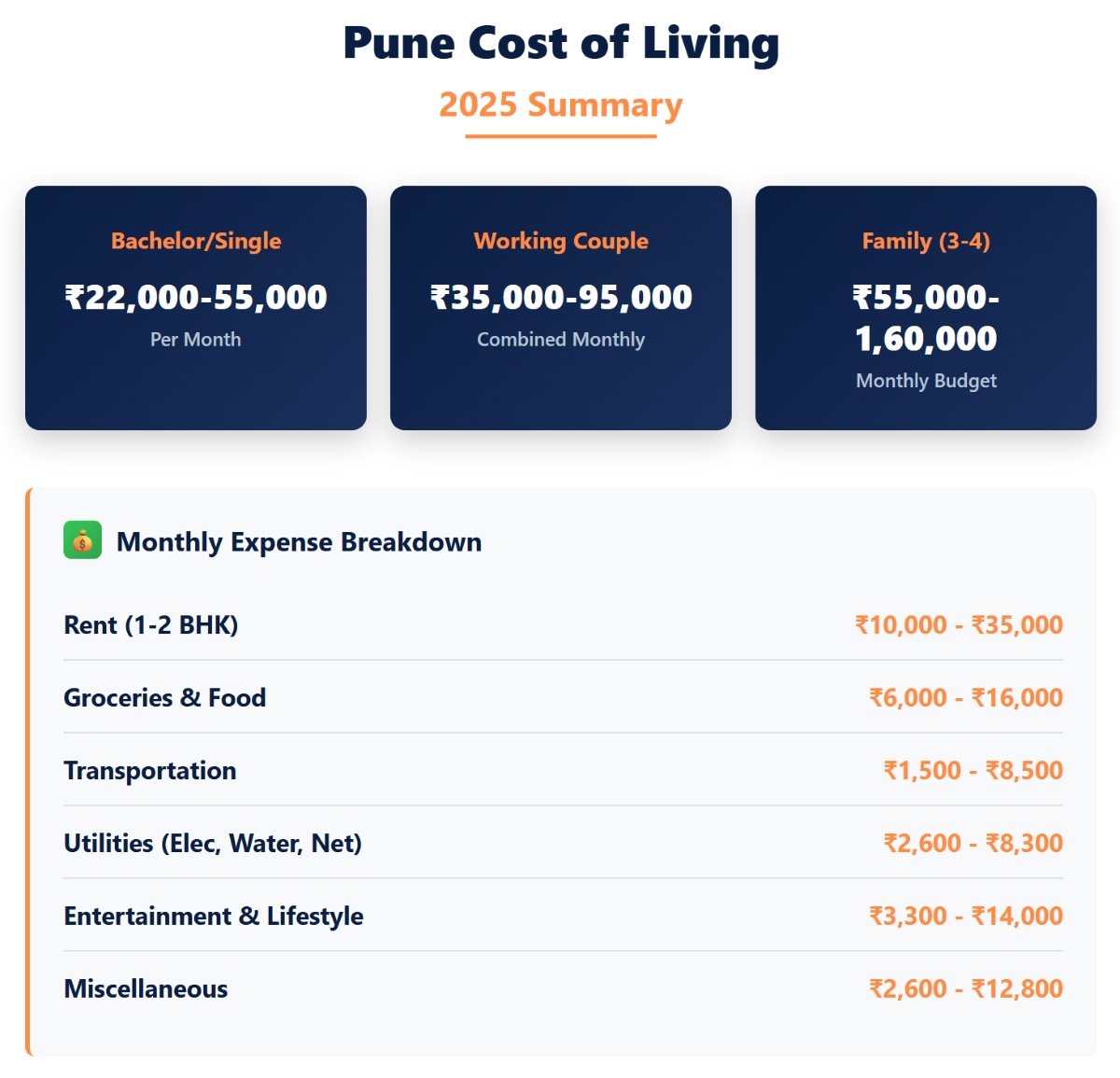
Monthly Budget Overview:
| Living Situation | Basic Budget | Comfortable Budget |
|---|---|---|
| Bachelor/Single | ₹22,000-₹32,000 | ₹35,000-₹55,000 |
| Working Couple | ₹35,000-₹55,000 | ₹65,000-₹95,000 |
| Family (3-4 members) | ₹55,000-₹90,000 | ₹1,10,000-₹1,60,000 |
For a detailed, up-to-date analysis, read our dedicated Cost of Living in Pune 2025: Complete Guide & Prices.
Detailed Expense Categories:
1. Housing (30-40% of budget):
- Rent: ₹10,000-₹35,000
- Maintenance: ₹1,000-₹4,000 (for apartments)
- Electricity: ₹800-₹2,500
- Water: ₹200-₹600
- Internet (Broadband): ₹600-₹1,200
2. Food & Groceries (25-30%):
- Monthly groceries (per person): ₹3,000-₹5,500
- Eating out (mid-range): ₹2,500-₹6,000
- Office lunches/canteen: ₹2,000-₹4,000
- Weekend dining/coffee: ₹1,500-₹4,000
3. Transportation (10-15%):
- Bus Pass/Fuel: ₹1,200-₹2,500
- Two-wheeler fuel: ₹1,500-₹3,000
- Cab/Auto for occasional trips: ₹1,000-₹3,000
4. Lifestyle & Entertainment (10-15%):
- Movies/Events: ₹800-₹2,000
- Gym/Sports club: ₹1,000-₹3,500
- Weekend activities: ₹1,500-₹4,000
- Shopping (clothing, etc.): ₹1,500-₹5,000
5. Miscellaneous (10%):
- Mobile recharge: ₹300-₹700
- Personal care: ₹800-₹1,800
- Streaming subscriptions: ₹500-₹1,000
- Contingency/Emergency fund: ₹2,000-₹4,000
Settling In: First Week Essentials
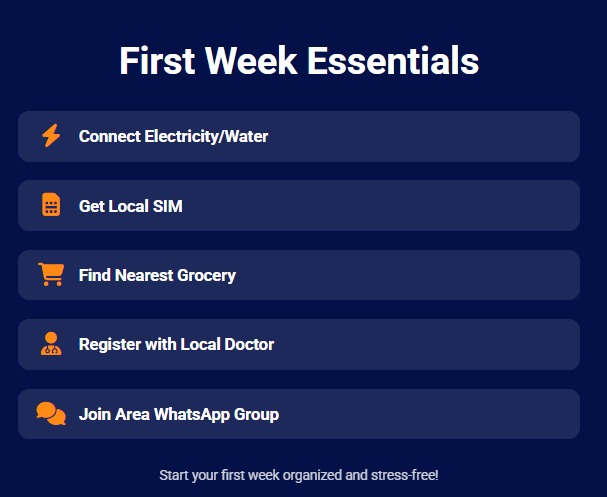
Immediate Setup Tasks:
Utilities Connection:
- Electricity: Register with MSEDCL. Ensure the meter is in your name.
- Water: Check source (municipal or tanker). Process depends on society/standalone house.
- Cooking Gas: Apply for LPG connection (Bharat Gas, HP, Indane). Takes 5-7 days.
- Internet: Popular providers: JioFiber, Airtel Xstream, You Broadband, Tata Play Fiber.
- DTH/Cable: Tata Play, Dish TV, or local cable operator.
Local Documentation:
- Aadhar Address Update: Visit nearest center or update online with rental agreement.
- Mobile SIM: Get a local number; major operators have stores everywhere.
- Bank Account: Open an account with a Pune branch for easier rental transactions, etc.
- Police Verification: Often required by landlords for rental agreement.
Essential Services to Locate:
- Nearest ATMs and bank branches (HDFC, ICICI, SBI, Axis are widespread)
- Supermarkets and local vegetable markets (Mall, D-Mart, local "bazaar")
- Laundry service (Most societies have in-house "dhobi" or use apps like UClean)
- Medical store (24/7 chains: Apollo, MedPlus, local pharmacies)
- Nearest clinic or hospital for emergencies
Building Your Local Network:
- Introduce yourself to neighbors and join apartment WhatsApp groups.
- Connect with colleagues, especially those from your hometown or alumni.
- Join Facebook groups: "Pune Foodies," "Expats in Pune," "Pune Flat and Flatmates."
- Explore how to build a local network in a new city for more tips.
- Attend company onboarding and social events.
💡 Pro Tip: In your first week, focus on getting utilities and documentation sorted. Exploring the city and socializing can follow in the coming weekends.
Work Culture & Professional Life
Pune Work Environment:
IT & Manufacturing Hubs:
- Hinjewadi, Magarpatta, Kharadi host major IT companies.
- Chakan, Talegaon are major auto and manufacturing belts.
- Work culture varies from global MNCs to agile startups.
- Dress code is generally business casual to casual in IT.
Educational & Research Institutions:
- Presence of universities and research centers creates a knowledgeable workforce.
- Opportunities in academia, R&D, and ed-tech.
Networking Opportunities:
- Tech Meetups: Regular events on JavaScript, Python, Data Science, etc., in venues across Hinjewadi and Kharadi.
- Startup Events: Pune has a thriving startup community with pitch nights and networking sessions.
- Professional Associations: PMI Pune Chapter, NASSCOM events.
- Co-working Spaces: WeWork (Kharadi, Baner), Smartworks host community events.
- Alumni Networks: Strong networks from colleges like COEP, SPPU, Symbiosis.
Work-Life Balance Tips:
- Many IT companies offer flexible timings to avoid peak traffic.
- Hybrid work models (2-3 days WFH) are increasingly common.
- Pune's proximity to hill stations (Lonavala, Mahabaleshwar) makes for perfect weekend breaks.
- Numerous parks, trekking spots, and cultural activities support a balanced lifestyle.
- Set clear boundaries between work and personal time, especially when working from home.
Healthcare & Essential Services
Major Hospitals:
Multi-Specialty Hospitals:
- Ruby Hall Clinic (Shivajinagar, Wanowrie)
- Jehangir Hospital (Sasoon Road)
- Deenanath Mangeshkar Hospital (Erandwane)
- Columbia Asia Hospital (Kharadi, Yeshwantpur)
- Apollo Spectra (Shivajinagar, Karve Road)
- Sahyadri Hospitals (Multiple branches)
Government Hospitals:
- Sassoon General Hospital (affordable, multi-specialty)
- Armed Forces Medical College (AFMC)
Healthcare Tips for Newcomers:
- Health Insurance: Most companies provide group insurance. Verify network hospitals in Pune.
- Find a GP: Locate a reliable general physician/clinic near your home (₹300-800 per visit).
- Pharmacies: 24/7 chains: Apollo, MedPlus, Guardian.
- Online Medicine: PharmEasy, Netmeds, 1mg offer quick delivery.
- Emergency Numbers:
- Police: 100
- Ambulance: 108
- Fire: 101
- Women's Helpline: 1091
Pune Food Scene
Must-Try Local Dishes:
- Misal Pav: Spicy curry made of sprouts, served with bread rolls.
- Puran Poli: Sweet flatbread stuffed with lentil and jaggery.
- Bhakri: Traditional millet bread often served with "zunka" (chickpea flour curry).
- Poha: Flattened rice breakfast dish, a Pune staple.
- Mastani: Thick milkshake with fruits and dry fruits, named after the historical figure.
Iconic Food Spots:
- Bedekar Misal: Legendary for Misal Pav (Narayan Peth)
- Vaishali: Famous for South Indian and continental (FC Road)
- Good Luck Cafe: Old Irani cafe for bun maska and chai (Deccan Gymkhana)
- Kayani Bakery: Renowned for Shrewsbury biscuits and wine cake (East Street)
- Durga: Famous for soft serve ice cream (FC Road)
Food Streets & Areas:
- FC Road & JM Road: Hub for cafes, restaurants, and street food.
- Koregaon Park: Upscale dining, international cuisine, and cafes.
- Shaniwar Wada Area: For authentic local Maharashtrian food.
- Baner-Balewadi-Hinjewadi Belt: Loaded with pubs, microbreweries, and multi-cuisine restaurants.
Cooking at Home:
- Local Markets: Market Yard (Mandi), Laxmi Road, Camp Bazaar for fresh produce.
- Supermarket Chains: D-Mart, Reliance Smart, More, Spar.
- Online Grocery: BigBasket (strong presence), Grofers, Amazon Fresh.
- Specialty Stores: Find ingredients from across India in Camp area and modern supermarkets.
Weekend Exploration & Getaways
Within Pune:
- Shaniwar Wada: Historic fortification of the Peshwas.
- Aga Khan Palace: Historical palace linked to Mahatma Gandhi.
- Sinhagad Fort: Popular trekking destination with panoramic views.
- Raja Dinkar Kelkar Museum: Houses a vast collection of Indian artifacts.
- Osho International Meditation Resort: In Koregaon Park (requires prior registration).
- Parvati Hill: Temple and viewpoint overlooking the city.
Weekend Getaways (1-3 hours drive):
Hill Stations & Nature:
- Lonavala & Khandala: Popular hill stations (65km, 1.5 hrs)
- Mahabaleshwar & Panchgani: Strawberry farms, viewpoints (120km, 3 hrs)
- Matheran: Asia's only automobile-free hill station (120km, 3 hrs)
- Bhimashankar: One of the 12 Jyotirlingas, wildlife sanctuary (110km, 3 hrs)
Historical & Cultural:
- Shirdi: Sai Baba temple town (185km, 4 hrs)
- Ajanta & Ellora Caves: UNESCO World Heritage sites (300km, 6-7 hrs)
- Raigad Fort: Capital fort of Chhatrapati Shivaji Maharaj (150km, 4 hrs)
Hobby & Interest Groups:
- Trekking: Pune is the trekking capital with groups like "Pune Trekking" and "Treks and Trails."
- Cycling: Active cycling community with weekend rides to forts and countryside.
- Book Clubs: Atta Galatta, Crossword host regular book readings.
- Photography: Pune Photography Club organizes walks and workshops.
- Pottery & Arts: Numerous studios offer workshops in Koregaon Park and Kothrud.
Pro Tips & Common Challenges
Adapting to Pune Life:
- Learn Basic Marathi: It helps build rapport with locals, shopkeepers, and auto drivers.
- Respect Local Sensibilities: Pune has a strong cultural identity; being respectful goes a long way.
- Weather Preparedness: Monsoon can be heavy; invest in good waterproof gear for you and your vehicle.
- Embrace the Pace: Pune is generally more relaxed than Mumbai or Bangalore. Enjoy its laid-back yet productive vibe.
Common Challenges & Solutions:
1. Traffic and Narrow Roads:
- Challenge: Congestion during peak hours, narrow lanes in older parts of the city.
- Solution: Prefer two-wheelers for daily commute, plan travel outside peak hours, use public transport where feasible.
2. Water Availability:
- Challenge: Some outer areas (Wagholi, Undri) may face water scarcity, especially in summer.
- Solution: Before renting, inquire about water source (24/7 municipal vs. tanker supply). Apartments with borewells are preferable.
3. Finding Your Community:
- Challenge: Initial loneliness in a new city.
- Solution: Actively join hobby groups, attend work socials, use apps like Meetup to find people with similar interests.
4. Monsoon Management:
- Challenge: Heavy rains causing waterlogging and traffic snarls.
- Solution: Know flood-prone areas in your locality, keep emergency supplies, plan for extra travel time, and ensure proper waterproofing for your home.
Safety Tips:
- Pune is generally considered safe. However, take standard precautions.
- Share your live location when using ride-sharing services at night.
- Be cautious while walking/driving in poorly lit areas, especially in the outskirts.
- Keep emergency contacts saved on your phone.
- If living in a standalone house, ensure good door/window security.
Wondering if Pune is the right city for you? Weigh all factors by reading our detailed analysis: Of Punekars and Puneri’s: Why Pune is Great and Why it’s Not!.
Frequently Asked Questions
Q1: What salary is needed to live comfortably in Pune?
For a single professional, a monthly take-home of ₹35,000-50,000 allows for comfortable living, decent accommodation, eating out, and savings. For a couple, a combined income of ₹65,000-90,000 is comfortable.
Q2: Is knowing Marathi necessary in Pune?
Not necessary for daily professional life, as Hindi and English are widely understood. However, learning basic Marathi is highly appreciated and helps in local interactions, especially with older residents and in non-touristy markets.
Q3: What are the initial setup costs when moving to Pune?
Budget approximately ₹1-2.5 lakhs for:
- Security Deposit: ₹80,000-₹2,00,000 (typically 10 months rent)
- Brokerage: ₹10,000-₹25,000 (if applicable)
- Basic Furnishings & Appliances: ₹30,000-₹70,000
- Utility Connections & Initial Groceries: ₹10,000-₹15,000
Q4: Which area is best for IT professionals in Pune?
Primarily depends on your office location:
- Hinjewadi IT Park: Live in Wakad, Hinjewadi, Baner, or Tathawade.
- Magarpatta/Kharadi: Live in Kharadi, Wadgaon Sheri, Viman Nagar, or Magarpatta itself.
- EON Free Zone (Kharadi): Similar areas as Magarpatta.
- For a balanced lifestyle with good connectivity, Baner and Wakad are popular choices.
Q5: How is the traffic situation in Pune?
Traffic has increased significantly with the city's growth. Peak hours (9-11 AM & 6-8 PM) see heavy congestion, especially on bridges, IT park exit roads, and key corridors like Mumbai-Bangalore Highway. Planning your commute and living close to work is advised.
Q6: What documents are needed for renting a house in Pune?
Typically required:
- Identity Proof (Aadhar, PAN, Passport)
- Address Proof (Previous)
- Employment Letter/Last 3 months' payslips
- Passport-size photographs
- Police verification is often mandated by the society/landlord.
Q7: Is Pune safe for women professionals?
Pune is generally considered one of the safer metro cities in India. Areas like Koregaon Park, Kothrud, Baner, and most IT suburbs are safe. Standard precautions like avoiding isolated areas late at night and using trusted transport are always recommended.
Q8: How to find PG or flat without brokerage?
Options include:
- Online platforms like NoBroker, NestAway
- Facebook groups ("Flat and Flatmates Pune," "Pune PG for Professionals")
- Referrals from colleagues or friends already living in Pune
- Walking around your preferred society and looking for "To-Let" boards
Q9: What's the best way to commute to Pune airport?
Pune Airport (Lohegaon) is within the city.
- App Cabs (Ola/Uber): Most convenient, takes 30-60 mins from most locations.
- Auto-Rickshaw: Metered or pre-negotiated fare.
- PMPML Buses: Several routes connect to the airport (most economical).
Q10: How do I meet people and make friends in Pune?
- Join activity-based groups (trekking, cycling, photography).
- Attend workshops or courses (pottery, language, dance).
- Use apps like Meetup and Bumble BFF.
- Socialize with colleagues and their friend circles.
- Participate in events at popular cafes and cultural centers.
Q11: Is a vehicle necessary in Pune?
A two-wheeler is highly recommended for convenience and time-saving, given the traffic and last-mile connectivity issues with public transport. For families, a car is useful for weekend outings and school runs. Many manage with a combination of two-wheeler and ride-sharing apps.
Q12: How is the work culture in Pune's IT companies?
Generally good. A mix of global MNCs and Indian IT giants. Work-life balance is better compared to some other metros, though it varies by company. The presence of educational institutions ensures a talented and young workforce. The culture is often less hierarchical and more collaborative.
Conclusion: Starting Your Pune Journey
Moving to Pune for a new job is the beginning of an enriching chapter. The city offers a unique blend of historical charm, academic excellence, and modern professional opportunities. While you'll face initial challenges like navigating traffic and setting up your new home, the pleasant climate, vibrant culture, and balanced lifestyle make it worthwhile.
Your Success Checklist:
- Choose your neighborhood wisely based on workplace proximity.
- Budget adequately for initial deposits and setup costs.
- Plan your commute—consider a two-wheeler for flexibility.
- Be proactive in building your social and professional network.
- Explore Pune's rich food, history, and nearby getaways.
- Strive for a healthy work-life balance from the start.
The physical relocation can be the most stressful part. For a smooth, hassle-free move, consider professional assistance. AssureShift connects you with verified packers and movers in Pune, offering transparent pricing, comprehensive services including packing, loading, and transit insurance, ensuring your belongings reach your new home safely.
Remember, every newcomer experiences an adjustment period. Be patient, stay curious, and soon you'll discover why so many people fall in love with Pune and call it home.
For more detailed insights on relocating to this wonderful city, check out our Quick Guide for Moving to Pune.
Ready for Your Pune Move? Get free quotes from verified moving partners.
Welcome to Pune – your new professional and personal adventure awaits!