How To Lift Heavy Boxes Correctly: The Complete Guide
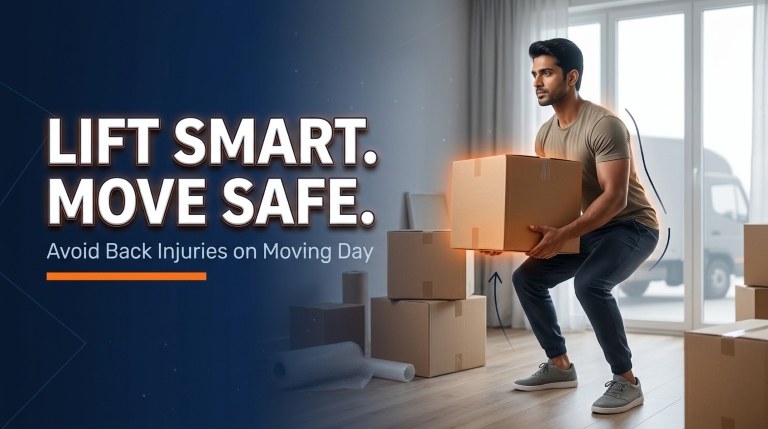
Nearly 80% of moving-day injuries involve the lower back — and almost every single one is avoidable. The culprit is rarely the weight of the box. It is the split second when someone bends at the waist instead of the knees, lets the load drift too far from their body, or starts lifting on muscles that were never warmed up.
This guide walks you through proper heavy box lifting technique from warm-up to set-down — covering safe weight limits, step-by-step form, the right equipment, and when to call professionals. Everything you need for a pain-free move.
Before You Lift — 5-Minute Warm-Up
Most people skip this. That is exactly why they get hurt. Cold muscles tear more easily — a 5-minute warm-up is the single easiest way to prevent a moving-day injury.
| Stretch | How To Do It | Duration |
|---|---|---|
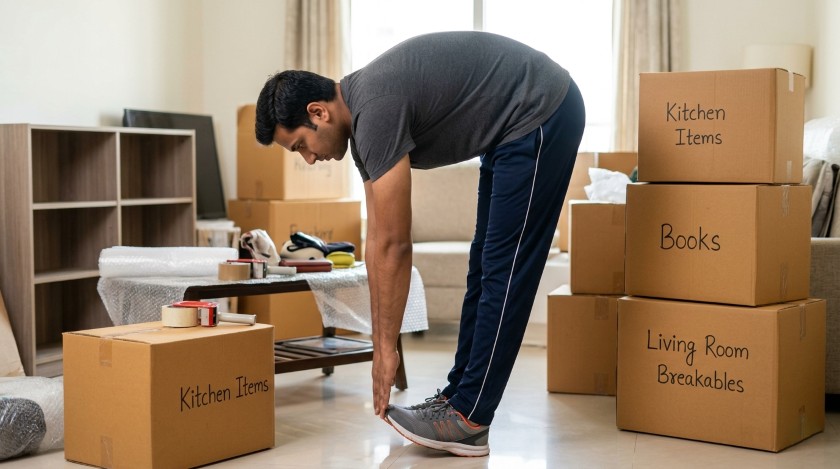
| Hamstring stretch | Stand straight. Slowly bend forward reaching toward your toes. Keep knees soft — not locked. Hold. | 30 sec × 2 |
| Hip flexor lunge | Step one foot forward into a lunge. Lower back knee toward the floor. Hold, then switch sides. | 20 sec / side |
| Cat-cow stretch | On all fours — arch your back up slowly (cat), then dip it down (cow). Alternate. | 10 slow reps |
| Shoulder rolls | Roll both shoulders backward in large slow circles, then forward. | 10 each way |
| Wrist & grip flex | Extend arms forward, flex and extend fingers. Rotate wrists in both directions. | 15 sec |
How To Prepare Before Lifting
Use Sturdy Boxes
- Heavy items — books, tools, appliances — go in double-walled cardboard only
- Press firmly on the sides and base before sealing
- If the box bends under light pressure, it will fail under load
- Pack lightweight items in weaker boxes only
Know Your Weight Limit
Dress for the Job
Wear
- Loose cotton or jersey
- Closed-toe grip shoes
- Work gloves
Avoid
- Sandals or heels
- Tight jeans or skirts
- Loose jewellery
Clear the Pathway First
Before lifting a single box — walk the entire path to the truck and remove:
Proper Lifting Technique — Step by Step
Balance the Box Before You Close It
Pack heavier items at the bottom, lighter on top. Distribute weight evenly side to side. An unbalanced box shifts as you carry it — that sudden weight shift causes wrist and shoulder injuries.
Stand Correctly Before You Bend
Test the Weight First
Never commit to a full lift without testing. Nudge one corner of the box upward with both hands. This tells you the approximate weight before your back takes any load.
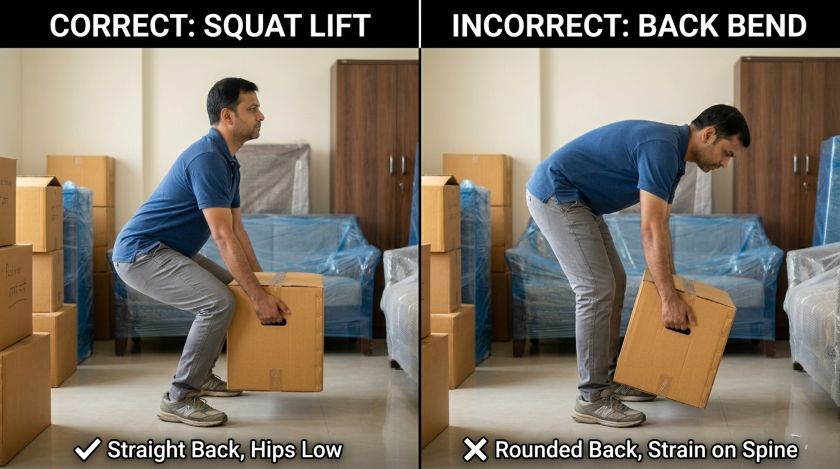
Bend Your Knees. Not Your Back.
Squat down by bending at the knees. Keep your back straight throughout. Your quadriceps and glutes — the strongest muscles in your body — do all the work. Your lower back stays protected.
Get a Firm Grip
- Hold from two opposite corners or from underneath
- Never grip from the top flaps — they can tear mid-lift
- Work gloves improve grip significantly over a long moving day
Lift With Your Legs. Hold It Close.
Push upward through your legs to stand. Hold the box close to your body at waist height — touching or nearly touching your torso. Do not let it drift forward or to the side.
Walk Slowly. Move Your Feet to Turn.
Set the Box Down Correctly
Reverse the entire process — walk to the exact spot, bend at the knees with a straight back, and slowly lower the box. Only release your grip once it is firmly on the ground.
Do This / Not This — Quick Reference
| DO THIS | NOT THIS |
|---|---|
| Bend your knees when lifting | Hunch your back to pick up a box |
| Warm up for 5 minutes first | Start lifting with cold muscles |
| Keep the box close to your body | Hold the box away from your torso |
| Move your feet to change direction | Twist your spine while carrying |
| Test weight before fully lifting | Assume a box is light before you lift |
| Wear closed-toe shoes with grip | Wear sandals, heels, or open shoes |
| Take a break every 30–40 minutes | Push through pain or exhaustion |
| Ask for help when a box is too heavy | Solo-lift beyond your safe limit |
Alternatives to Lifting — Work Smarter
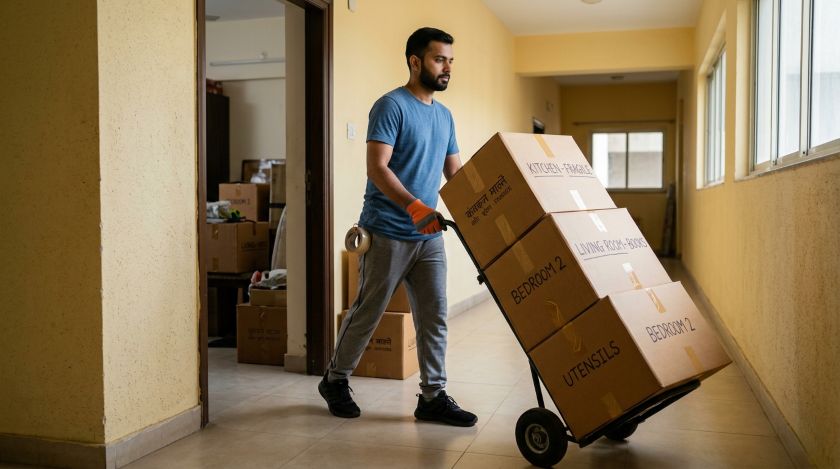
You do not have to carry everything by hand. Hardware stores and moving companies across India rent equipment that eliminates most heavy lifting entirely.
Hand Truck
Stacks of boxes, tall appliances
Furniture Dolly
Sofas, wardrobes, bed frames
Appliance Dolly
Fridges, washers, ovens
Moving Straps
Two-person bulky item carries
When To Call Professional Movers
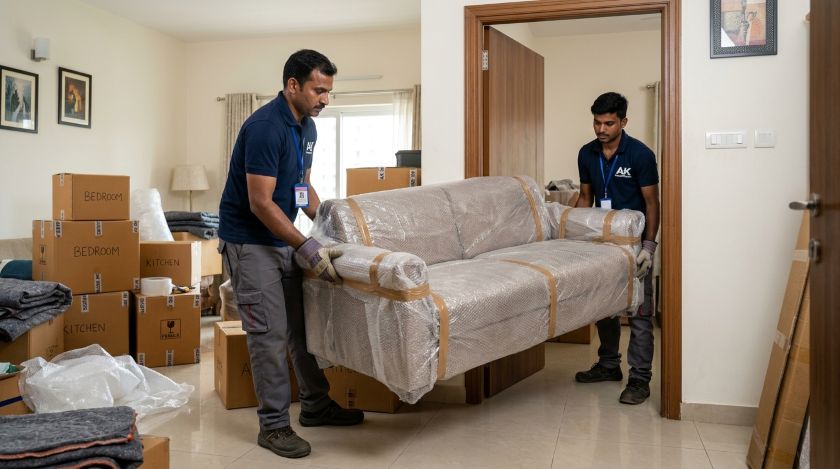
Some moves are simply beyond what one person — or even two — should handle manually; knowing how to move large and heavy items safely is essential before heavy furniture, multiple flights of stairs, or large appliances are involved.
Professional movers bring the correct equipment, the proper technique, and full insurance coverage for your goods. You guide — they carry.
AssureShift connects you to pre-verified, trusted professional packers and movers near you. Compare quotes, reviews, and services from 3 top-rated movers in one place.
Frequently Asked Questions
Conclusion
Moving day does not have to hurt — this guide on moving injury prevention covers 95% of every lifting injury that happens on moving day.
Warm Up First
5 minutes before any lifting — every single time.
Check the Weight
Bathroom scale before sealing any box.
Bend Your Knees
Squat down — never bend at the waist.
Hold It Close
Waist height, torso-touching. Always.
Move Your Feet
Step to turn — never twist your spine.
Set It Down Right
Reverse the process — bent knees all the way.
And if your move involves heavy furniture, multiple floors, large appliances, or anything that genuinely exceeds what one or two people should be carrying — that is what professionals are for.