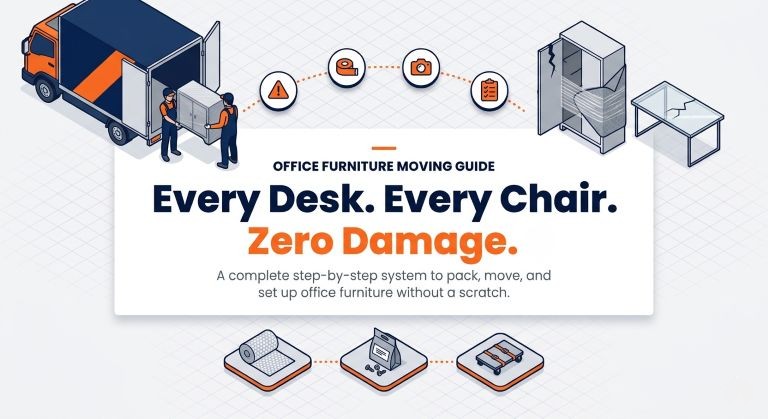
Moving office furniture safely is one of the biggest challenges in any office relocation — desks, chairs, cabinets, and conference tables are bulky, heavy, and easy to damage, and a scratched surface or cracked glass tabletop can delay your move-in date. This guide covers the entire process of moving office furniture safely: auditing what's worth taking, packing by material type, disassembling carefully, transporting without damage, and setting up at your new location. For the complete office relocation process, including cost, GST, and timelines, see our Complete Office Moving Guide.
1
Decide What's Worth Moving
Before you book a single truck, decide what's actually worth moving. Office furniture accumulates over years, and not everything deserves a spot in your new space.
Questions to ask for each piece:
Condition — Is it structurally sound, or does it have damage that will only worsen in transit?
Age and lifecycle — Will it look out of place or feel dated in the new office?
Cost of moving vs. replacing — Heavy, bulky, or fragile pieces (large conference tables, glass cabinets) sometimes cost more to move safely than to replace with new furniture.
Fit for the new layout — Measure key pieces against the new floor plan before assuming they'll work.
What to do with furniture you're not taking:
Donate usable desks, chairs, and cabinets to NGOs, schools, or smaller businesses.
Sell modern or higher-value pieces through office liquidation platforms or local resellers.
Recycle broken or outdated furniture through certified e-waste or scrap furniture recyclers.
Replace pieces that are damaged beyond repair or no longer practical — sourcing new furniture can sometimes cost less than moving and repairing an old one.
Doing this audit early means you're not paying to move (or store) furniture that's headed for disposal anyway — and it keeps your packing and labeling process focused only on what matters.
2
Plan Around Your New Space
Once you know what's moving, build a simple checklist dedicated to furniture logistics:
1
Create a furniture inventory list — Document every piece by type, quantity, and current location (department/floor).
2
Measure the new space — Check doorway widths, room dimensions, and final placement spots for large items like desks and conference tables.
3
Confirm elevator and doorway clearance — At both the old and new buildings, measure elevator interior dimensions and stairwell widths if elevators aren't an option.
4
Set up a labeling/numbering system — Assign each piece a number or tag matching its inventory entry and destination room. A consistent system across every box and furniture piece makes unpacking far faster — our guide on labeling boxes for shifting covers a simple version of this.
5
Photograph furniture before the move — Useful for both insurance purposes and reassembly reference later.
6
Assign a furniture coordinator — One point of contact to track inventory and answer mover questions on the day.
A clear checklist here prevents the most common furniture-moving problem: discovering on moving day that a desk won't fit through a doorway or into the service elevator.
3
Pack Each Piece the Right Way
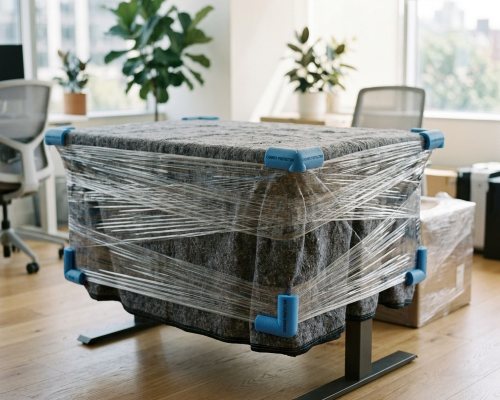
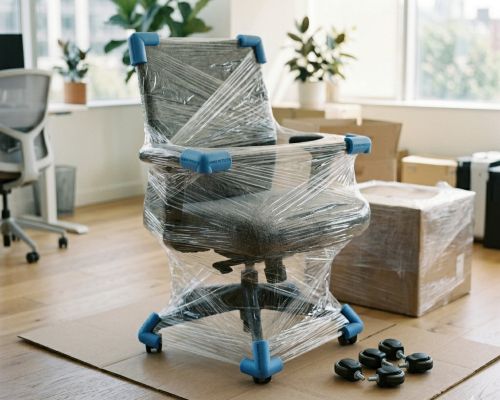
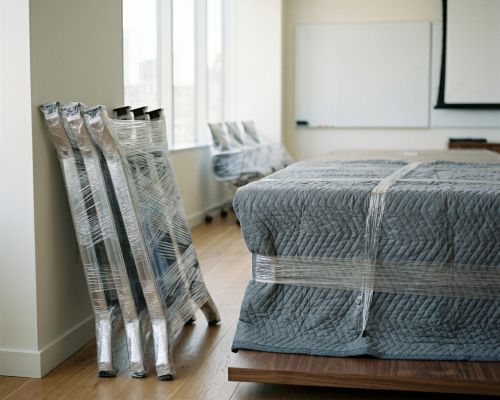
Different furniture types need different protection. Generic bubble wrap and tape won't cut it for everything.
Protecting Furniture by Material
Packing material should match what you're protecting, not just what's on hand:
Wood — Vulnerable to scratches and moisture. Avoid plastic wrap directly on wood for long durations, since it can trap humidity and damage the finish.
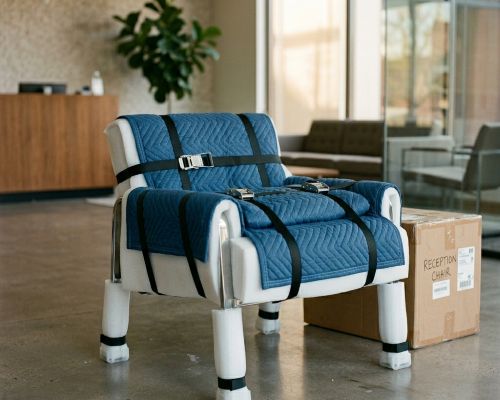
Upholstery/fabric — Protect against stains and tears with breathable covers rather than plastic.
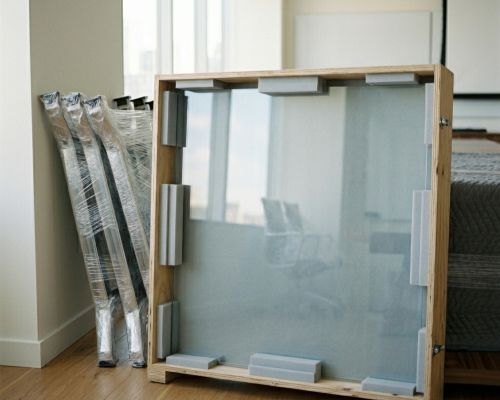
Glass/metal — Always handle and pack separately from other furniture to avoid scratching or chipping.
4
Disassemble Carefully
Disassembling office furniture for moving reduces damage risk and makes bulky pieces easier to maneuver through tight spaces. Here's how to disassemble furniture easily for any piece with removable parts:
1
Gather the right tools — Screwdrivers, Allen keys, and a power drill cover most modern office furniture.
2
Photograph the furniture before disassembly — Take pictures from multiple angles so reassembly later is straightforward.
3
Label every screw, bolt, and bracket — Use labeled zip-lock bags or tape pieces directly to the corresponding furniture part.
4
Disassemble in a logical order — Remove legs, tabletops, drawers, and attachments systematically rather than all at once.
5
Store small parts safely — Keep hardware bags taped to their matching furniture piece so nothing gets lost in transit.
6
Recheck stability before transport — Confirm that any partially disassembled piece won't shift or collapse during loading.
This step matters most for conference tables, modular workstations, and large cabinets — the pieces most likely to get stuck in doorways or damaged if moved fully assembled.
5
Load, Transport & Move Safely
Getting this part right is what separates a smooth move from one that ends in dents, scratches, or worse. Here's how to move heavy office furniture without damage on moving day, similar to general tips for moving large and heavy items:
![Two movers lifting a blanket-wrapped office cabinet up a ramp into a moving truck]()
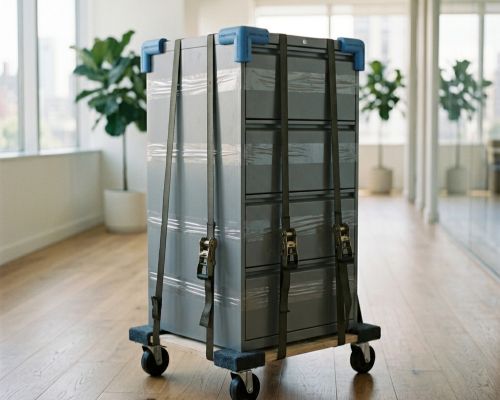
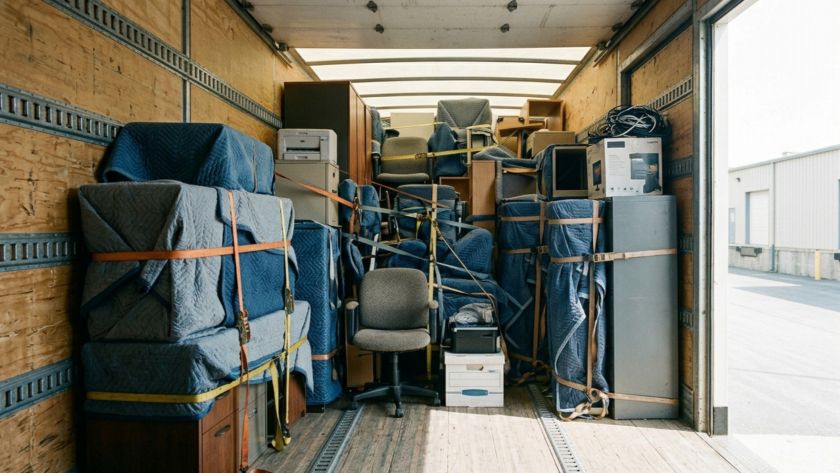
Load heaviest items first — Place large, heavy furniture like cabinets and desks at the bottom and front of the truck for stability, with lighter or fragile items loaded last and on top.
Secure everything in transit — Use straps and moving blankets to prevent shifting during transport; loose furniture is one of the leading causes of in-transit damage.
Use proper lifting technique — Lift with legs, not the back, and use two or more people for anything bulky or over the safe single-person lifting weight.
Navigate narrow doorways and staircases carefully — Measure beforehand and, if a piece is borderline, disassemble further rather than forcing it through.
Use elevators strategically — Pad walls and door edges, and move one large piece at a time rather than overloading the elevator.
These precautions matter more for furniture than for boxed items, since dents, scratches, and structural damage are far more visible and costly to fix.
6
Set Everything Up Right
Moving furniture in is only half the job — proper setup avoids a second round of damage and rework.
1
Place furniture according to the floor plan — Use your numbering system from the planning stage to match each piece to its destination room.
2
Reassemble using your earlier photos and labels — This is where the disassembly documentation pays off, especially for conference tables and modular furniture.
3
Inspect every piece for transit damage — Check against your pre-move photos and inventory list, and flag any issues immediately while it's still fresh.
4
Test functionality — Drawers, wheels, reclining chairs, and adjustable desks should be tested on the spot rather than after staff have already moved in.
Catching damage or missing hardware at this stage — rather than weeks later — makes it far easier to resolve with your moving company or insurer.
DIY vs. Hiring Professional Movers
Whether to handle furniture yourself or bring in professional movers for your office relocation depends on a few practical factors:
| Factor |
DIY Move |
Professional Movers |
|---|
| Cost |
Lower upfront, but risk of damage/replacement costs |
Higher upfront, includes labor and equipment |
| Time |
Slower, especially for disassembly and heavy lifting |
Faster, with trained teams and proper equipment |
| Risk of damage |
Higher, particularly for glass, conference tables, and bulky cabinets |
Lower, due to experience with packing and handling |
| Liability |
Falls entirely on your team |
Often covered by mover insurance/liability policies |
Furniture specifically tends to push costs up when it involves heavy disassembly work, oversized single items like large conference tables, or fragile pieces that need custom crating — our guide on what factors affect packing and moving charges breaks this down in more detail.
If your move involves mostly standard desks and chairs in a small office, DIY can work with enough planning. For larger inventories, glass furniture, or tight building access, professional office relocation services reduce the risk of damage and the time your team spends away from actual work.
Common Mistakes to Avoid When Moving Office Furniture
Underestimating doorway or elevator clearance — leading to furniture getting stuck or damaged mid-move.
Not confirming the new office is move-in ready before furniture arrives, resulting in pieces sitting unprotected or blocking other work.
Scheduling moves during business hours, disrupting other tenants or ongoing operations in shared buildings.
Skipping the audit step and paying to move furniture that should have been donated, sold, or recycled.
Treating all materials the same — using generic packing for glass, fabric, and wood instead of material-specific protection.
Avoiding these mistakes is usually less about effort and more about sequencing — doing the audit and planning steps properly before moving day arrives.
FAQs
Use moving blankets, corner protectors, and stretch wrap rather than tape directly on surfaces. Wood and laminate finishes especially need padded protection at every edge and corner that could bump against doorframes or other furniture.
It depends on condition and cost. Furniture that's structurally sound but cosmetically worn can often be repaired cheaply; pieces that are outdated or barely functional are usually better donated, sold, or recycled rather than moved.
Most professional office movers offer disassembly and reassembly as part of their service, particularly for modular workstations, conference tables, and large cabinets.
Costs go up with disassembly complexity, table size, and whether custom crating or extra labor is needed for safe transport. Exact pricing varies by mover and city.
It's possible with the right materials — custom padding, separated glass panels, and careful handling — but the risk of cracking or chipping is significantly higher without professional crating and experience.
Measure clearances in advance, disassemble furniture further if it's a tight fit, and use at least two people with proper lifting technique rather than forcing a piece through.
Conclusion
A well-planned office furniture move protects your desks, chairs, cabinets, and conference tables from the dents, scratches, and structural damage that turn a simple relocation into an expensive repair bill. The six steps above — from the initial audit through final setup — work best when followed in sequence rather than rushed on a single moving day.
Less to move
Donating or selling unused pieces early cuts cost and effort
Fewer surprises
Measuring doorways and elevators avoids moving-day delays
Less damage
Material-specific packing protects wood, glass, and fabric
Easier reassembly
Labeled hardware and photos save time at the new office
Safer transit
Proper loading and lifting prevent in-transit shifting
Faster setup
Inspecting on arrival catches issues while they're fixable
If you'd rather hand off the heavy lifting, AssureShift handles furniture disassembly, packing, and safe transport as part of a complete office move.
Get Free Office Moving Quotes