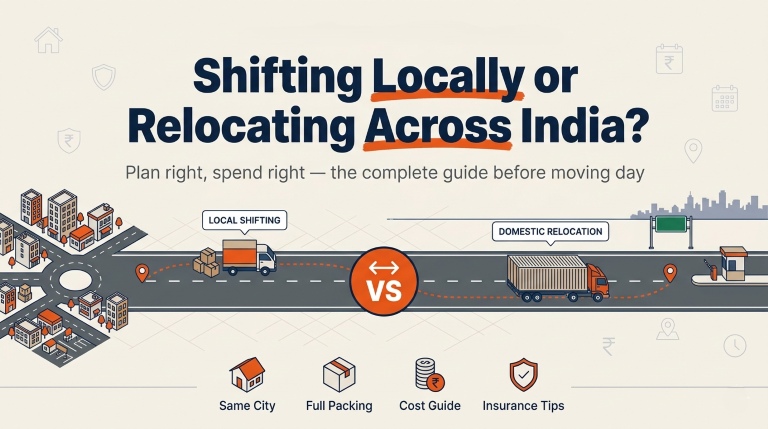
Most people in India use "local shifting" and "domestic relocation" as if they mean the same thing — they do not.
Local Shifting means moving your household goods within the same city. Domestic Relocation means moving to a different city or state within India.
The planning, process, cost, and time involved in both are completely different. This guide covers everything — so you know exactly what your move involves before you book a single mover.
At a Glance: Local Shifting vs Domestic Relocation
| Parameter |
Local Shifting |
Domestic Relocation |
|---|
| Distance | Within same city | Different city or state |
| Planning Time | 1–2 days | 3–4 weeks minimum |
| Packing | Partial | Full — every item |
| Transport Type | Mini truck / Tempo | Container / Large truck |
| Approx. Cost (1BHK) | ₹3,000–₹8,000 | ₹15,000–₹40,000 |
| Delivery Time | Same day | 3–14 days |
| Insurance | Optional | Strongly recommended |
| Unpacking at Destination | Included | Extra — on request only |
Which Type of Move Is Yours?
Before diving in, identify which move applies to you:
Same city limits?
→ Local Shifting
Different city or state?
→ Domestic Relocation
Not sure?
Check your destination PIN code. Different city or district = Domestic Relocation.
How to Plan Your Move
Planning for Local Shifting
Local shifting requires minimal planning. The distance is short, delivery happens the same day, and the risk to your goods is comparatively low. A few focused steps are all you need.
| Task | Why It Matters |
|---|
| Declutter before booking | Reduces volume of goods — directly reduces your cost |
| Book movers 3–5 days in advance | Ensures availability on your preferred date |
| Confirm charges in writing before move day | Prevents last-minute billing surprises |
| Plan utility disconnection 1 day before | Avoids paying extra billing cycles unnecessarily |
| Pack an overnight essentials bag | You will not unpack everything on the first day |
| Schedule a mid-week move if possible | Cheaper rates and movers are less rushed on weekdays |
Planning for Domestic Relocation
Domestic relocation demands structured, timeline-based planning. The more goods you have and the farther you are moving, the earlier you must start. Last-minute planning is the single biggest cause of poor mover selection and unexpected costs.
| Timeframe | Task |
|---|
| 4 weeks before | Research movers online, call at least 3 for quotes, schedule a pre-move survey |
| 2–3 weeks before | Compare quotes carefully, confirm your mover, begin decluttering |
| 1 week before | Notify utilities for disconnection, start packing non-essential items |
| 2–3 days before | Pack remaining items, reconfirm vehicle type and delivery date with mover |
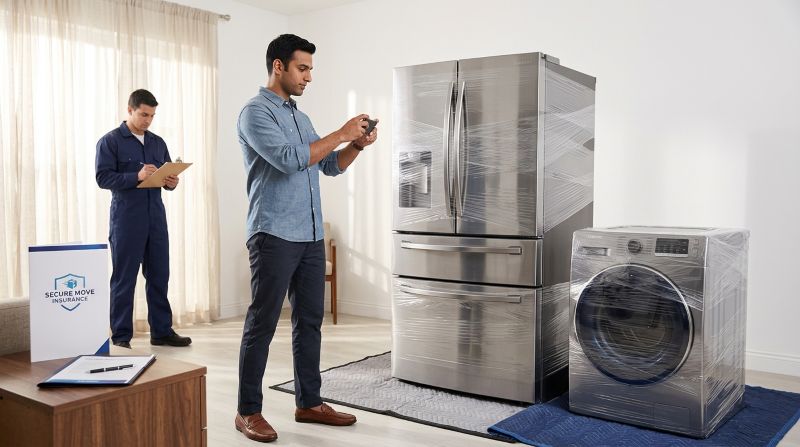
| Moving day | Final room-by-room walkthrough, photograph all goods before loading, collect a signed goods receipt from the mover |
Why a pre-move survey matters: A pre-move survey means the mover physically visits your home, assesses the volume and nature of goods, and gives you an accurate quote. Without it, your quote is an estimate — and final charges can vary significantly on moving day.
Step-by-Step Moving Process
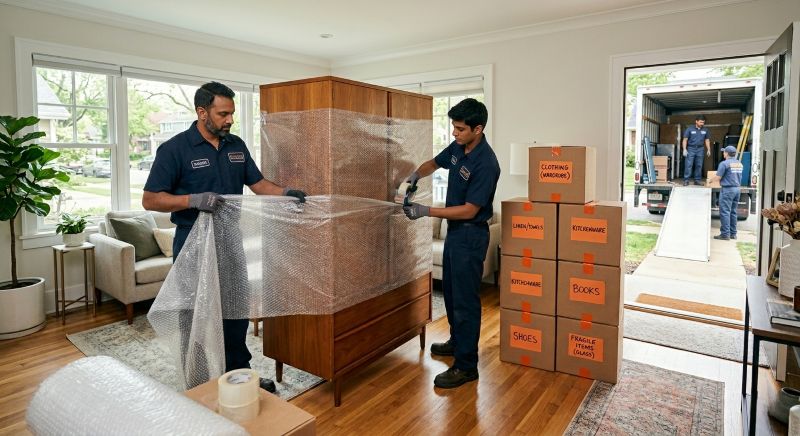
![Packers wrapping furniture with bubble wrap and stacking labelled carton boxes before loading into a container truck for domestic relocation]()
Local Shifting Process
At Origin
Disassembly of large furniture items such as beds and wardrobes
Packing of fragile, delicate, and important items with basic protective material
Systematic loading of all goods into a mini truck or tempo
At Destination
Doorstep unloading of all items
Unpacking of packed goods
Reassembly of all dismantled furniture
Domestic Relocation Process
At Origin
Complete dismantling of all large furniture
Full packing of every single item using high-quality protective packing material — bubble wrap, corrugated sheets, strong cartons
Careful, systematic loading into a container truck to minimise movement and damage during transit
In Transit
Goods transported via shared or dedicated vehicle depending on what you have booked
Transit time ranges from 3 to 14 days depending on distance and route
Most professional movers provide basic tracking — confirm this before finalising your booking
Your goods may pass through one or more transit hubs depending on the mover's network
At Destination
Doorstep unloading of all goods
Important: Unpacking and reassembly are not included as standard in domestic relocation. These are provided as additional paid services. Confirm exactly what is included at the destination before you sign any agreement with the mover. If unpacking is not arranged in advance, you will receive your goods in packed boxes only.
If goods are damaged in transit: Document the damage immediately with photographs before unpacking further. Report it to the mover in writing on the same day. If you have transit insurance, contact your insurer with photographs and the goods receipt as evidence.
Cost: Local Shifting vs Domestic Relocation
Cost Comparison by Home Size
| Home Size | Local Shifting | Domestic Relocation |
|---|
| 1 BHK | ₹3,000–₹8,000 | ₹15,000–₹35,000 |
| 2 BHK | ₹5,000–₹12,000 | ₹25,000–₹55,000 |
| 3 BHK | ₹8,000–₹18,000 | ₹40,000–₹80,000 |
| Packing Material | Basic | High-quality protective |
| Insurance | ₹500–₹1,500 optional | ₹1,500–₹5,000 recommended |
| Unpacking at Destination | Included | ₹2,000–₹5,000 extra |
These are indicative ranges. Actual charges depend on your city, mover, exact volume of goods, and distance. Always get a written quote after a pre-move survey — never finalise based on a phone estimate alone.
Metro vs Tier-2 Cities: Shifting costs in metro cities like Mumbai, Delhi, and Bangalore tend to be 20–30% higher than in Tier-2 cities like Nagpur, Coimbatore, or Jaipur — due to higher labour costs, traffic, and demand. Factor this in when comparing quotes across providers.
What Affects Your Final Cost
Volume and weight of goods
More items mean higher packing, loading, and transport costs directly.
Distance and route
Longer distances and difficult or toll-heavy routes increase transport charges.
Shared vs dedicated transport
Shared transport reduces cost but increases delivery time; dedicated transport is faster but more expensive.
Season
March to June is typically peak moving season in India; charges are noticeably higher during this period.
Hidden Charges to Watch Out For
These are costs many movers do not mention upfront. Ask about each one before signing any agreement:
Floor and stair charges
If your origin or destination has no elevator, movers charge per floor for carrying goods up or down.
Toll and state entry charges
Applicable for inter-state domestic moves; sometimes charged separately from the quoted price.
Waiting charges
If access to your new home is delayed on moving day, movers charge for waiting time.
Octroi or local body charges
Applicable in certain cities and states; confirm with your mover in advance.
Repackaging charges
If goods need additional packing at a transit hub, some movers charge extra for this.
How Much Time Does Each Move Take?
| Phase | Local Shifting | Domestic Relocation |
|---|
| Booking lead time | 3–5 days in advance | 3–4 weeks in advance |
| Packing time | 3–5 hours | 1–2 days |
| Transit and delivery | Same day | 3–14 days |
| Post-move tasks | 1–2 days | 3–5 days |
Post-move tasks include: updating your address with your bank, Aadhaar, driving licence, and employer; reconnecting utilities such as gas, internet, and electricity; and registering with local authorities if relocating to a new state.
Should You Opt for Goods Insurance?
Goods-in-transit insurance covers your belongings against damage, loss, or theft during the move.
For Local Shifting
Insurance is optional. The move happens within a single day, over a short distance, and the risk of damage is relatively low.
For Domestic Relocation
Insurance is strongly recommended. Your goods will be in transit for multiple days, passing through different cities and sometimes multiple states. The risk of damage, mishandling, or loss is significantly higher than a local move.
Physical damage to goods during loading, transit, and unloading
Damage due to accident or vehicle breakdown
Damage caused by improper packing done by the owner
Breakage of fragile items not reported at delivery
Pre-existing damage to goods
Who provides it: Most professional movers offer transit insurance as an add-on. You can also purchase a separate policy from a general insurance provider. Always ask for a written insurance certificate — not just a verbal assurance.
Transit insurance for domestic moves typically costs between ₹1,500 and ₹5,000 depending on the declared value of your goods. This is a small cost compared to the replacement value of appliances, furniture, and electronics — read the complete home relocation insurance guide before deciding.
Documents Needed for Domestic Relocation
This is a step most first-time domestic movers overlook entirely.
Government-issued photo ID
Required by the mover for verification.
Proof of new address
Needed for address update post-move.
Goods inventory list
Signed by mover before loading — your proof of what was handed over.
Insurance certificate
Required to file a claim if goods are damaged.
Moving agreement / Contract
Outlines scope of service, charges, and liability.
Vehicle registration copy
Ask mover for this — confirms the truck is legitimate.
For inter-state moves, some states may require additional documentation such as a domicile certificate or vehicle entry permit. Confirm with your mover well in advance.
Common Mistakes to Avoid
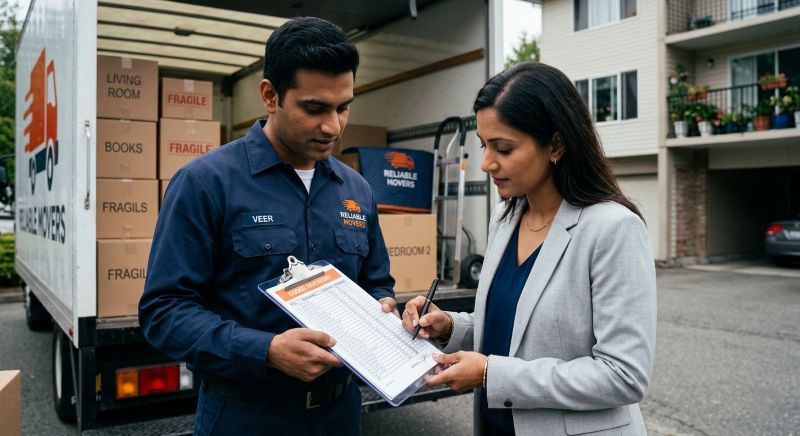
![A mover and homeowner reviewing and signing a printed goods inventory checklist on a clipboard before loading household items into a truck]()
Booking movers at the last minuteFewer options are available and rates are higher when you book less than 48 hours before your move.
Not getting final charges confirmed in writingVerbal quotes are not binding; always ask for a written or digital confirmation.
Skipping declutteringYou end up paying to move items you no longer need or use.
Choosing the cheapest quote without verifying credentialsLow quotes frequently mean hidden charges, poor packing quality, or unreliable delivery timelines. Learn
how to avoid fraud packers movers before committing.
Skipping the pre-move surveyWithout a physical survey, your quote is an estimate and the final bill can be significantly different.
Not opting for insuranceOne damaged refrigerator or washing machine can cost more than the insurance premium itself.
Not getting a signed goods inventory before loadingWithout this document, you have no proof of what was handed to the mover.
Not clarifying delivery timeline in writingMovers often give verbal estimates; if your goods are delayed, a written timeline is your only recourse.
Frequently Asked Questions
Local shifting means moving household goods within the same city. Domestic relocation means moving to a different city or state within India. The two differ significantly in planning time, packing requirements, transport type, cost, and delivery timeline.
Local shifting typically costs between ₹3,000 and ₹18,000 depending on your home size, volume of goods, and city. A 1 BHK move costs approximately ₹3,000–₹8,000 while a 3 BHK move can reach ₹18,000 or more.
Domestic relocation costs range from ₹15,000 to ₹80,000 or more depending on home size, distance, transport type, and additional services such as unpacking and insurance. Always get a written quote after a pre-move survey for an accurate figure.
Book at least 3–4 weeks in advance for domestic relocation. During peak season — March to June — book 5–6 weeks ahead to ensure availability and avoid surge pricing.
Insurance is not mandatory but is strongly recommended for domestic relocation. Your goods are in transit for multiple days across long distances and the risk of damage is considerably higher than a local move. Always ask for a written insurance certificate.
In shared transport, your goods travel in the same truck as goods from other customers moving in the same direction — this reduces your cost but increases delivery time. In dedicated transport, the truck carries only your goods — faster delivery but at a higher cost. For time-sensitive or high-value moves, dedicated transport is the better choice.
You will need a government-issued photo ID, proof of new address, a signed goods inventory list, a moving agreement or contract, and an insurance certificate if you have opted for coverage. For inter-state moves, additional state-specific documentation may be required.
For very small moves with minimal goods, you can pack yourself and hire only a transport vehicle. However, professional movers handle loading, transport, and unloading — reducing the risk of damage significantly and making the process faster and less stressful overall.
Conclusion: Which Move Are You Planning?
Local Shifting
Straightforward — affordable, same-day, and manageable with a reliable mover booked a few days in advance.
Domestic Relocation
A different undertaking entirely — requires structured planning starting at least a month ahead, full packing of every item, the right transport vehicle, a signed goods inventory, and transit insurance.
If you are moving within your city, book a verified local mover and you are ready. If you are crossing city or state lines, start your planning now — get a pre-move survey done, compare at least three quotes, confirm everything in writing, and opt for insurance.
The difference between a smooth move and a stressful one almost always comes down to how early and how carefully you planned.
Ready to Move? Get Quotes from Trusted Packers and Movers Near You
Verified movers | Transparent pricing | Free quotes — no obligation.
Share Requirements