Best Time to Move in Bangalore (Weather, Traffic & Cost Factors)

Getting the timing wrong on a Bangalore move can cost you ₹5,000–₹6,000 more on a standard 1BHK shift — sometimes more during peak season or festival weekends.
The best time to move in Bangalore is October to February — dry weather, lowest mover demand, and off-peak rates across all household sizes. Three variables make timing uniquely critical in this city: the annual monsoon flooding risk, the IT workforce-driven demand cycle, and one of India's densest urban traffic networks. This guide covers the best and worst months by weather, moving cost, traffic pattern, and festival demand — for both local moves within Bangalore and interstate relocations departing the city.
Compare movers before you decide on a date.
Compare Verified Packers & Movers in Bangalore →
Month-by-Month Moving Calendar for Bangalore
Here is a complete month-by-month breakdown of the best and worst months to move in Bangalore — covering weather conditions, demand levels, moving cost Bangalore by month, and a verdict for each month.
If Your Date Is Not Fixed Yet
Date is flexible
Date is fixed in a peak month
Date falls on a festival weekend
| Factor | Best Time | Worst Time |
|---|---|---|
| Cost | January–February | April–May |
| Weather | October–February | July–August |
| Traffic | Mid-week, 6–9 AM | Weekends, 8–11 AM |
| Mover Availability | January–February | April–May, Diwali window |
| Overall Risk | Low | High |
Weather Impact on Moving in Bangalore
Weather in Bangalore follows a predictable annual cycle — but its impact on a move varies significantly by season, route, and the type of goods being transported.
Monsoon Season — June to September
Why it affects your move
Bangalore's monsoon is not just rain — it causes active waterlogging in Koramangala, Bellandur, Varthur, Whitefield low-points, and Hebbal. Road flooding during heavy rainfall weeks disrupts transit routes entirely in some areas.

Goods damage, surcharges, and what to do if the date is unavoidable
- Goods damage risk rises sharply for electronics, fabric items, upholstered furniture, and wooden pieces exposed during loading and unloading.
- Movers apply a waterproof packing surcharge of ₹500–₹2,000 over the base quote.
- Mover cancellations and transit delays spike during heavy rainfall weeks — verbal commitments are not reliable during this window.
- Transit insurance claims are at their annual highest during monsoon months.
Summer — March to May
Why it affects your move
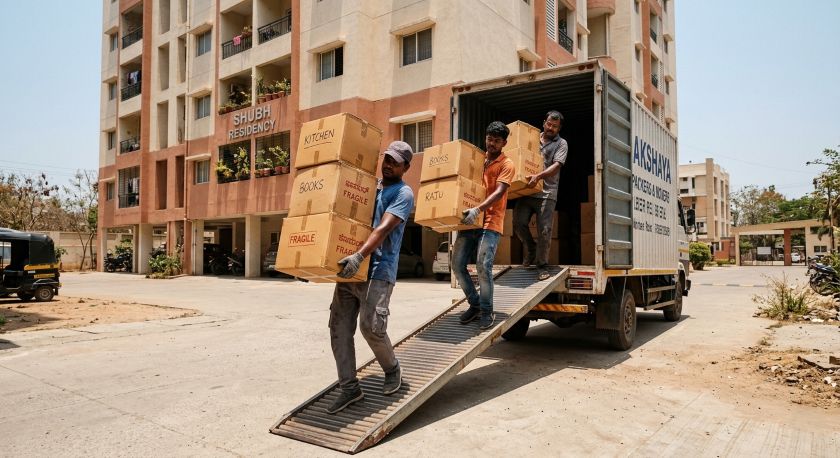
Temperatures reach 35–38°C across Bangalore. This is a direct risk to electronics, wooden furniture, and all heat-sensitive goods during transit — especially when vehicles sit in traffic.
Crew fatigue, demand peak, and quote inflation
- Crew fatigue increases on longer moves — extended loading and unloading durations add to overall labour cost. For practical steps on managing moving in summer heat, plan your schedule around an early morning start.
- Highest annual demand period — mover availability tightens significantly from mid-March onwards.
- Quote inflation is sharpest in April and May — rates run 30–50% above the January baseline.
Post-Monsoon and Winter — October to February
Why this is the optimal window
Dry, stable, mild conditions across all move types and distances. No weather-related loading, transit, or unloading risk. No waterproof packing surcharges. Crew efficiency is highest in cooler temperatures — moves complete faster with fewer delays.
This is the best window for large household moves, interstate relocations, and vehicle transport from Bangalore.
Watch points within this window
October–November festival weekends: Dussehra and Diwali push rates up ₹1,000–₹3,000 — confirm booking in advance even within this optimal period.
December: Holiday travel overlap reduces mover crew availability slightly — 2 weeks advance booking recommended.
How Season Affects Packers and Movers Charges in Bangalore
Seasonal demand is the biggest factor affecting moving costs in Bangalore — charges fluctuate 15–50% depending on the month, the day of the week, and demand conditions at the time of booking.
1BHK Local Move — Indicative Seasonal Cost Range
| Season | Period | Estimated Cost Range |
|---|---|---|
| Off-peak | January–February | ₹3,500–₹6,000 |
| Moderate | October–December | ₹4,500–₹8,000 |
| Peak summer | March–May | ₹6,000–₹12,000 |
| Monsoon + waterproofing | June–September | ₹5,000–₹10,000 + ₹500–₹2,000 surcharge |
| Festival weekend premium | Applicable across all tiers | +₹1,000–₹3,000 additional |
Rates vary by household size, distance, floor, and specific mover. Use these as benchmarks when evaluating quotes — not as fixed prices.
Real-World Example
A 1BHK move from Whitefield to BTM Layout in January typically costs ₹4,000–₹5,500. The same move in May can reach ₹9,000–₹11,000 — nearly double — due to peak demand, summer packing requirements, and festival proximity. This is why choosing the right month directly impacts your total moving cost.
The cost difference between the cheapest and most expensive moving window in Bangalore can reach ₹5,000–₹6,000 on a standard 1BHK move — making the timing decision as financially significant as choosing the right mover. See our full guide on packers and movers charges in Bangalore for a detailed size-wise breakdown.
Traffic and Best Time of Day to Move in Bangalore
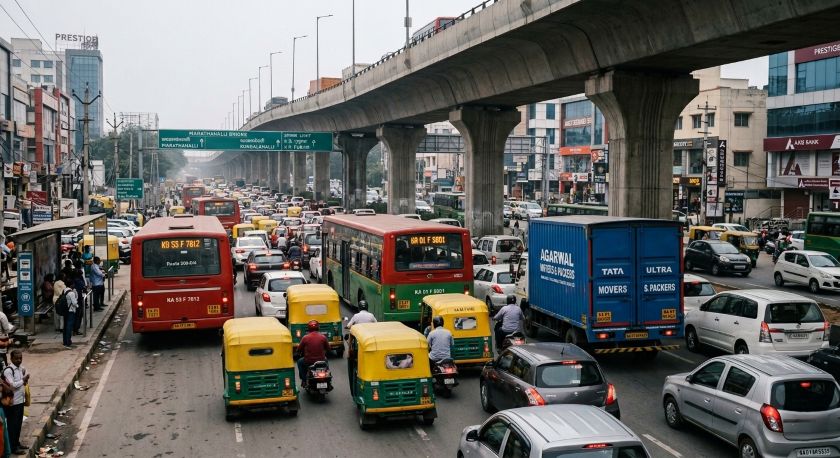
In Bangalore, when you move matters as much as which month you choose — the city's traffic can add 2–3 hours to a local move if timed poorly.
Peak Hours to Avoid
Optimal Move Window
Start time: 6–9 AM — complete loading before 11 AM to stay ahead of congestion.
Best days: Tuesday, Wednesday, Thursday — lowest congestion, no weekend premium charge applies.
Interstate Moves from Bangalore
Depart before 6 AM to clear city limits on the following highways before peak hour builds.
| Highway | Direction |
|---|---|
| NH-44 | Towards Chennai |
| NH-48 | Towards Mumbai |
| NH-75 | Towards Mangalore |
Building Type Considerations
High-Rise Apartments
Move timing must align with elevator booking slots and society NOC requirements — which can limit early morning moves and restrict the optimal 6–9 AM window in many gated communities.
Gated Communities
Most enforce moving vehicle entry only between 9 AM–6 PM — this directly narrows your timing choices, especially on peak-demand days when movers are already stretched.
Independent Houses
No society restrictions apply — full flexibility to use the optimal early morning window for traffic advantage.
Festival and Demand Surge Dates to Know Before Booking in Bangalore
Bangalore has predictable demand surge windows every year — driven by local festivals, academic transitions, and the IT workforce relocation cycle. Each one directly tightens mover availability and pushes pricing higher.
Ugadi and Kannada Rajyotsava — March–April and November
Local relocation surge around both events. Prices spike for 3–5 days around each date.
Dussehra–Diwali Window — October–November
The highest combined demand period of the year in Bangalore. Rates spike ₹1,500–₹3,000 above standard pricing. Movers book up 3–4 weeks in advance — this is the single most competitive booking window of the year.
Academic Year Transitions — May–June and November–December
Student and family relocation peak. 1BHK and 2BHK demand is highest during these windows.
IT Appraisal and Job Change Cycle — April–June
This is a Bangalore-specific demand driver. Tech workforce transitions generate the highest single-cause relocation volume of the year in the city. This coincides with summer peak — compounding pressure on both availability and pricing simultaneously.
Booking on the last weekend of the month: Demand peaks due to rent cycle endings — mid-month moves are consistently cheaper across all seasons.
Assuming October is fully off-peak: Dussehra and Diwali fall within this window — festival weekends spike rates significantly even in the best overall season.
Accepting the lowest quote during peak season without checking inclusions: Low quotes in April–May almost always exclude waterproofing, floor charges, or GST — verify line by line before confirming.
Frequently Asked Questions
Conclusion
The best time to move in Bangalore is October to February — the window where weather, cost, and traffic conditions all work in your favour simultaneously. January and February are the strongest months within this window for anyone where the date is flexible.
If the move falls in a peak or monsoon period, plan at least 3 weeks ahead, budget 20–40% above off-peak rates, and prioritise a verified mover over the lowest available quote — availability and reliability matter more than price when demand is high.
For those comparing verified top moving companies in Bangalore, AssureShift lists background-checked providers with transparent seasonal pricing — useful when evaluating quotes at any time of year.
October to February is the optimal window
January and February are the strongest months
Start at 6 AM on Tuesday, Wednesday, or Thursday
Prioritise a verified mover over the lowest quote
Compare Verified Packers and Movers in Bangalore
AssureShift lists background-checked providers with transparent seasonal pricing — useful when evaluating quotes at any time of year.