Modes of Transport for Shifting Household Goods in India
Most people spend weeks deciding what to pack and barely an hour choosing how their goods will actually travel — a small oversight that often leads to delayed deliveries, damaged furniture, or a budget that runs over without warning. These problems are entirely avoidable with the right transport decision made upfront.
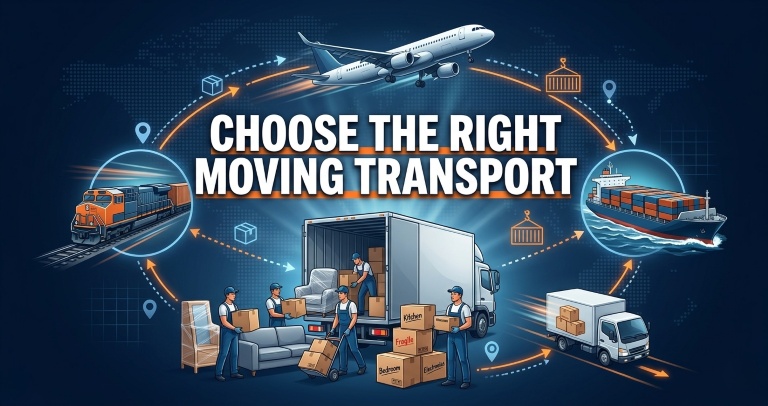
If you are planning a household relocation in India and want a clear, practical breakdown of your options, this guide covers all five major modes of transport for shifting household goods — road, rail, air, sea, and part-load — with real costs, transit times, honest pros and cons, and a scenario-based guide to help you choose the right fit for your specific move.
Watch this quick overview before diving in — or scroll down for the complete written guide.
5 Modes of Transport for Household Shifting in India — Explained
No single transport mode works for every move. A 1 BHK shift within Pune is a completely different situation from a full family relocation from Delhi to London. Understanding each option in depth is what allows you to make a confident, cost-effective decision.
Road Transport (Trucks, Tempos & Mini Trucks)
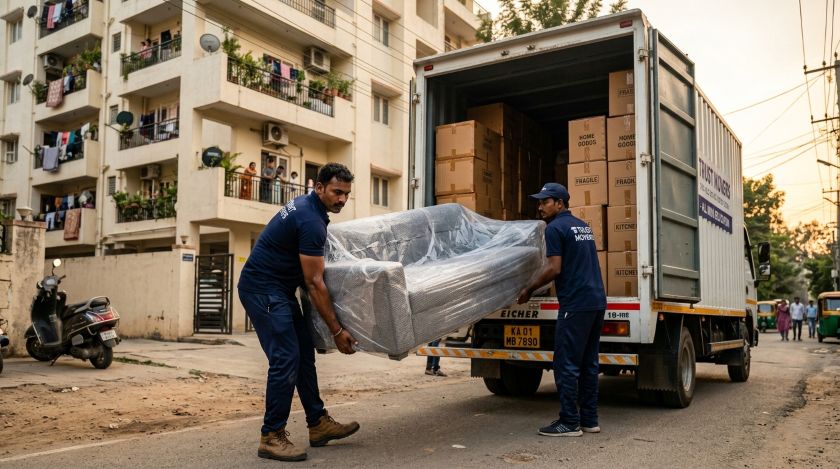
Road transport is the most widely used option for household shifting in India. It works for everything from a single-room move within a city to a full 4 BHK relocation across states. The biggest advantage is flexibility — you get door-to-door delivery, choose your own schedule, and can find a vehicle regardless of where in India you are moving.
The vehicle you choose depends directly on the size of your household. Booking too large wastes money; booking too small means two trips.
Vehicle Types & Capacity
| Vehicle | Capacity | Best For |
|---|---|---|
| Mini Tempo | 300–500 kg | 1 room / studio apartment |
| Tata Ace | 750 kg | 1–2 BHK small volume |
| 14 ft Truck | 1,500–2,000 kg | 2–3 BHK |
| 19 ft Truck | 2,500–3,500 kg | 3–4 BHK |
| 32 ft Trailer | 5,000+ kg | Large bungalow / office |
- Flexible date and time — move on your schedule
- Door-to-door delivery with no intermediate stops
- Pan-India availability including remote towns
- Goods loaded once — no intermediate handling
- Traffic delays and adverse weather can affect timelines
- Costlier than rail for very long distances with heavy loads
- Driver and operator reliability varies across providers
Rail Transport (Indian Railways Parcel & Cargo)
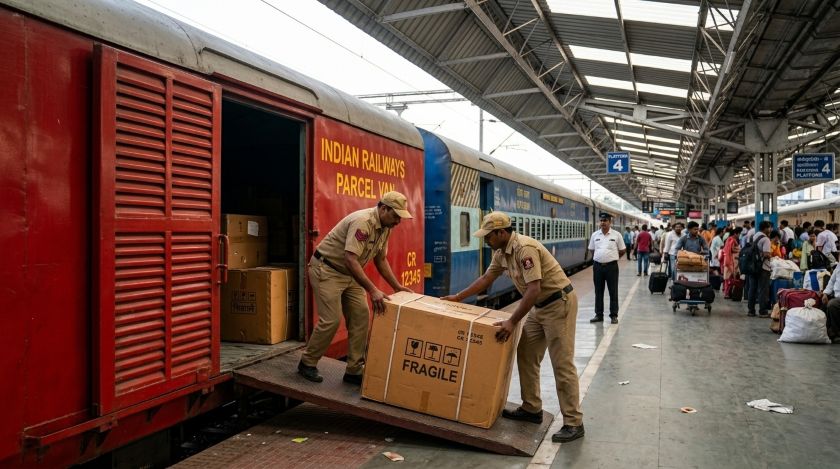
For long-distance interstate moves with heavy or bulky household goods, rail transport is one of the most cost-effective solutions in India. Indian Railways handles household goods through two primary booking options — parcel van booking for smaller consignments, and full wagon booking for large household volumes that need dedicated space.
Rail is not door-to-door. Goods need to be dropped at the origin railway station and collected at the destination station — which means you will need road transport at both ends. Factor that into your total cost when comparing.
- Most cost-effective for heavy goods over long distances
- Reliable, schedule-driven — unaffected by road conditions
- Less damage risk from vibrations on very long hauls
- Eco-friendly compared to long-distance road transport
- Station-to-station only — not door-to-door
- Requires additional road transport at both ends
- Advance booking process is time-consuming
- Limited to cities connected to the railway network
Air Transport (Air Cargo)
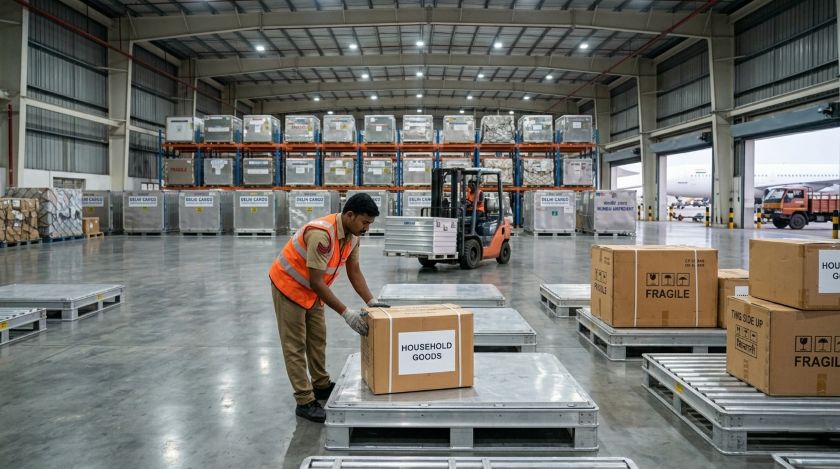
When speed and security matter more than cost, air transport is the fastest available mode for shifting household goods. Domestic air cargo services handle urgent intercity moves, while international air freight is used for overseas relocations where delivery timelines cannot be compromised.
Air transport is not practical for full household moves — size and weight restrictions make it unsuitable for furniture or large appliances. It works best for high-value items, fragile goods, or small consignments that need to reach their destination without delay.
- Fastest mode — same day or next day on most domestic routes
- Highest security with real-time tracking throughout transit
- Minimal damage risk — least handling, shortest transit
- Ideal for fragile, irreplaceable, or high-value items
- Most expensive transport mode by a significant margin
- Strict size and weight restrictions limit what can be shipped
- Not practical for large household moves with furniture
- Requires road transport for pickup and delivery at both ends
Sea Transport (Shipping Containers)
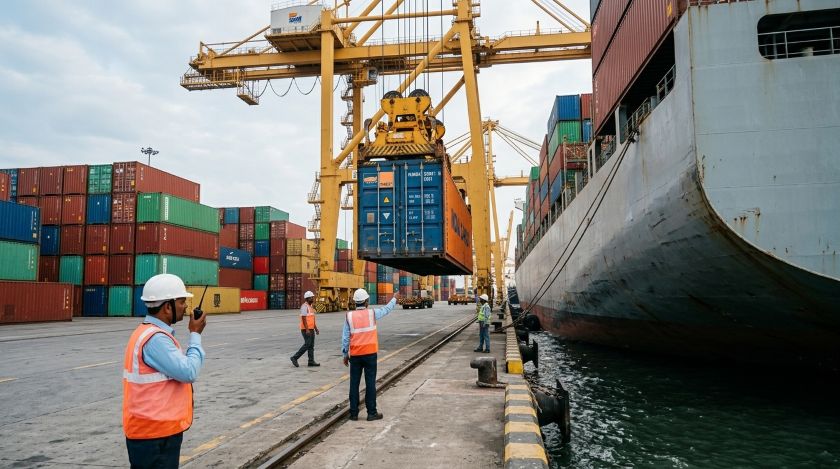
For international relocations or moves between major coastal cities, sea freight is the most economical option for large household shipments. Goods travel in standardised shipping containers and you have two options depending on your volume: Regardless of which option you choose, taking out home relocation insurance is strongly advised for sea shipments given the long transit durations and port handling involved.
The entire container is exclusively reserved for your household goods. Best for large homes — maximum security with no shared handling.
Your goods share container space with other customers. More affordable when volume does not justify a full container.
- Most economical mode for large international shipments
- Accommodates an entire household including heavy furniture
- Suitable for oversized items restricted in air transport
- FCL vs LCL flexibility allows cost optimisation by volume
- Slowest mode — not suitable for time-sensitive relocations
- Not viable for domestic inland moves
- Customs clearance adds complexity, paperwork, and time
- Requires a professional freight forwarder for smooth execution
Part-Load / Shared Transport
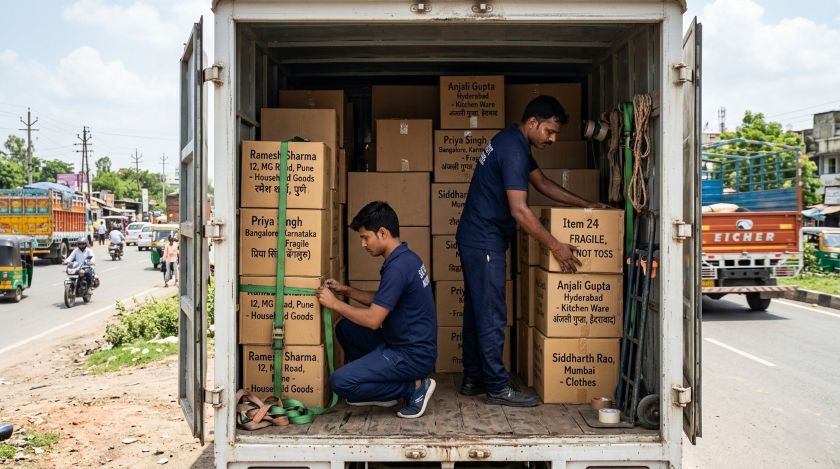
Part-load transport — also called shared transport — is a practical, budget-friendly option that many movers overlook. Instead of booking an entire truck, your household goods share truck space with consignments from other customers moving along the same route.
Your goods are packed separately, labelled clearly, and loaded alongside others. They are offloaded at your destination while the truck continues its route to other drop points.
- Significantly cheaper than booking a dedicated truck
- Widely available on major intercity routes across India
- Practical and cost-efficient for small volumes
- Longer transit time due to multiple stops along the route
- Less control over exact pickup and delivery schedule
- Slightly higher damage risk due to multiple loading cycles
Comparing All Modes of Transport — Cost & Time at a Glance
Every household move involves a trade-off between speed, cost, and convenience. Before deciding, it helps to see all five transport modes side by side. Use this table as a quick decision reference — then dive into the scenario guide below to find your specific situation.
| Transport Mode | Short Distance Cost | Long Distance Cost | Transit Time | Best For |
|---|---|---|---|---|
| Road Transport | ₹20–₹50/km | ₹20–₹50/km | Same day – 3 days | Local & intercity moves |
| Rail Transport | ₹30–₹50/kg | ₹50–₹80/kg | 2–7 days | Interstate bulk moves |
| Air Transport | ₹100–₹150/kg | ₹150–₹250/kg | Same day – 2 days | Urgent/high-value items |
| Sea Transport | ₹15K–₹20K/container | ₹30K–₹50K/container | 7–30 days | International/coastal |
| Part-Load | ₹8–₹15/kg | ₹12–₹20/kg | 3–7 days | Small budget moves |
Which Mode of Transport is Best for Shifting Household Goods?
The best transport mode depends entirely on your situation. Here are five distinct scenarios — each with a clear recommendation and the reasoning behind it.
Road transport is the only answer here. A tempo or truck gives you same-day door-to-door delivery with complete flexibility on timing and route. For a 1 BHK within Bangalore or Hyderabad, a Tata Ace handles the load comfortably at an affordable rate.
Part-load transport is your best option. Routes like Hyderabad to Pune or Jaipur to Delhi are heavily serviced by shared transport operators. You pay only for the space your goods occupy — the most affordable option for small households comfortable with a 3–5 day delivery window.
For a 3–4 BHK with heavy furniture and appliances, it helps to prepare for long distance relocation well in advance regardless of the mode you choose. The cost-per-kg difference across that distance is substantial. For a smaller household needing faster delivery, a 19 ft truck via road is more convenient — volume is the deciding factor.
A sea plus road combination works best here. Goods travel by coastal sea freight and are delivered to the final destination via a local tempo. This avoids the wear and cost of a 1,300 km road journey — particularly cost-effective for large household volumes.
Sea freight is the standard choice for full household international relocations. An FCL container offers maximum security and space for an entire home. For a small number of urgent or high-value items, air freight gets them there faster — but at a significantly higher cost per kg.
Frequently Asked Questions
Choose the Right Transport Mode for a Smooth Household Move
Every move is different — and the right transport mode is the one that fits your distance, volume, and budget. There is no one-size-fits-all answer, but there is always a right answer for your specific situation.
Professional packers and movers offering a house shifting service understand these modes in depth and can recommend the most suitable option based on your exact route, volume, and timeline. — so you are never paying more than you need to.
Ready to Plan Your Household Move?
Share your moving requirements with AssureShift today and get matched with the right transport solution — on time and within budget.