Moving to Chennai? Pros, Cons & Honest Guide

If you're relocating for a job, a family move, or a fresh start, Chennai is probably on your shortlist for a reason — and probably confusing you for one too. It's a city where a 400-year-old temple sits a few kilometers from a Ford assembly line, and where one of the world's longest urban beaches runs alongside some of India's worst traffic. Before you commit, it's worth weighing the pros and cons of living in Chennai honestly, not just the highlight reel — and once you decide, comparing Relocation Services in Chennai options will make the move itself far easier.
This guide covers what actually matters when you're deciding whether to move — cost, safety, commute, climate, and job market — and closes with what to do next once you've made up your mind.
| Factor | What to know |
|---|---|
| Cost of living | Roughly 20–25% lower than Bangalore, and significantly lower than Mumbai, for a comparable lifestyle. |
| Safety | Regularly ranks among India's safer large metros in NCRB-based crime data, especially for women. |
| Climate | Tropical; hot and humid most of the year, monsoon June–December. |
| Best for | IT and manufacturing professionals, families prioritizing safety and healthcare, students. |
| Job market | Strong in IT (OMR corridor) and auto manufacturing (Guindy, Ambattur). |
| Commute | Metro Phase 2 opening in stages through 2026–2028; road traffic remains heavy in the meantime. |
Pros of Living in Chennai
1. Affordable Cost of Living
Chennai is consistently rated one of the more budget-friendly Tier-1 metros in India. A single professional can live comfortably on roughly ₹30,000–45,000 a month here, and cost comparisons put Chennai around 20–25% cheaper than Bangalore, with an even bigger gap versus Mumbai. High-end areas like Adyar, Nungambakkam, and T. Nagar sit at a premium, while mid-range neighborhoods like Velachery, Porur, and Medavakkam offer good connectivity at noticeably lower rents, and budget-friendly options like Tambaram and Chromepet stretch a salary further still.
2. Strong & Growing Job Market
Chennai's economy runs on two engines: IT and manufacturing. The OMR and Sholinganallur corridor is home to major IT campuses and is often called Chennai's "IT Expressway," while Guindy and Ambattur anchor the city's auto and industrial manufacturing base, with companies like Ford, Hyundai, and BMW's supplier network operating nearby. If your job is in either sector, choosing where to live often comes down to which corridor you'll be commuting to.

3. Quality Healthcare Access
For families relocating with kids or elderly parents, healthcare access matters more than almost anything else on this list. Chennai has a dense concentration of well-regarded hospitals — Apollo, Fortis Malar, and MIOT International among them — spread across multiple neighborhoods, so quality care is rarely more than a short drive away, regardless of which part of the city you settle in.
4. Reputable Education Options
Chennai is home to IIT Madras and Anna University, along with a wide range of CBSE, ICSE, and international schools. For families relocating with school-age children, this is often a deciding factor — and one the city delivers on more consistently than several other Tier-1 metros.
5. A Safer City for Families
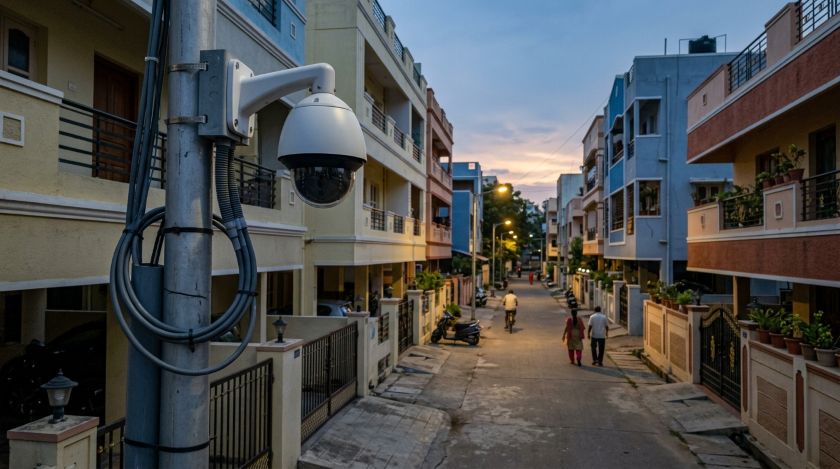
Chennai routinely appears near the top of India's safer large-metro rankings in NCRB-based crime data, particularly on crimes against women, where its rate sits well below the national metro average. Local factors that get cited alongside this include dense CCTV coverage through the city's Integrated Command and Control Centre and an active women's helpline. That doesn't mean zero caution is needed — no city warrants that — but it's a genuine, data-backed point in Chennai's favor compared to several metros of similar size.
6. Growing Public Transport
Chennai Metro's Phase 2 expansion — roughly 119 km across three new corridors — is opening in stages through 2026, with full completion targeted around 2028, and it's already supplementing the existing MTC bus network and suburban rail lines. If you're choosing a neighborhood, proximity to a current or upcoming metro line is worth factoring into your decision now — it directly affects how much of the traffic problem below you'll actually experience day to day over the next few years.
7. A Genuine Coastal Lifestyle
Chennai has one of the longest urban beaches in the world, and areas near Besant Nagar and Elliot's Beach offer a rare combination for an Indian metro: a real coastal lifestyle, cooler evening air, and beachfront property options, all inside city limits. It's not just a weekend novelty — for residents in the right neighborhoods, it's part of daily life.

8. Easy Access to Food and Culture
You won't struggle to find good food in Chennai, from South Indian staples to international cuisine, and the city's temple culture and annual festivals (like the Chennai Music Season and Pongal) are woven into everyday life rather than confined to tourist zones. It's a comfortable city to settle into culturally, even if you're not from South India originally, and a few simple habits can make adjusting to a new city even easier.
Cons of Living in Chennai
1. Heat and Humidity
Chennai is hot for most of the year, with temperatures regularly climbing into the high 30s°C (low 100s°F) outside monsoon season. If you're moving from a cooler climate, budget for a real adjustment period — and factor air conditioning costs into your monthly expenses from day one.
2. Monsoon Flooding and Cyclone Risk
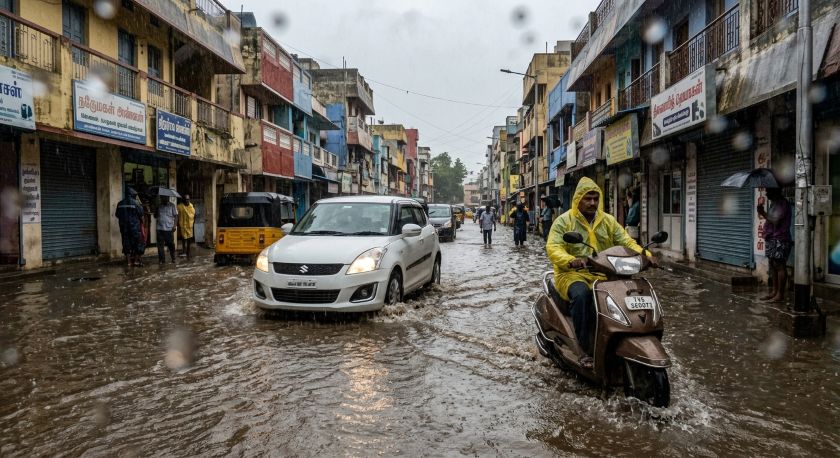
Chennai's monsoon season (roughly June–December, with the northeast monsoon peaking October–December) brings heavy rainfall, and the city's low-lying areas are prone to flooding due to drainage limitations. Its coastal position also means occasional cyclone exposure from the Bay of Bengal. Before signing a lease, check a neighborhood's flood history — it varies significantly block to block.
3. Traffic Congestion
Road traffic is genuinely heavy, especially during peak hours in the Central Business District and other commercial zones. The Metro expansion is helping, but if your commute depends on roads rather than rail, build extra time into your daily schedule — and weigh this seriously against your workplace location before choosing where to live.
4. Language Barrier
Tamil is the dominant local language, and while English is widely understood in business and professional settings, day-to-day interactions in residential or local-market areas can be harder to navigate if you don't speak Tamil. It's rarely a dealbreaker, but it is a real adjustment for non-Tamil speakers.
5. Water Scarcity
This is a real, ongoing issue rather than a solved problem: Chennai's four main reservoirs have been running at a fraction of combined capacity in recent summers, and an underperforming monsoon has kept the gap between supply and demand wide. Certain neighborhoods, particularly parts of OMR and the wider southern suburbs, lean heavily on private water tankers as a result. Before finalizing housing, ask directly about a building's water supply arrangement — municipal connection, tanker dependency, or borewell — rather than assuming it's uniform across the city.
6. Rising Rents in IT Corridors
While Chennai is affordable overall, gated-community maintenance fees and rents in high-demand IT corridors like OMR have been climbing as demand grows, and tanker-dependent areas add their own recurring water costs on top of rent. If cost is your primary driver, it's worth comparing a slightly longer commute from a more affordable area against paying a premium to live closer to work.
7. Air Quality in Industrial Zones
Areas near heavy manufacturing and industrial clusters can see noticeably lower air quality than the city's coastal or residential zones. If air quality is a health consideration for you or your family, it's worth checking specific neighborhood data rather than assuming it's uniform across the city.
Frequently Asked Questions
Conclusion
Chennai works well for people who prioritize affordability, healthcare, safety, and a strong IT or manufacturing job market — and who are prepared to manage real heat, monsoon season, and city traffic in return. It's not the right fit for everyone, but for the right reader, the trade-offs are manageable and often worth it.
Affordable cost of living
Quality healthcare access
A safer city for families
Strong & growing job market
If you've weighed the pros and cons and decided Chennai is the right move, the next step is planning the logistics — from choosing the right neighborhood for your commute to organizing the move itself. Start by checking Packers and Movers Chennai charges so you can budget your move accurately.